
Smartphone editorial team · Updated:
Pros
Our editorial view of this model’s strengths and limitations.
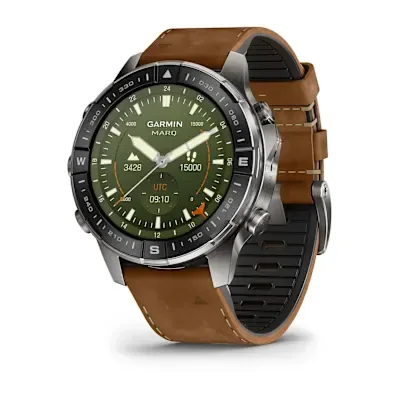
Garmin MARQ Adventurer (Gen 3) LTE has a AMOLED display with a 454 x 454 resolution. Workout readings and notifications can be checked directly on the wrist.
Garmin rates battery life at up to 18 days in smartwatch mode, making daily activity tracking possible without charging every evening.
Built-in GPS records your route without using the phone’s positioning, so you can leave the phone at home for a run or walk.
Dual-band positioning is better equipped for difficult reception conditions, such as routes between tall buildings or in mountainous terrain.
Built-in mapping provides context around an unfamiliar route, making turns easier to understand than on a simple breadcrumb track.
The microphone and speaker let you handle calls through a compatible smartphone, provided the phone stays within Bluetooth range.
Garmin Pay supports contactless payments from the wrist. Check that your bank and card are supported before relying on it.
Music can be stored on the watch and played through compatible Bluetooth headphones without a phone. Downloads from music services may require a separate subscription.
Sapphire glass adds scratch resistance for daily wear, although a hard impact can still damage the display.
LTE adds phone-free communication through Garmin services. It is a useful distinction of this version, with features depending on the plan and coverage.
How do we assess advantages and disadvantages?
Our editorial assessment draws on specifications, manufacturer documentation and available material about the model. It does not imply our own laboratory testing. We distinguish physical RAM from virtual expansion; features and box contents can vary by market. Reference prices are conversions; check the store for the final price of an offer.