
Smartphone editorial team · Updated:
Pros
Our editorial view of this model’s strengths and limitations.
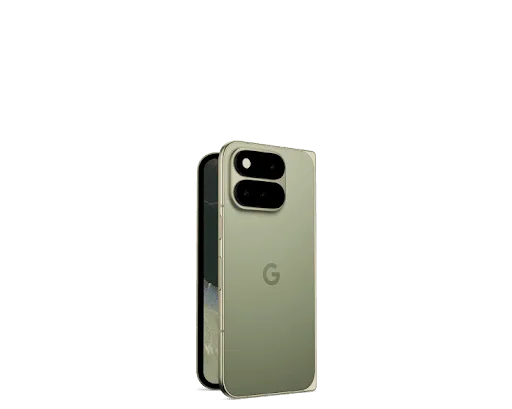
The folding design pairs a large inner screen with a separate outer display for quick interactions. You can switch between a more compact folded shape and a larger working area when you open the phone.
The 4806 mAh battery provides capacity for everyday use, with charging over USB-C. Battery life depends on brightness, reception and workload, so capacity alone does not guarantee a particular number of hours.
Available configurations offer up to 1024 GB of storage and up to 16 GB of physical RAM. That provides space for apps and personal files, but check the exact configuration before buying because capacities vary between versions.
Google Tensor G6 supports 5G networks. That gives you access to faster mobile connections for downloads and tethering where coverage is available, although actual speeds still depend on the network and your plan.
The 48 MP main camera has optical stabilisation to compensate for small hand movements. It can reduce camera-shake blur in low light, though it cannot freeze a moving subject by itself.
A dedicated 10.8 MP telephoto camera gives portraits and distant details more flexibility. Zooming need not rely solely on cropping the main camera image, although results still depend on lighting conditions.
Wireless charging lets you place the phone on a compatible pad, which is convenient on a desk. The charger is sold separately, and speed depends on its standard and compatibility with this particular model.
How do we assess advantages and disadvantages?
Our editorial assessment draws on specifications, manufacturer documentation and available material about the model. It does not imply our own laboratory testing. We distinguish physical RAM from virtual expansion; features and box contents can vary by market. Reference prices are conversions; check the store for the final price of an offer.