
Roaming: how your mobile service works abroad
Roaming lets you use your mobile number (calls, texts, data) while on another operator's network, most often abroad. Your operator has agreements with local operators and bills you at their roaming rates.
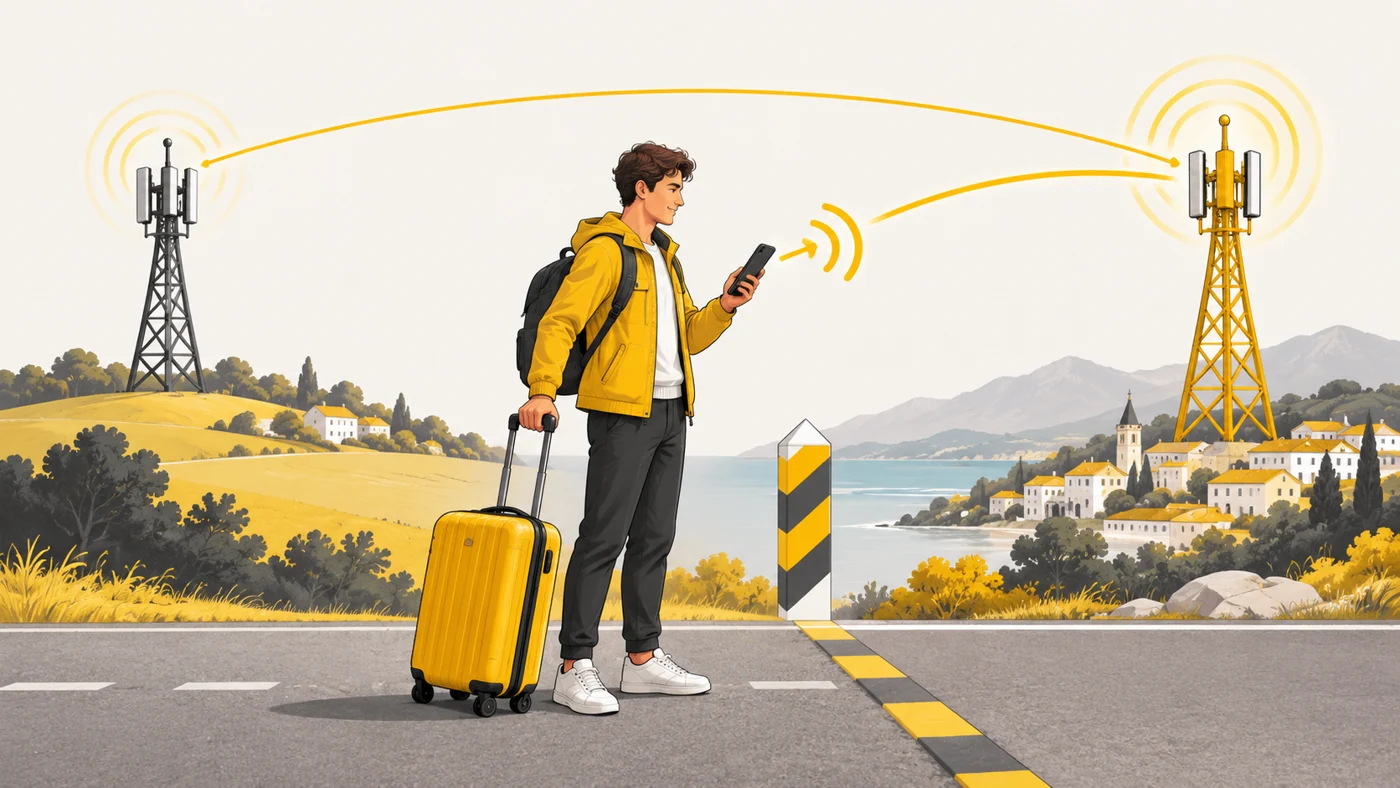
In plain words
Roaming is like a library card that gets you into libraries in other cities: you do not have to register again, but the rules and prices there may be different. A travel eSIM is like a temporary local library card: cheaper if you are staying a while.
How it works
- Abroad, your phone cannot see your operator's network.
- It connects to a local partner operator.
- The local network checks your SIM through your operator.
- Calls and data are charged at roaming rates.
- Some plans include roaming bundles for certain countries.

Where you'll see it
In mobile network settings, the "Data roaming" switch. Roaming rates are on your operator's website or app. Some regions have special rules - in the EU, for example, "roam like at home" applies - so check before you travel.
Does it matter when buying
Yes, so you do not get a surprise bill. Before a trip, check your plan's terms, add a roaming bundle or buy a travel eSIM. Turn off data roaming if you do not plan to use it.
Myths
- Myth: Incoming calls are always free when roaming. Reality: It depends on the plan and the country; often they are charged.
- Myth: If I turn off mobile data, roaming will cost nothing. Reality: Calls and texts are still charged.
FAQ
How do I avoid big bills?
Add a roaming bundle or travel eSIM and turn off data roaming when you do not need it.
What is national roaming?
When, within your own country, your phone connects to another operator's network.
Does Wi-Fi Calling work when roaming?
If your operator supports it, yes - and it is often cheaper.