
What is artificial intelligence (AI) in plain words
Artificial intelligence (AI) is the general name for programs that do tasks that used to require human thinking: recognising faces and speech, translating, writing text, drawing and controlling robots.
In plain words
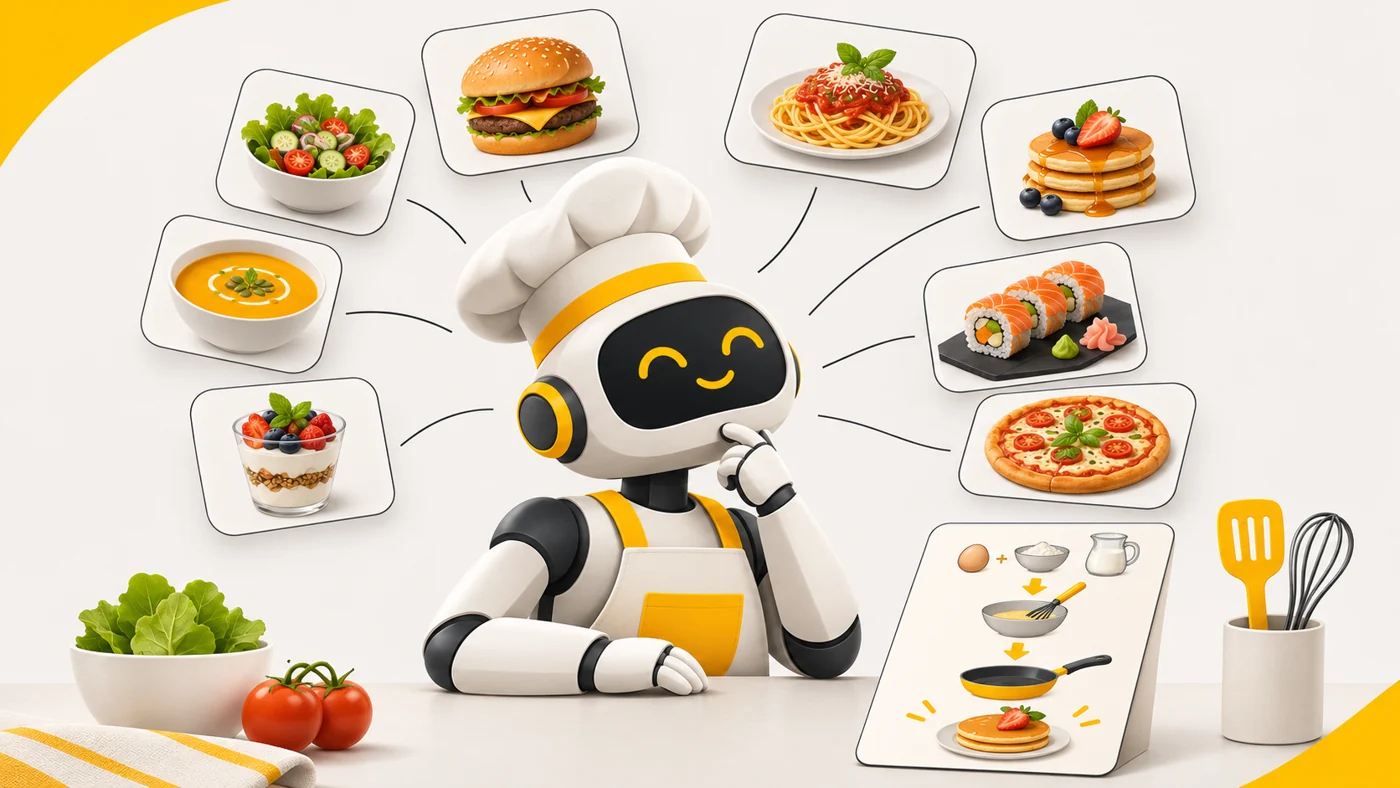
A regular program is like a recipe: step one, step two, no improvising. AI is like a cook who wasn't given a recipe but was shown thousands of finished dishes and told: "Figure it out." The cook spotted the patterns and now makes things no one wrote down step by step. Sometimes tasty, sometimes weird.
How it works
- Developers collect lots of examples: photos, texts, voice recordings, sensor data.
- A program - usually a neural network - is trained to find patterns in those examples.
- After training, it applies those patterns to new data it has never seen.
- Today's AI is mostly "narrow": it does one thing well, like translating or recognising faces.
- Large language models seem universal, but they run on the same principles.
Where you'll see it
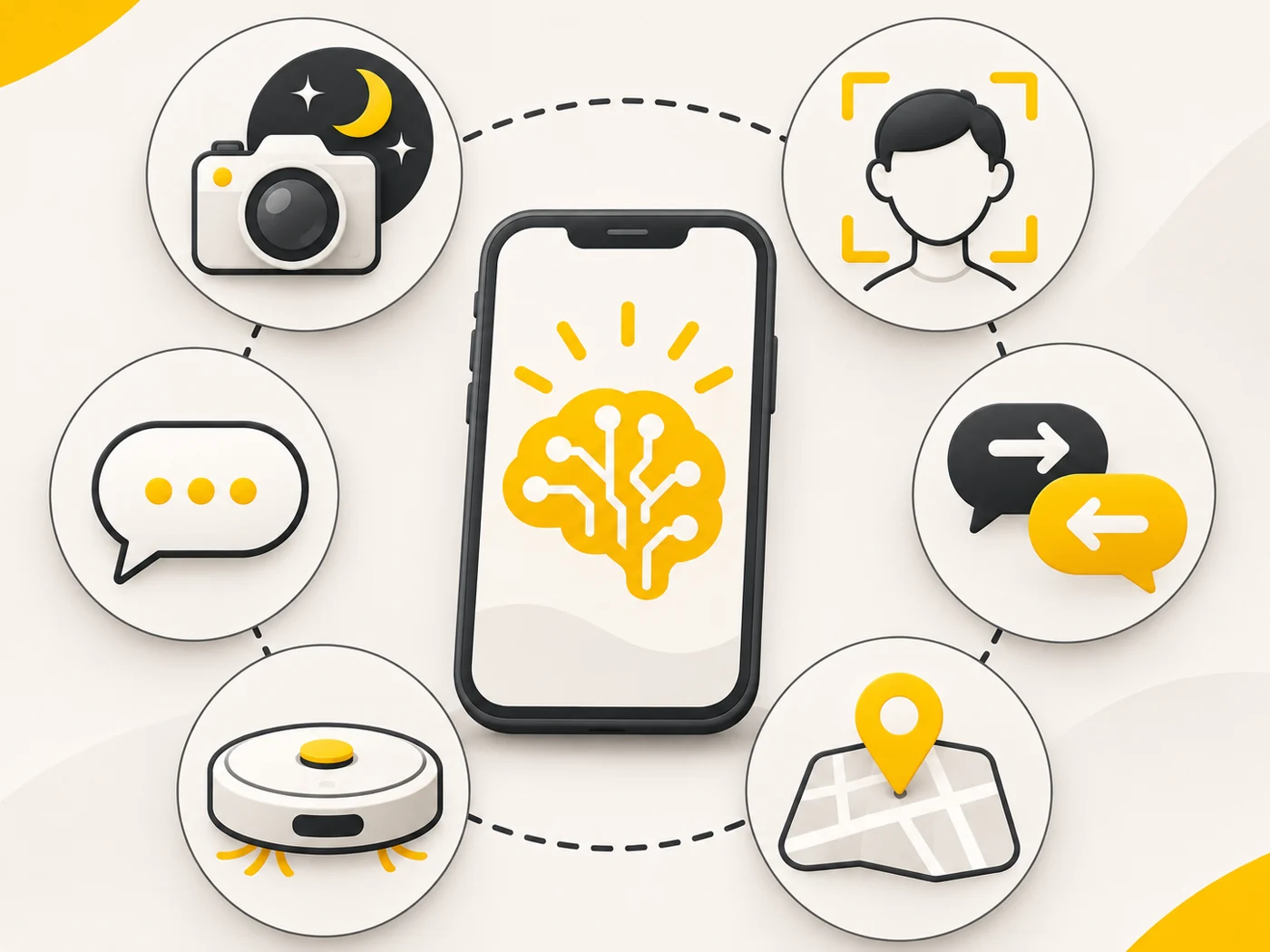
AI has long lived in your smartphone: in the camera (night mode, portraits), face unlock, the keyboard and the voice assistant. It's also in YouTube and TikTok recommendations, translators, navigation apps, robot vacuums and chatbots. Makers mention AI in chip specs (neural processor, TOPS) and in feature names - Galaxy AI, Apple Intelligence, Gemini.
Does it matter when buying
When buying tech, I suggest not looking at the word "AI" on the box - it's on toothbrushes now - but at the specific features you need. Want conversation translation or photo editing without internet? Then you need a strong neural processor and enough memory. If you don't, don't pay extra for marketing.
Myths
- Myth: AI thinks and feels like a human. Reality: No. It finds patterns in data. It has no consciousness, desires or feelings.
- Myth: AI never makes mistakes because it's a computer. Reality: It does, often confidently - especially where there was little training data.
FAQ
How is AI different from a regular program?
A regular program is written with rules by hand; AI learns the rules itself, from examples.
Will AI take people's jobs?
It already does some tasks faster. But more often it changes jobs: people who know how to use it become more productive.
Is it safe to share personal data with AI?
Be careful: cloud services may store your requests. I wouldn't send passwords, documents or medical data there.
Related terms
Machine learning, Neural network, Large Language Model, Generative AI, Artificial general intelligence