
Generative AI: how neural networks create text, images and video
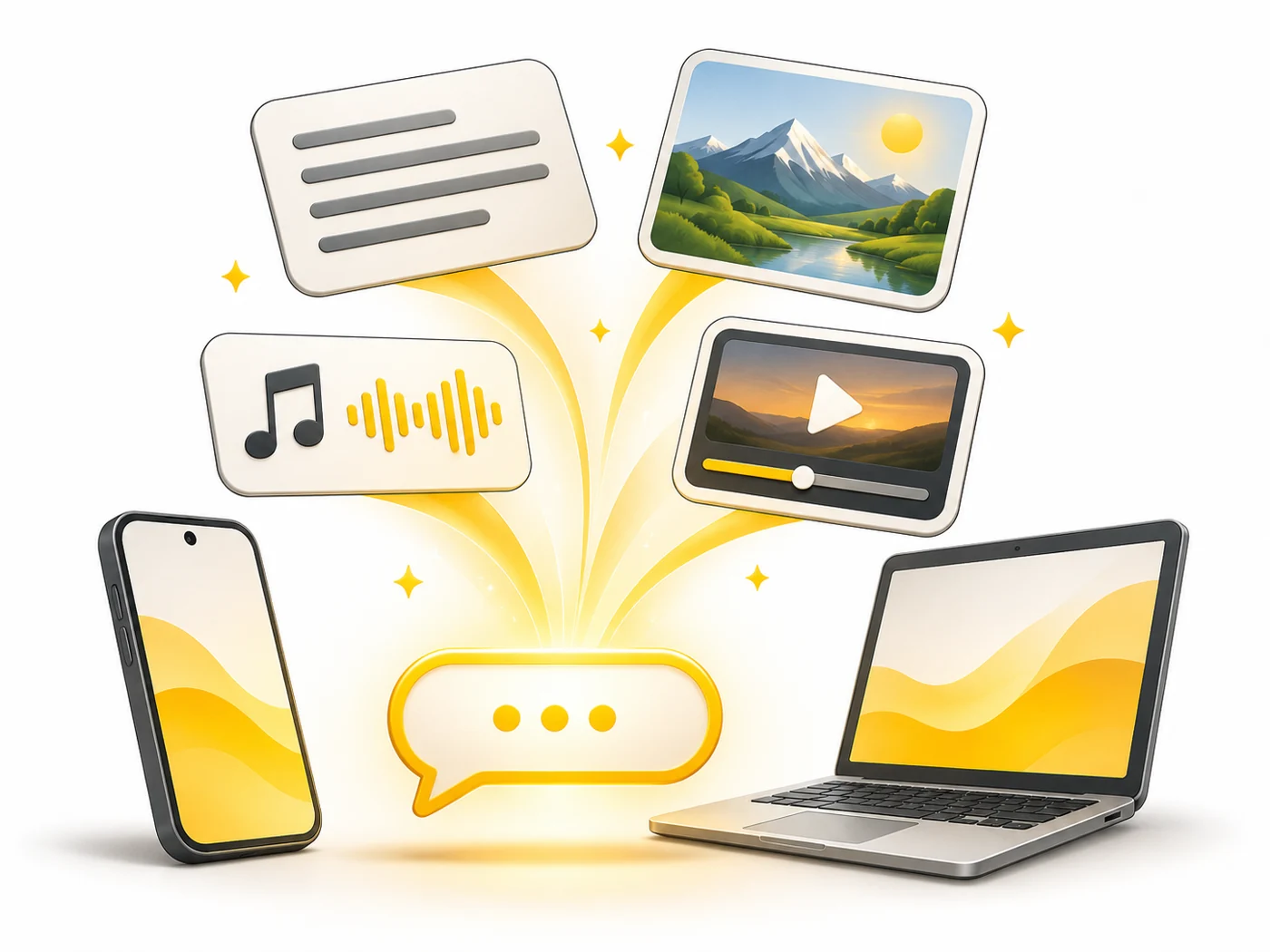
Generative AI means AI models that create new content - text, images, sound, music, video or code - from a description or an example.
In plain words
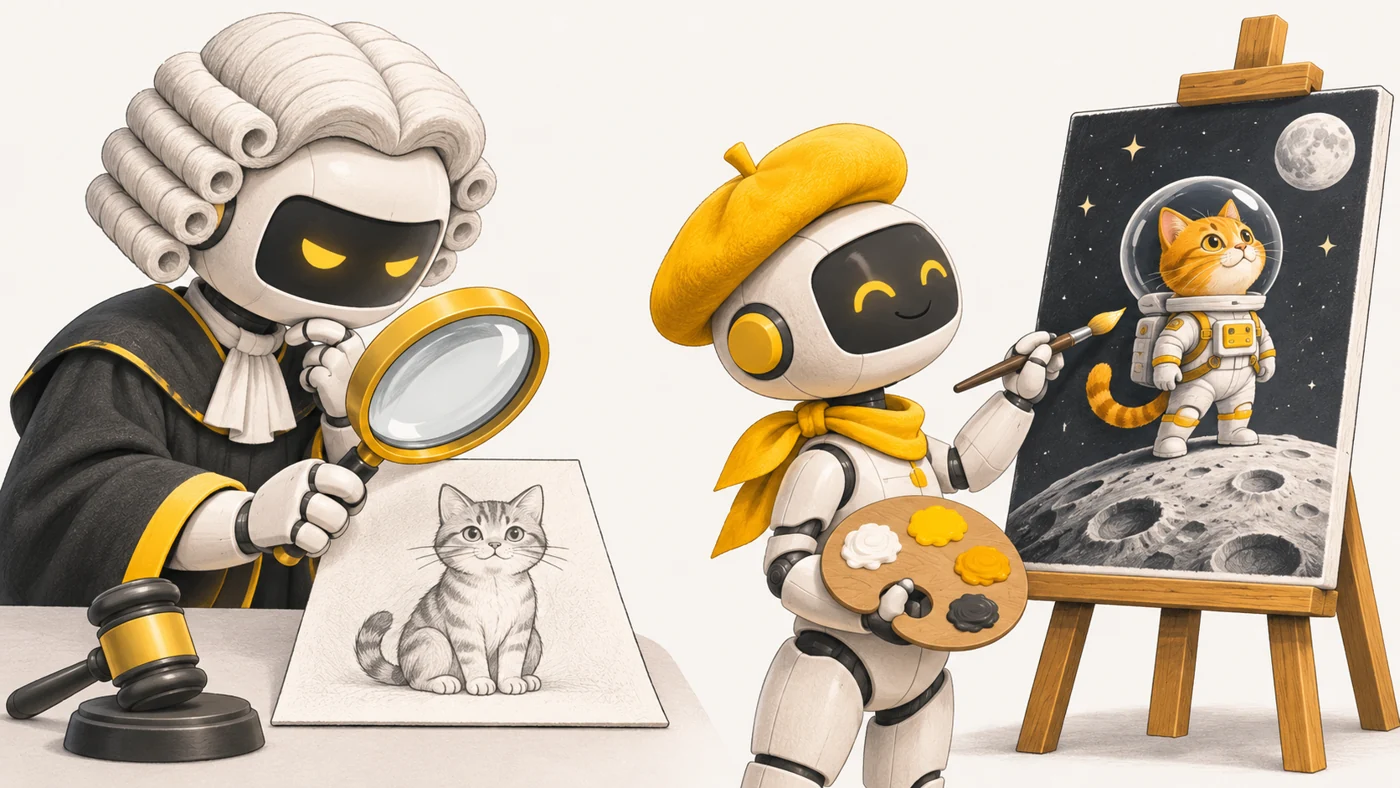
Regular AI is like a judge at a drawing contest: it looks and says "that's a cat" or "that's a dog". Generative AI is like an artist who has studied millions of pictures and now draws a new cat to order: "ginger, in a spacesuit, on the Moon". It doesn't copy a finished drawing - it builds a new one from the patterns it learned.
How it works
- The model is trained on huge collections of text, images, sound or video.
- It learns what such data usually looks like and what it's made of.
- You give it a prompt - a text description of what you want.
- Language models write text word by word, while diffusion models "develop" an image out of noise.
- The result is slightly different every time, even for the same request.
Where you'll see it
Chatbots (ChatGPT, Gemini, Claude), image and video generators, AI photo editing in smartphones (erase a random passer-by, extend the background), automatic summaries of notes and recordings, music and voice generation.
Does it matter when buying
For buying a smartphone - yes, if you're interested in these features: some run on the device and need a strong chip, others run in the cloud and may require a subscription. In everyday life remember two things: results need checking, and generated photos and voices can be used to deceive people.
Myths
- Myth: Generative AI just glues together pieces of other people's work. Reality: It doesn't store or cut out ready-made fragments; it generates something new from learned patterns. That said, copyright questions around training such models are still debated.
- Myth: Generated content is always true. Reality: Texts can contain invented facts, and photos can show events that never happened.
FAQ
How is generative AI different from regular AI?
Regular AI classifies and recognises; generative AI creates new things.
Can you tell a generated photo from a real one?
Not always by eye. AI content labels and attention to details - hands, text, shadows - help.
Can I use generated content in a school project?
It depends on your school's rules. Be honest that you used AI.
Related terms
Large Language Model, Diffusion model, Prompt, Deepfake, AI photo editing