
Computational photography: how a smartphone shoots better than its optics allow
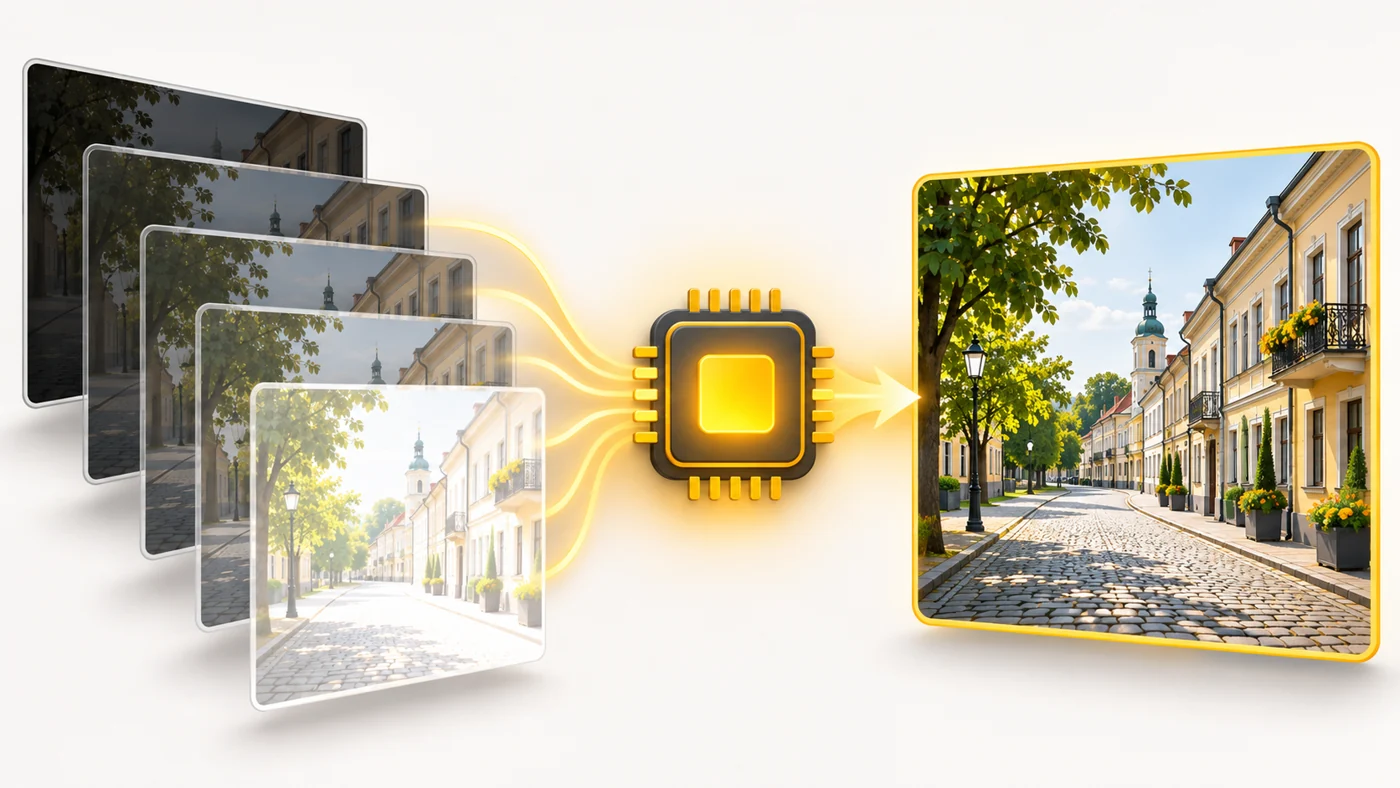
Computational photography is an approach in which photo quality comes not only from the optics but also from software: the phone takes several frames, analyses them with neural networks and merges them into one photo with better detail, colour and less noise.
In plain words
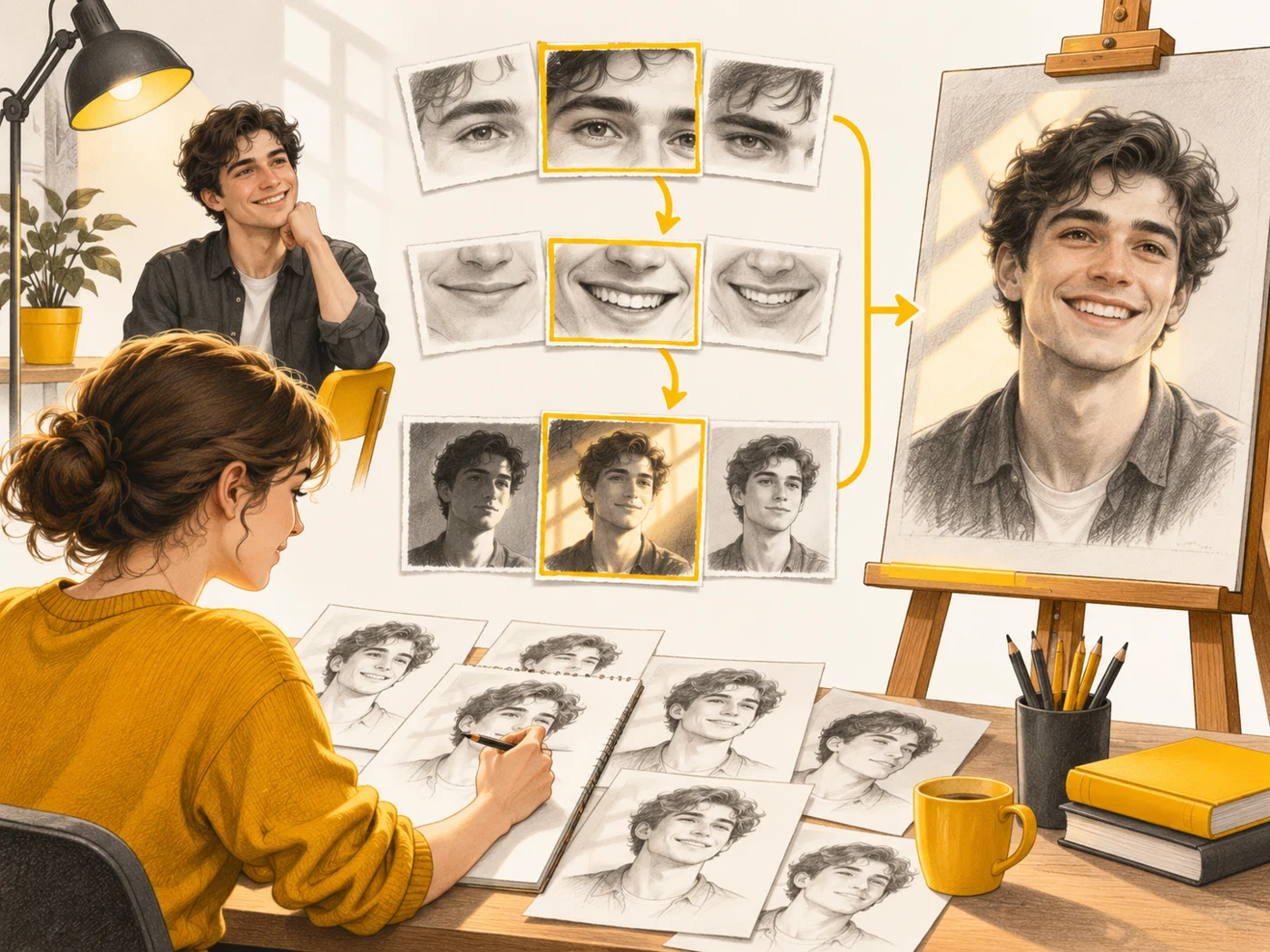
Imagine drawing a friend's portrait while they keep blinking and moving. You make ten quick sketches and take the best part of each: the eyes from one, the smile from another, the lighting from a third. The result is a perfect portrait. A phone does the same - in a fraction of a second, while you press the button.
How it works
- Even before you press the button, the camera continuously captures frames into a buffer.
- After you press it, it takes a series of frames at different exposures.
- Algorithms align the frames and combine the best parts.
- Neural networks remove noise, sharpen details and recognise sky, skin and text.
- Different areas of the frame are processed separately: sky one way, faces another.
Where you'll see it
In every modern smartphone: HDR photos, night mode, portrait blur, super zoom, motion photos, selfie enhancement and AI editing. Manufacturers have their own names: Deep Fusion, Smart HDR, Night Sight and so on.
Does it matter when buying
A lot. Processing is exactly why phones with similar optics take very different photos. I suggest looking at real photos of the scenes you care about - evenings, motion, portraits - not just camera specs. And remember that "too perfect" photos are also the work of algorithms.
Myths
- Myth: A good photo only comes from good optics. Reality: On smartphones, processing matters as much as the optics.
- Myth: Computational photography is the same as filters. Reality: Filters change the style; computational photography gathers more information from several frames.
FAQ
Why does the photo look different in the camera and in the gallery?
Processing finishes after the shot - within a few seconds.
Can I turn off processing?
Partly - RAW or "Pro" modes give less processed photos.
Does AI invent details in photos?
Sometimes, especially at high zoom. That is why super-zoom photos do not always show reality accurately.
Related terms
Night mode, Image signal processor (ISP), AI photo editing, HDR, HDR10+ and Dolby Vision, Pixel binning