
Hacker: who they really are - attacker or defender
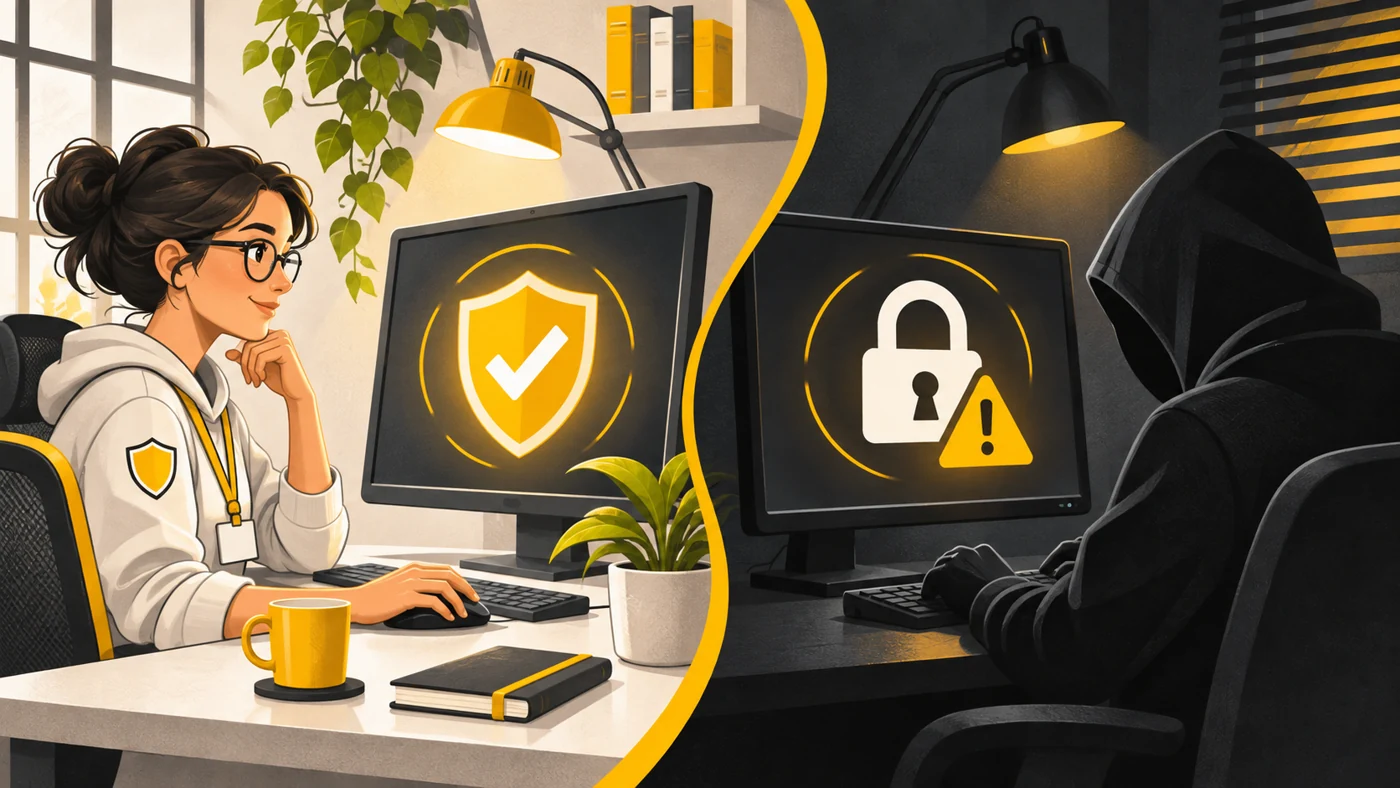
A hacker is a person with a deep understanding of computer systems who can find unconventional solutions and vulnerabilities in them. "White hat" (ethical) hackers look for holes so they can be fixed; "black hat" hackers exploit them for crime.
In plain words
A hacker is like someone who knows inside out how locks work. A specialist locksmith checks the locks on your door and tells you how to strengthen them. A burglar uses the same knowledge to break in. The skills are the same; the difference is the goal and whether it is legal.
How it works
- Hackers study how programs, networks and people work.
- They look for mistakes in code, settings and processes.
- Ethical hackers report what they find to system owners (bug bounties).
- Attackers exploit vulnerabilities to steal data or money.
- Most attacks start with social engineering - tricking people.

Where you'll see it
In news about cyberattacks, at cybersecurity companies, in CTF (Capture The Flag) competitions and in big companies' bug bounty programmes.
Does it matter when buying
You do not need to be a hacker to protect your accounts: updates, 2FA and caution with links already make you a hard target. If cybersecurity interests you, start legally: CTF competitions, training platforms and courses. Breaking into other people's systems is a crime.
Myths
- Myth: A hacker is always a criminal. Reality: Many hackers protect systems and work legally.
- Myth: Hackers break into anything in a minute, like in films. Reality: Real attacks often take a long time and rely on human error.
FAQ
What is ethical hacking?
Looking for vulnerabilities with the owner's permission so they can be fixed.
What is CTF?
Cybersecurity competitions where participants solve attack and defence challenges.
How do I protect myself from hackers?
Updates, unique passwords, 2FA and caution with links and files.
Related terms
Phishing, Malicious apps, Two-factor authentication (2FA), Antivirus