
Linear vibration motor: why some phones vibrate more pleasantly
A linear vibration motor (linear resonant actuator, X-axis motor) is the component that creates precise, short vibrations in a smartphone: keyboard "clicks", feedback in games and haptic notifications. It replaces the old motor with an off-centre weight.
In plain words
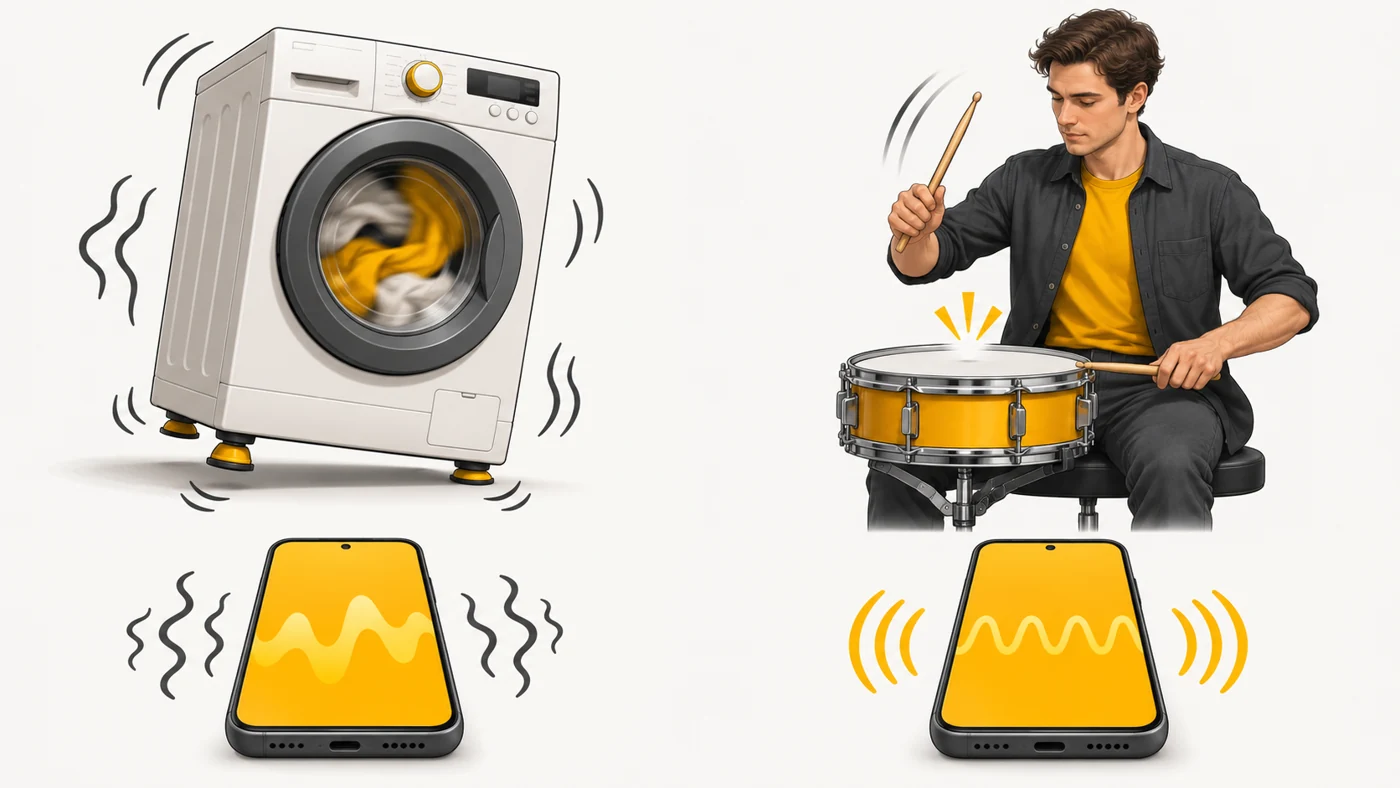
An old vibration motor is like a washing machine with an unbalanced drum: it hums, rattles, and takes ages to spin up and stop. A linear motor is like a drummer hitting crisp, short beats: "tap" - then silence. That is why typing with a linear motor feels like pressing real keys.
How it works
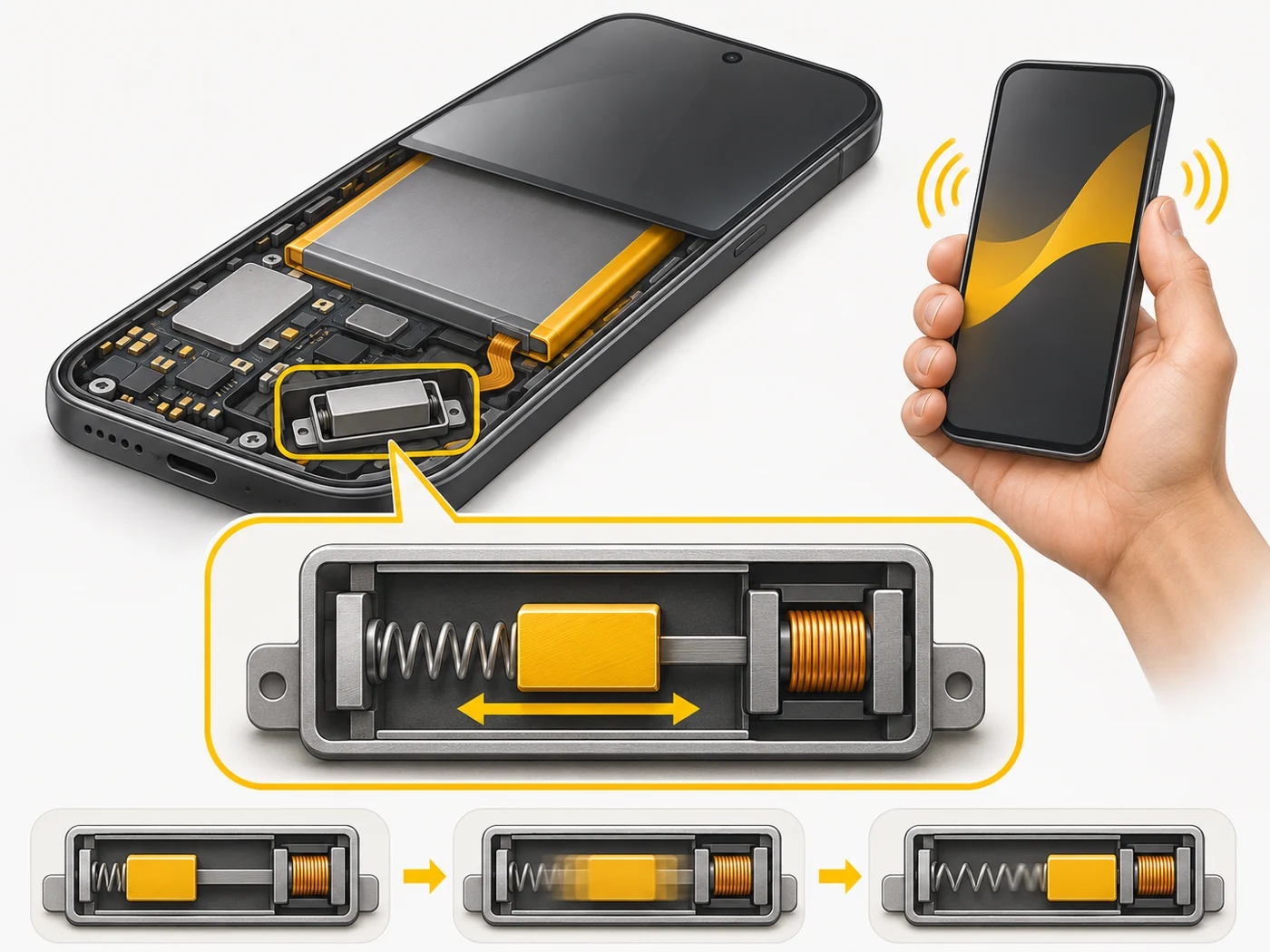
- Inside there is a small weight on a spring and a coil.
- Current in the coil pushes the weight back and forth along one axis.
- The motor runs at its resonant frequency, so it responds instantly.
- The system can set the strength, duration and pattern of the vibration.
- Short pulses imitate button clicks and textures in games.
Where you'll see it
In flagships and many mid-range models: iPhone (Taptic Engine), Pixel, Samsung Galaxy S, OnePlus, Xiaomi and others. Specs say "X-axis linear motor" or "linear vibration motor". Budget phones often have a simple motor.
Does it matter when buying
It seems minor, but you feel it every day: pleasant keyboard feedback, crisp notifications, feedback in games. If you can, hold the phone in a shop and type some text. For me it is one of the things that separates a "cheap" feel from a "premium" one.
Myths
- Myth: Stronger vibration is better. Reality: Crispness and brevity matter more than strength.
- Myth: You cannot adjust vibration. Reality: Many phones let you change the strength and patterns.
FAQ
How do I know which motor my phone has?
From the specs or reviews; to the touch, a linear motor gives crisp "clicks".
Does vibration use much battery?
Short pulses use almost none.
What are haptics?
The general name for tactile feedback - sensations delivered through vibration.