
MEMS: micromechanical sensors in phones and watches
MEMS (micro-electro-mechanical systems) are microscopic mechanical structures made on a silicon chip together with electronics. Accelerometers, gyroscopes, microphones, barometers and even projector mirrors are built from them.
In plain words
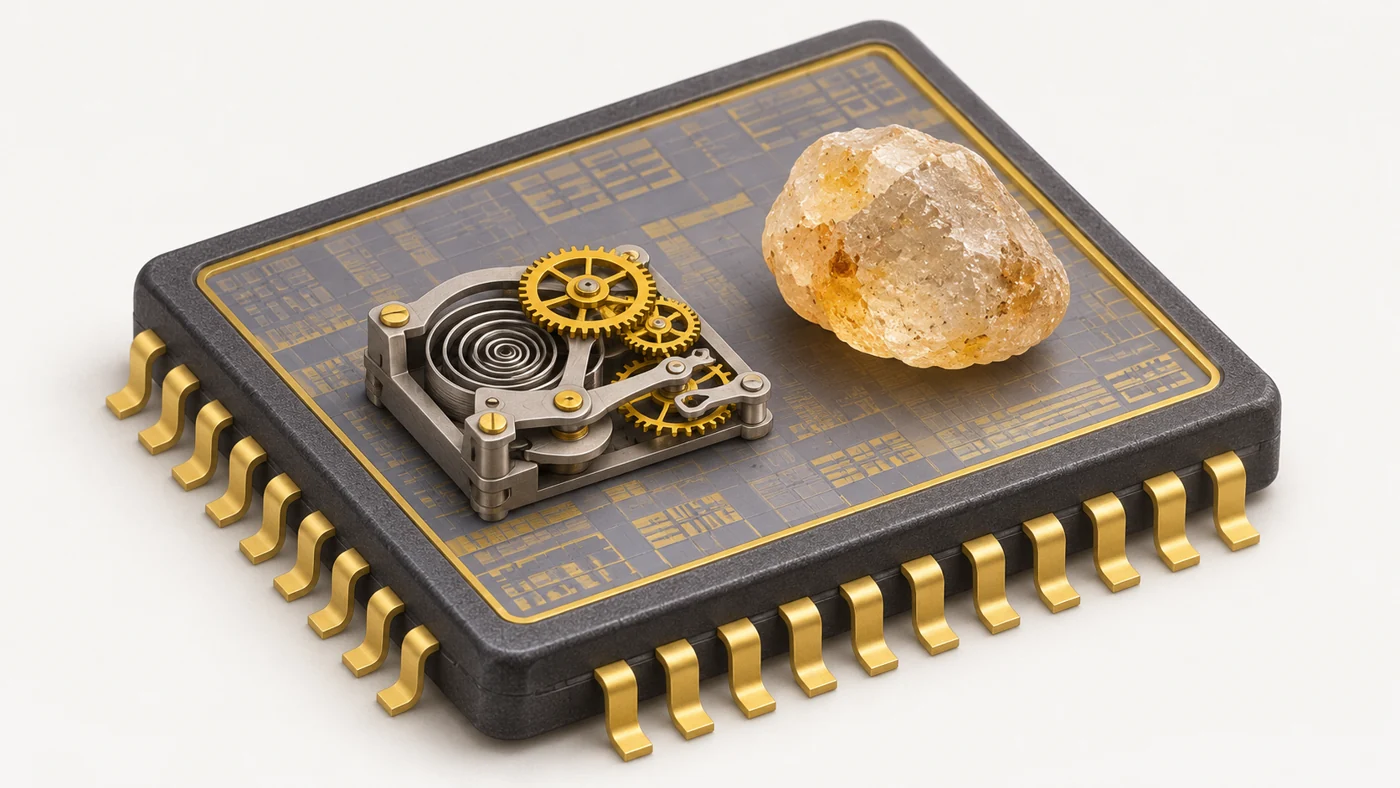
Imagine a mechanical clock with springs and levers, shrunk to the size of a grain of sand and built right onto a chip. These tiny "springs" and "membranes" react to movement, sound and pressure, and the electronics next to them turn their vibrations into numbers.
How it works
- MEMS are made with processes similar to chip manufacturing.
- Moving structures a few microns in size are etched into silicon.
- Movement, sound or pressure shifts these structures.
- The shift is measured by a change in capacitance or resistance.
- A chip alongside processes the signal and passes data to the processor.
Where you'll see it
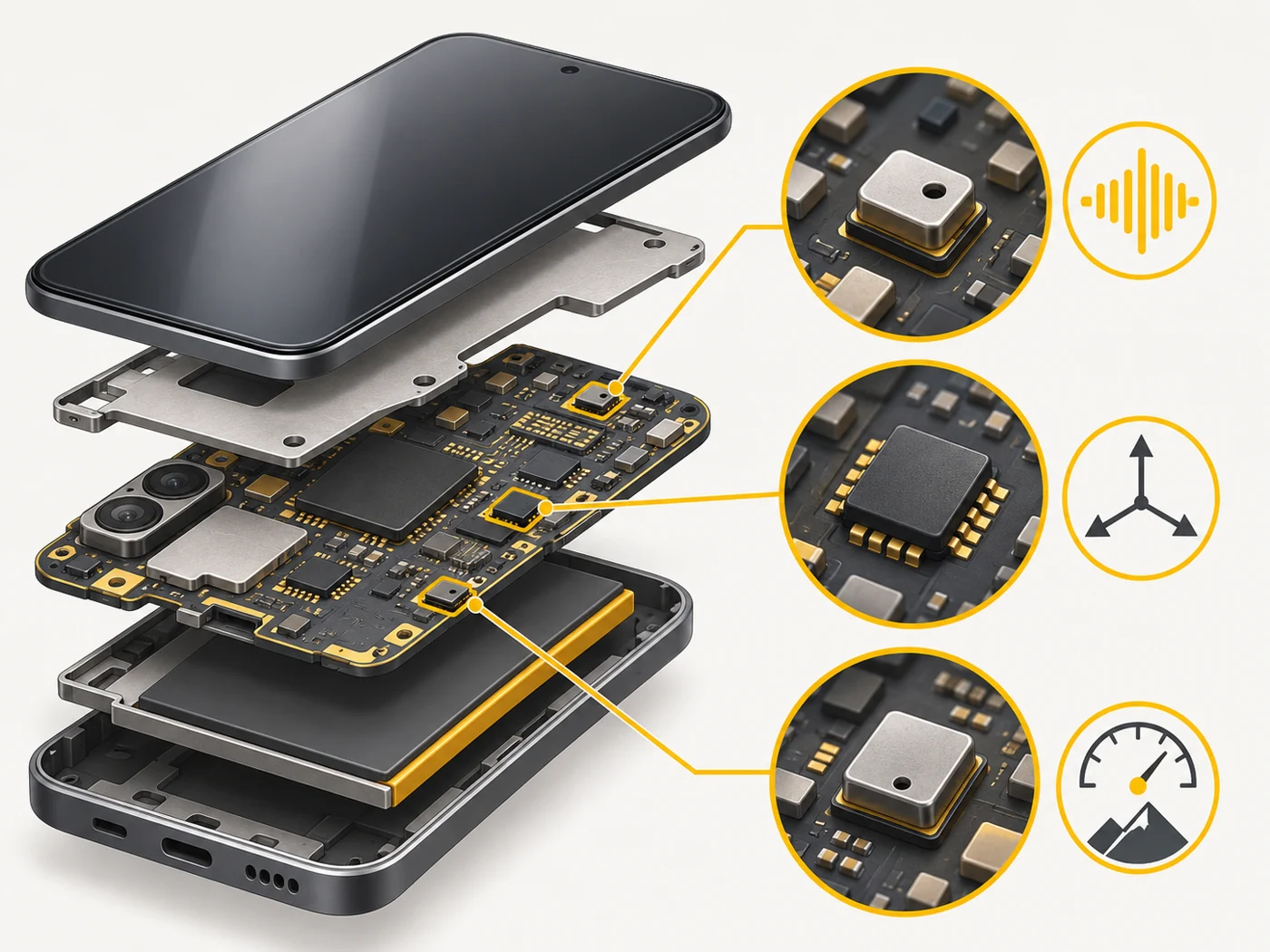
In every phone: the accelerometer, gyroscope, barometer and microphones (3-4 MEMS microphones for noise cancellation). Also in watches, earbuds, drones, cars (airbags) and game controllers.
Does it matter when buying
You do not choose MEMS directly, but they determine call sound quality, step accuracy and video stabilisation. It was the tiny size of MEMS that made smartphones and fitness bands possible.
Myths
- Myth: MEMS are just electronics with no mechanics. Reality: They have real moving mechanical parts - only microscopic ones.
- Myth: MEMS microphones are worse than ordinary ones. Reality: Modern MEMS microphones are very high quality and consistent.
FAQ
How many MEMS are in a phone?
Usually more than ten: motion sensors, microphones, a barometer and so on.
Do MEMS break when dropped?
They are fairly tough, but a hard impact can damage them.
Where else are MEMS used?
In car airbags, medical devices and inkjet printers.
Related terms
Accelerometer, Gyroscope, Barometer, Inertial measurement unit (IMU)