
Barometer in phones and watches: what it is for
A barometer is an atmospheric pressure sensor. In phones and watches it helps determine altitude above sea level, count floors climbed, plot routes in the mountains more accurately and notice sudden weather changes.
In plain words
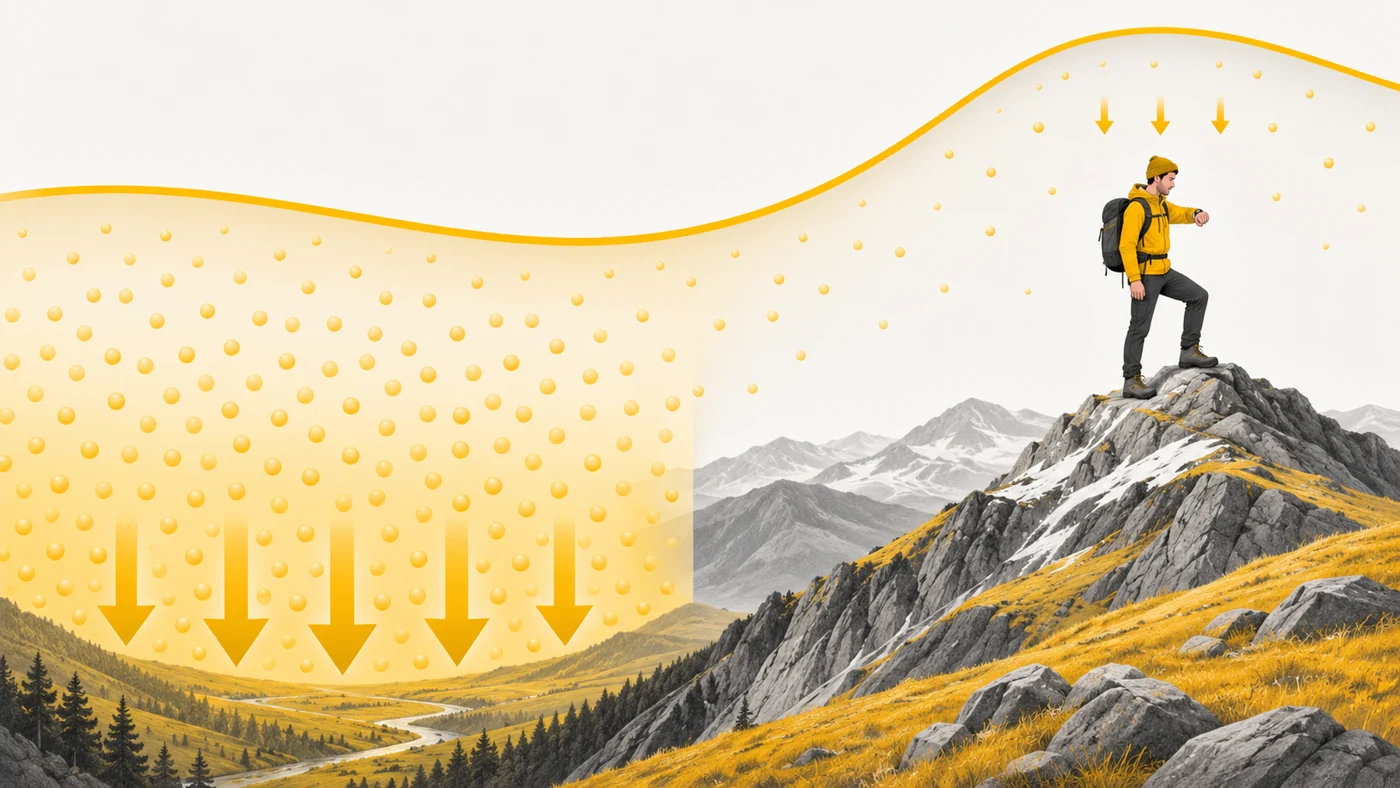
The air above us is like a thick blanket pressing down on everything below. The higher you climb, the thinner the blanket above you and the lower the pressure. A barometer "feels" this blanket: if the pressure drops, you have either gone up the stairs or bad weather is on its way.
How it works
- A microscopic membrane in the sensor flexes under air pressure.
- The flexing is turned into an electrical signal.
- A change of a few pascals corresponds to rising a few tens of centimetres.
- Watches combine barometer and GPS data for more accurate altitude.
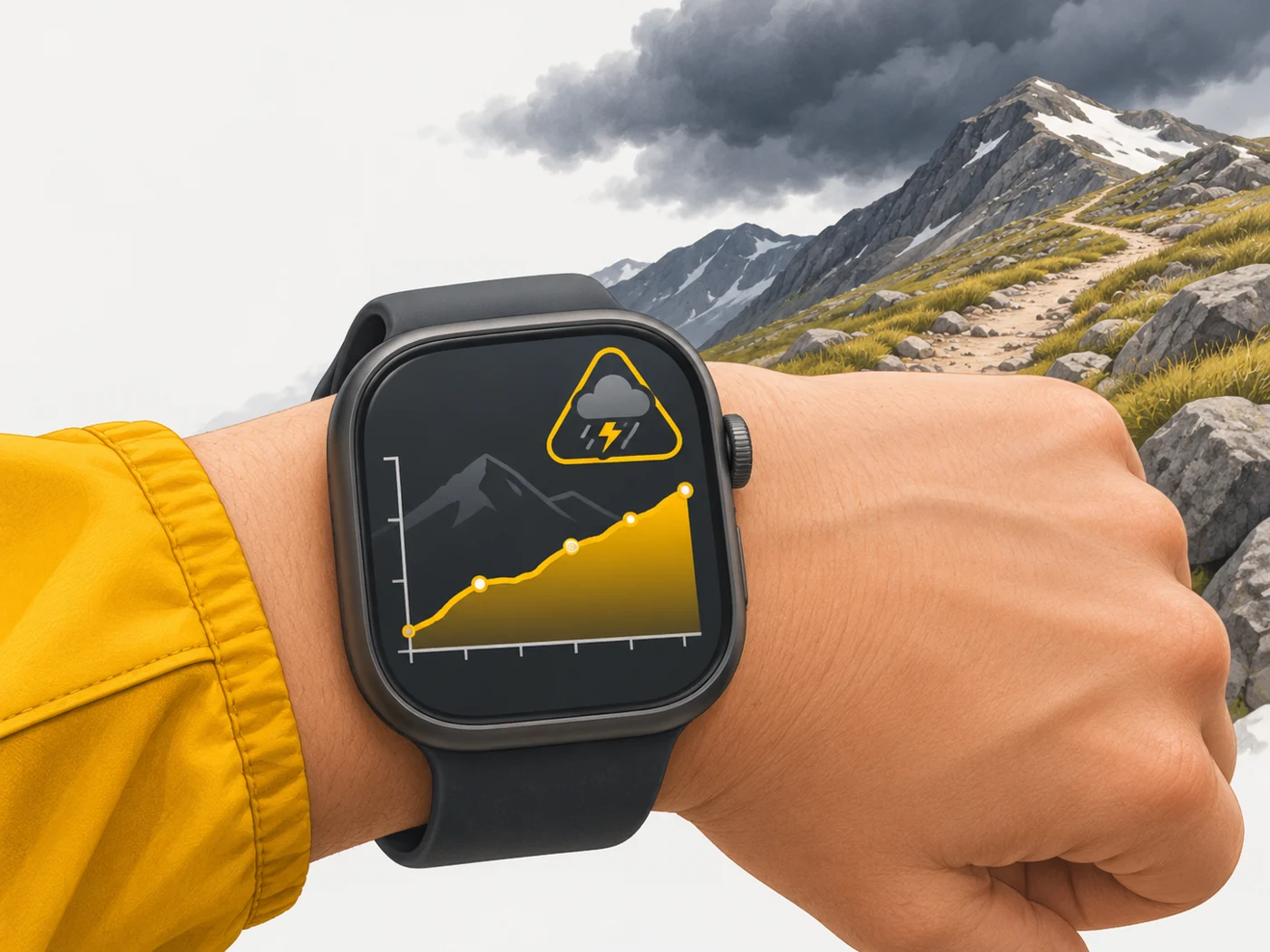
- A sharp drop in pressure can mean a storm is coming.
Where you'll see it
Many phones (flagships and mid-range models) have a barometer, as do sports and outdoor watches from Garmin, Huawei, Amazfit and Apple Watch. In our watch comparisons, the Sensors row.
Does it matter when buying
For hikers, mountain runners and cyclists it is useful: accurate elevation gain and storm warnings. For everyday users it counts floors and slightly improves navigation. Remember that a barometer needs calibrating against a known altitude.
Myths
- Myth: A barometer always shows altitude accurately. Reality: Weather changes the pressure, so without calibration the altitude "drifts".
- Myth: Only meteorologists need a barometer. Reality: It helps with navigation and fitness.
FAQ
How does a watch count floors?
From small pressure changes as you climb.
Does a barometer need calibrating?
Yes, against a known altitude or automatically via GPS.
Does a barometer work underwater?
Underwater it measures water pressure - dive watches use this.
Related terms
GNSS (GPS, Galileo, BeiDou), MEMS sensors, Sensor fusion, Water resistance (ATM and EN13319)