
Optimised charging and the 80% limit: how to extend battery life
Optimised (adaptive) charging is a feature that learns your routine and tops the phone up to 100% only just before you pick it up. An 80% limit (or 85-90%) stops charging at a set level to reduce battery wear.
In plain words
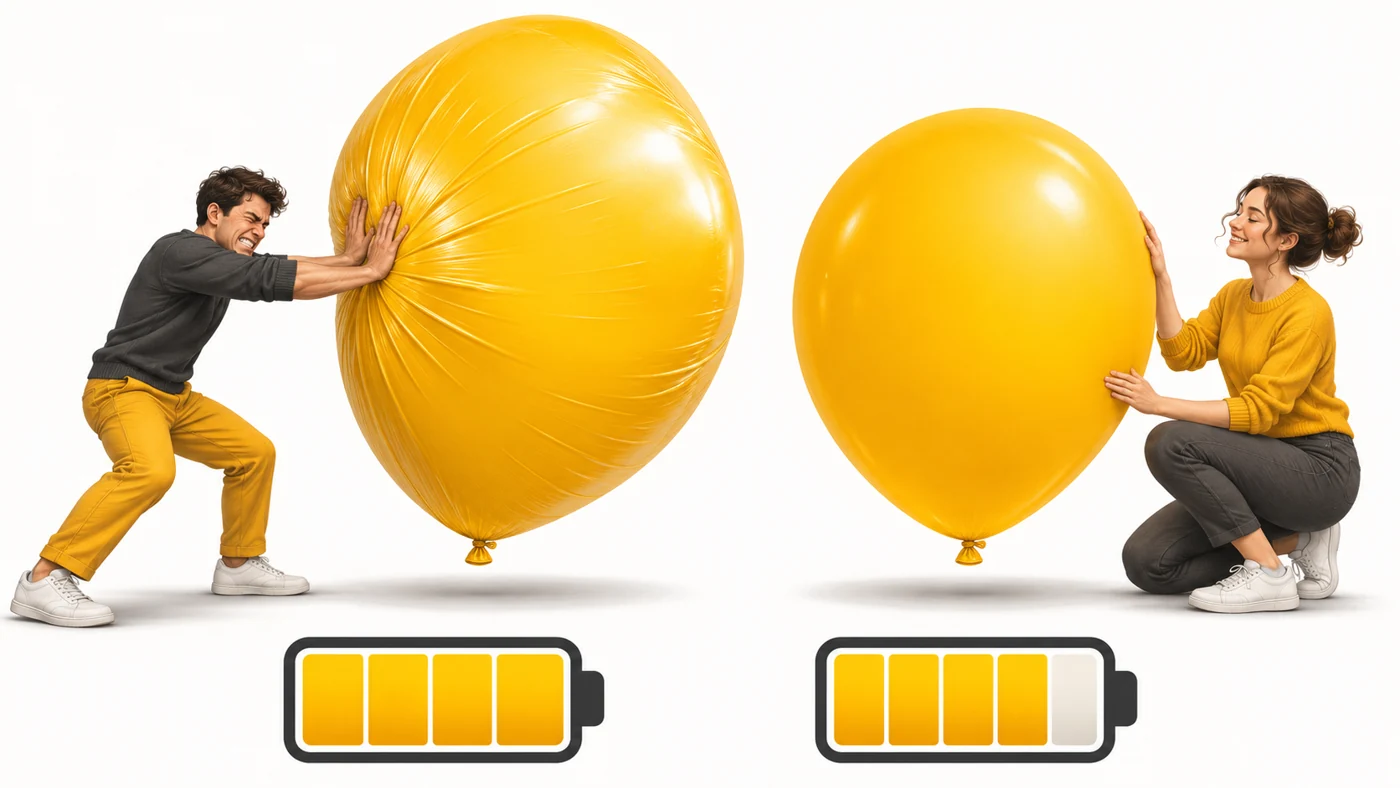
Imagine a balloon. Blow it up to the limit and leave it that way all night, and the rubber tires and stretches over time. Inflate it to 80% and it lasts much longer. A lithium-ion battery is similar: it "tires" most at 100% and when hot. Optimised charging avoids keeping it "inflated to the limit" for long.
How it works
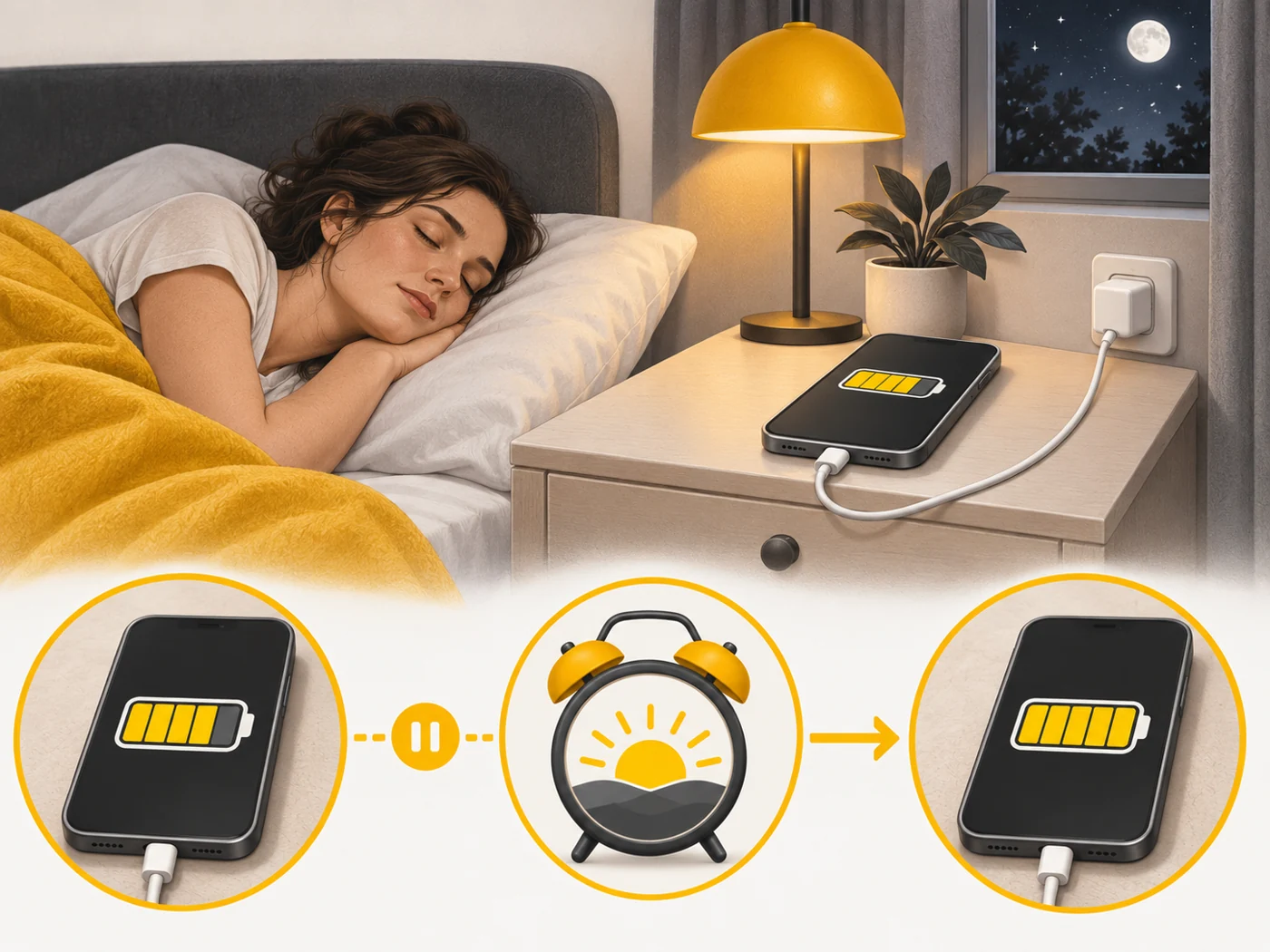
- The phone remembers when you usually unplug it.
- It charges quickly to 80%, then pauses.
- It tops up the last 20% closer to your wake-up time.
- The "80% limit" mode simply stops charging above the set level.
- Less time at 100% and lower temperatures mean slower wear.
Where you'll see it
On iPhone: Optimised Battery Charging and an 80-100% limit on newer models; on Samsung: Battery Protection with modes; on Pixel: Adaptive Charging and a limit; and similar features on Xiaomi, OnePlus and others. Laptops and some tablets have it too.
Does it matter when buying
Yes, I recommend turning it on. If 80% gets you through the day, the limit will noticeably extend battery life. If you have a long day ahead without a socket, you can switch the limit off temporarily and charge to 100%. For phones that are always plugged in (say, as a car navigator), the limit is especially useful.
Myths
- Myth: The 80% limit permanently reduces usable capacity. Reality: You can turn it off at any time.
- Myth: Modern batteries do not mind 100%. Reality: The controller prevents overcharging, but sitting at 100% for long still speeds up wear.
FAQ
Should I turn on the 80% limit?
If the charge is enough for you, yes - the battery will last longer.
Why did my phone stop at 80% overnight?
That is optimised charging - it will finish by morning.
Does it work with wireless charging?
Yes, these features work regardless of how you charge.
Related terms
Charge cycles and battery wear, Silicon-carbon battery, Bypass charging