
Silicon-carbon battery: how phones got 6000-7000 mAh
A silicon-carbon (Si/C) battery is a type of lithium-ion battery in which silicon is added to the graphite anode. Silicon holds more lithium, so a battery of the same size has a higher capacity.

In plain words
Imagine a bookcase. Graphite is ordinary shelves: each holds a certain number of books. Silicon is shelves that hold many times more. But there is a catch: full silicon shelves "swell". So engineers mix silicon with carbon to keep the bookcase from bursting - and get more space without swelling.
How it works
- In a lithium-ion battery, lithium ions move into the anode during charging.
- A classic anode is made of graphite.
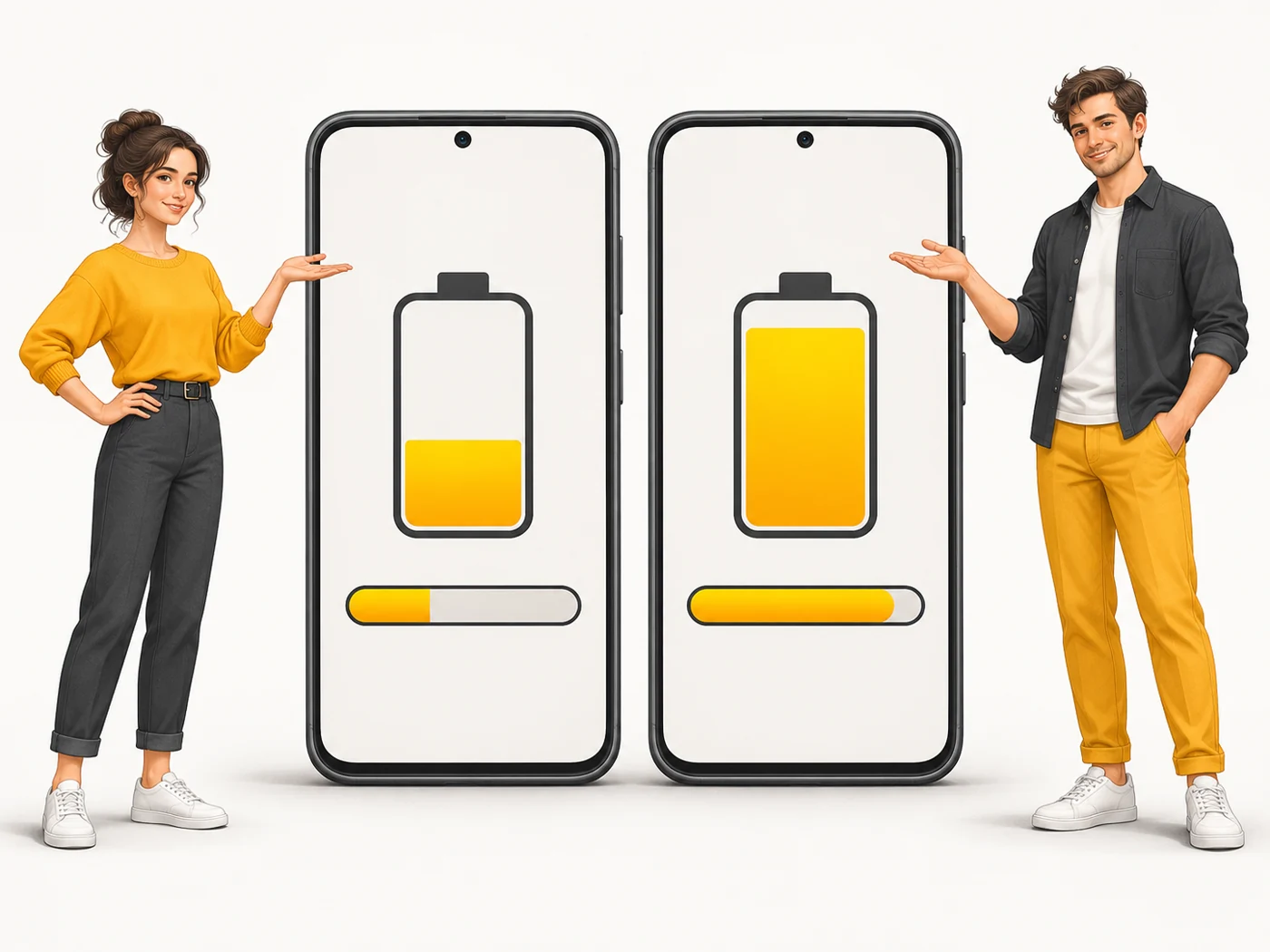
- Silicon can hold far more lithium than graphite.
- But silicon expands a lot, so it is used in a carbon mix and in a small proportion.
- The result is higher energy density: more mAh in the same volume.
Where you'll see it
In many new phones from Chinese brands (Honor, Xiaomi, OnePlus, vivo, OPPO and others) with 6000-7500 mAh batteries in a normal body, in thin phones and in foldables. In our smartphone comparisons it shows up as an unusually large capacity for a slim body.
Does it matter when buying
Yes - it is one of the most useful innovations of recent years: more battery life without a thick body. But compare not just mAh but real battery life in reviews. As for longevity, manufacturers claim a normal lifespan, but long-term data is still building up.
Myths
- Myth: Silicon batteries are a completely new technology, not lithium-ion. Reality: They are an improved lithium-ion battery, not a different type.
- Myth: More mAh always means longer battery life. Reality: A lot depends on the chip, screen and optimisation.
FAQ
Are silicon-carbon batteries safe?
They go through the same safety tests as regular lithium-ion batteries.
Do they wear out faster?
Manufacturers claim a comparable lifespan, but real multi-year data is still being collected.
Why did iPhone and Samsung wait so long to use them?
Big brands are cautious with new technology and waited for it to be better proven.
Related terms
mAh and Wh, Charge cycles and battery wear, Optimised charging (80% limit)