
Reverse charging: how a phone charges other devices
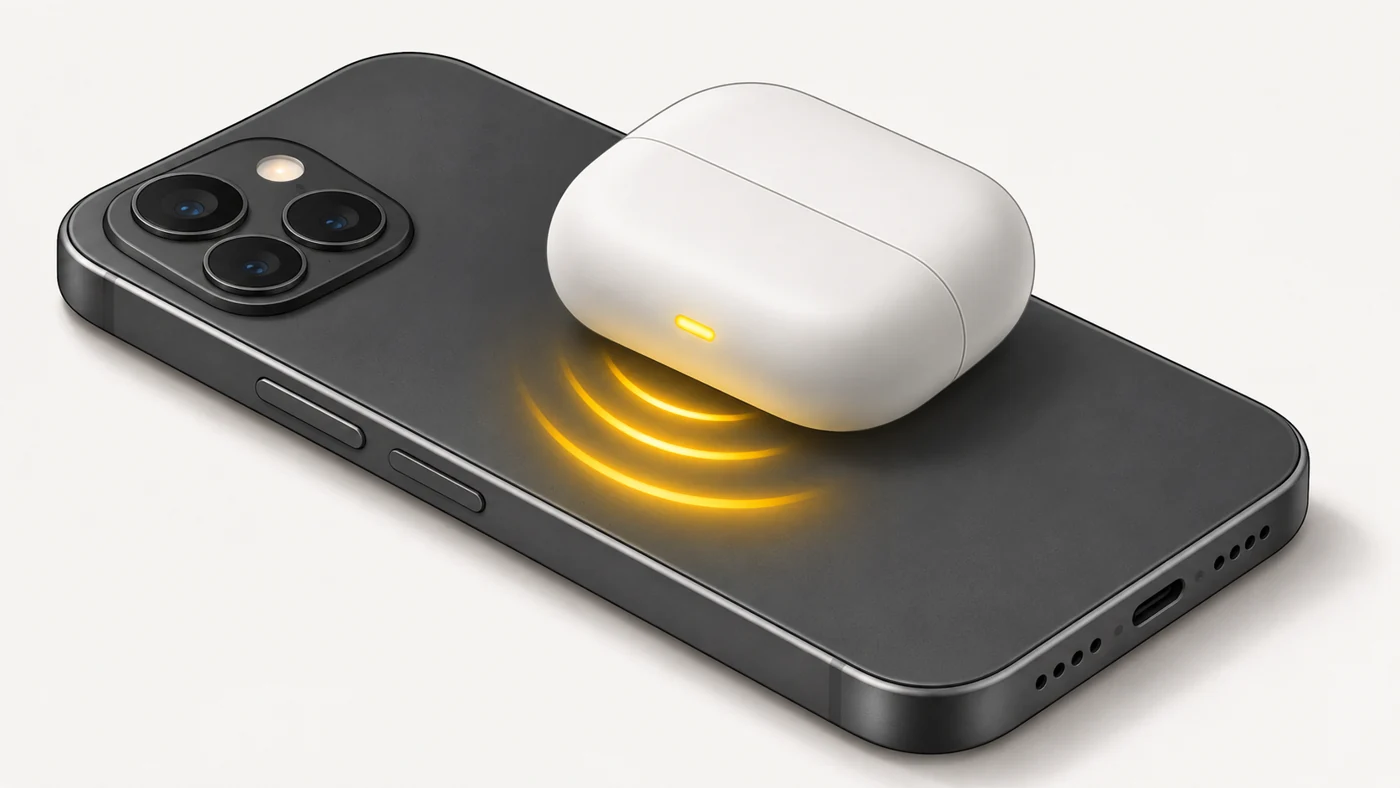
Reverse charging is a feature that lets a smartphone or tablet charge other devices: wirelessly (by placing earbuds on its back) or by wire through USB-C (like a power bank).
In plain words
Your phone is like a flask of hot tea. Usually you pour into it, but when a friend is cold, you can pour some out for them too. Only some of the tea spills on the way, especially when "pouring" wirelessly. So it is an emergency feature, not a replacement for a power bank.
How it works
- Wireless: the phone's coil works as a transmitter instead of a receiver.
- You place earbuds or a watch on the back of the phone.
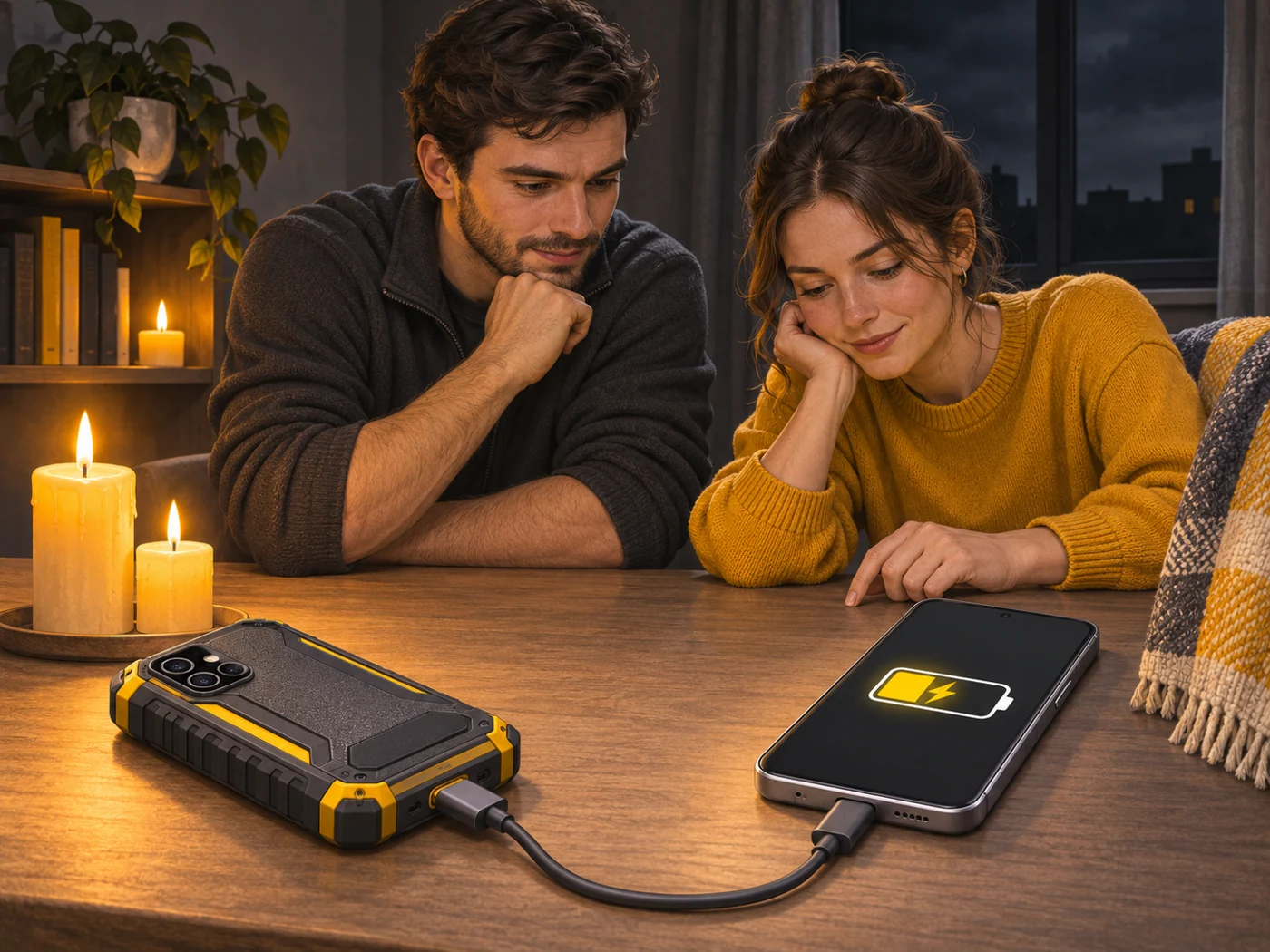
- Wired: the phone supplies power to another device through USB-C using the USB PD protocol.
- The power is usually low: 2-10 W wirelessly, a little more by cable.
- The wireless method loses a noticeable share of energy as heat.
Where you'll see it
In flagships from Samsung (PowerShare), Google Pixel (Battery Share), Xiaomi, Huawei and others. Wired reverse charging is available on many Android phones and USB-C iPhones, and on rugged phones with big batteries that are marketed as "phone-power banks".
Does it matter when buying
As a backup, it is handy: topping up earbuds or a watch on the go. But I would not use wireless reverse charging regularly: efficiency is low and the phone heats up. For rugged phones with 10,000 mAh batteries or more, wired reverse charging is a real advantage during power cuts.
Myths
- Myth: You can charge one phone from another without losses. Reality: Wirelessly a noticeable share of energy is lost; by cable less, but there are still losses.
- Myth: Reverse charging damages the battery. Reality: Only heat does; occasional use is fine.
FAQ
How do I turn on reverse charging?
Usually in quick settings: "PowerShare", "Battery Share" or "Reverse wireless charging".
Can I charge an iPhone from an Android phone this way?
Wirelessly, if the iPhone supports Qi; by wire, with a USB-C cable.
How powerful is reverse charging?
Mostly low - a few watts.
Related terms
Qi2 and magnetic charging, mAh and Wh, USB Power Delivery (PD)