
USB Power Delivery: how fast charging over USB-C works
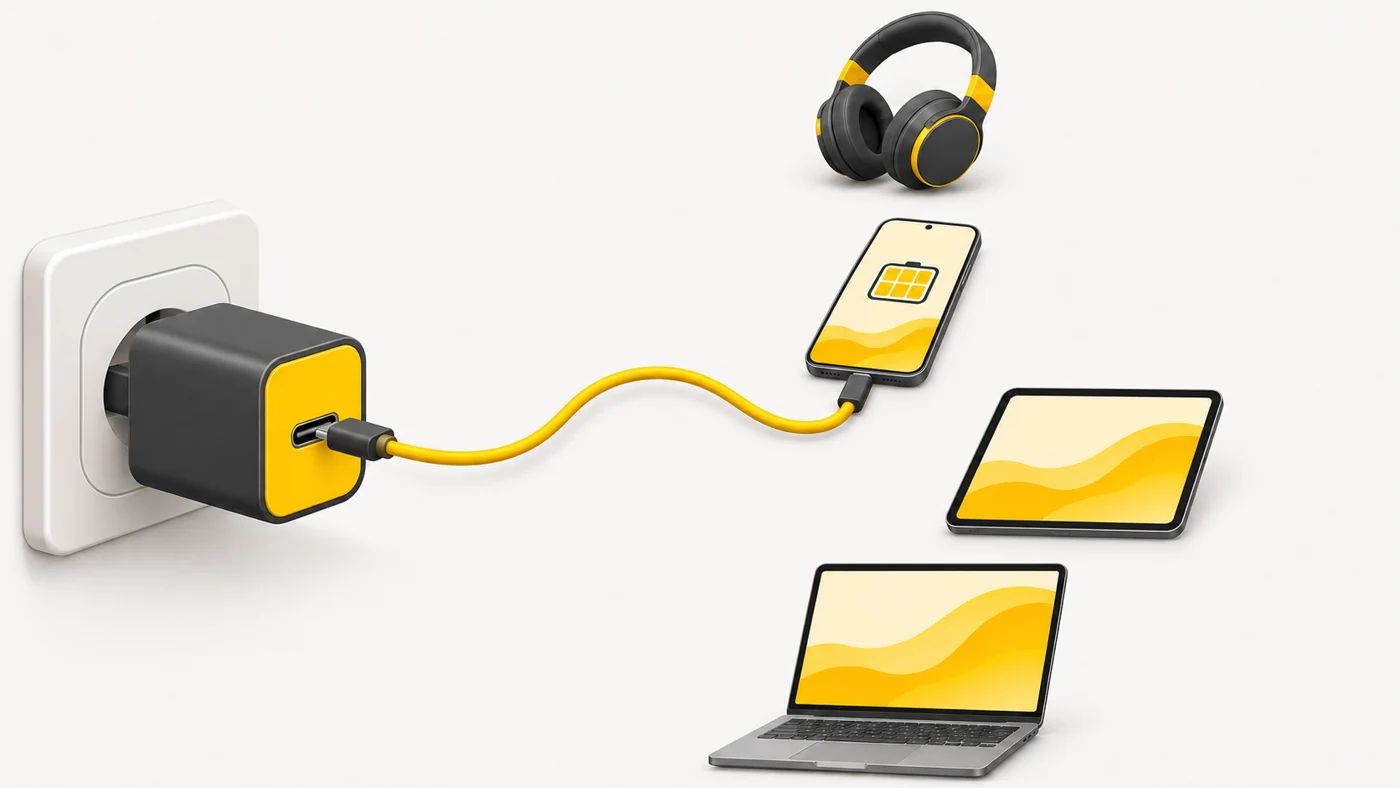
USB Power Delivery (USB PD) is a universal fast-charging standard over USB-C. The charger and the gadget "negotiate" voltage and current, so a single charger can safely charge earbuds, a smartphone and a laptop.
In plain words
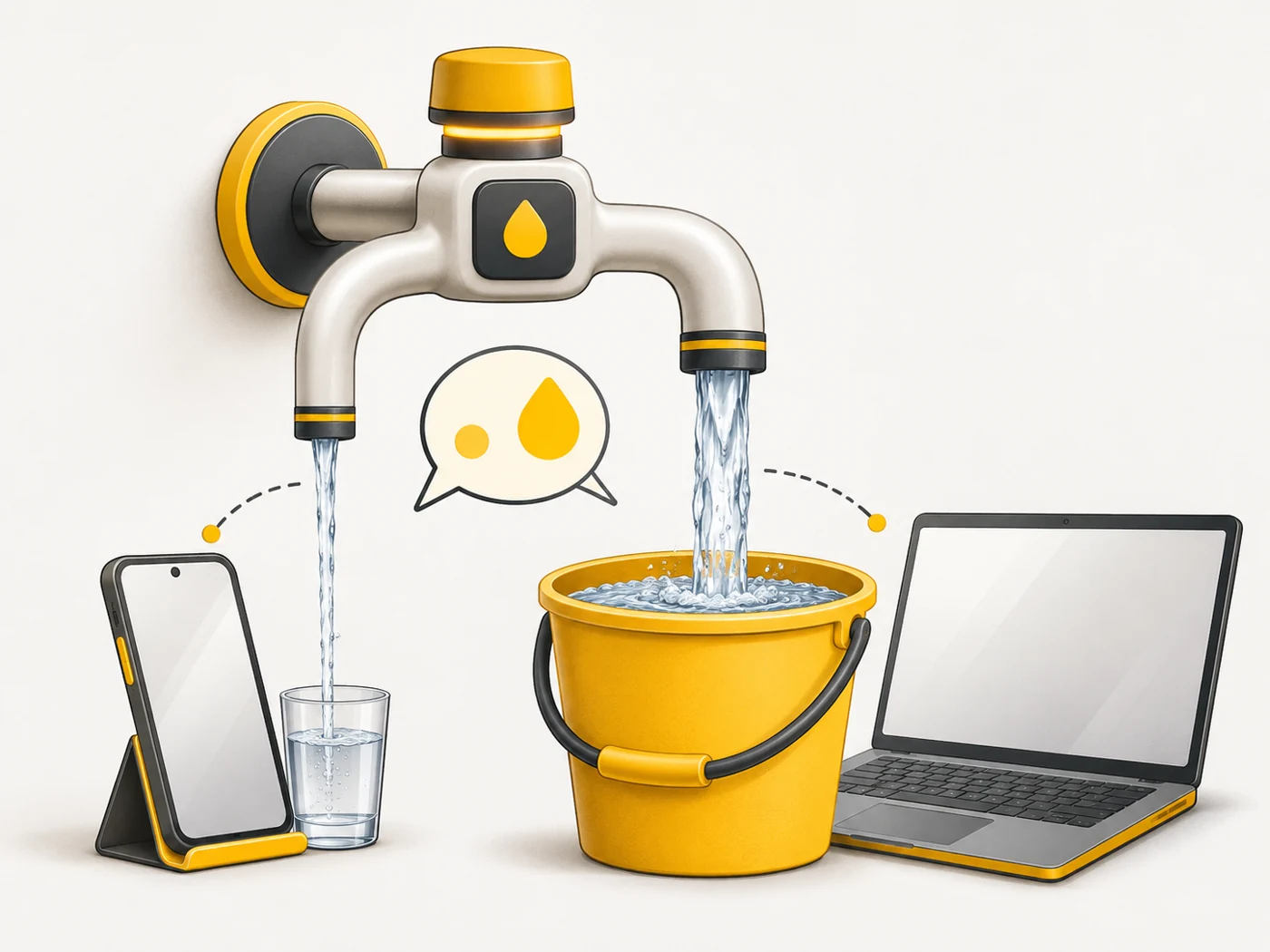
A regular charger is like a tap with one water pressure. USB PD is like a smart tap that first asks: "How much do you need - a glass or a bucket?" It gives a phone one amount of power and a laptop another, and nobody gets "too much". If a device does not answer, the tap gives a minimal safe flow.
How it works
- You connect a device to a PD charger with a USB-C cable.
- The charger reports which voltage and power modes it supports.
- The device picks the best mode for itself.
- The charger switches - for example, from 5 to 9, 15 or 20 V.
- During charging the mode can change depending on battery level and temperature.
Where you'll see it
USB PD is supported by iPhones, iPads, most Android phones and tablets, USB-C laptops, the Nintendo Switch, power banks and even some routers and monitors. Chargers are labelled "PD" or "USB-C PD 65W". In our comparisons it shows up in the charging descriptions.
Does it matter when buying
Yes. I recommend owning one good 65-100 W GaN charger with USB PD - it will charge everything from a phone to a laptop. But remember: some phones have their own proprietary super-fast charging and charge more slowly over PD than with their "own" charger.
Myths
- Myth: A powerful PD charger will "fry" a phone. Reality: No, the device chooses a safe power level itself.
- Myth: Any USB-C cable can handle 100 W. Reality: Above 60 W you need a cable with an electronic marker (e-marker).
FAQ
What are PD 3.1 and 240 W?
A newer version of the standard for powerful laptops - up to 48 V and 240 W.
Is PD compatible with Quick Charge?
Many chargers support both, but they are different protocols.
Can I charge a laptop with a phone charger?
Yes, if both support PD - but slowly if the power is low.