
PPS: why Samsung phones only charge at 45 W with certain chargers
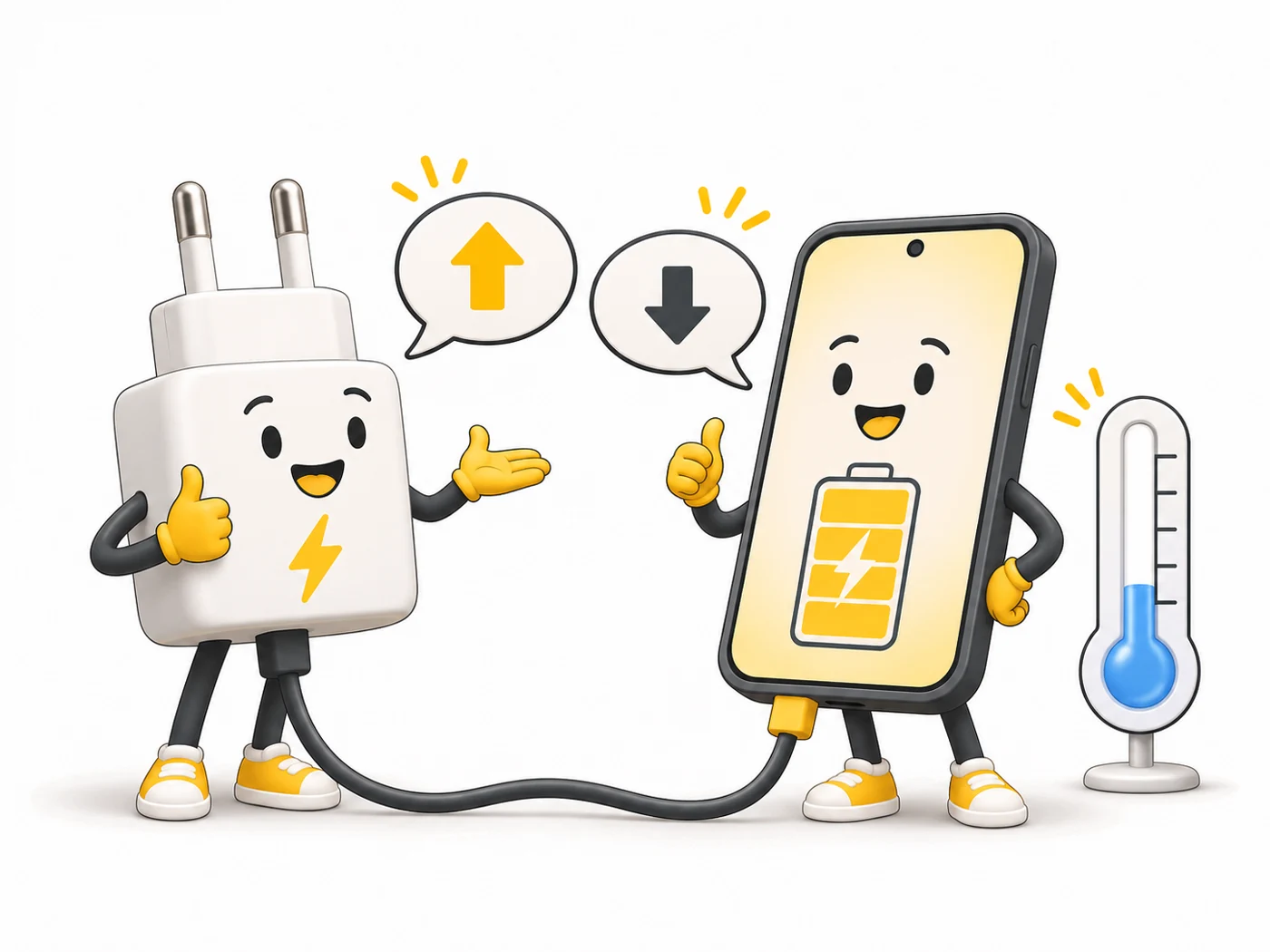
PPS (Programmable Power Supply) is a mode of the USB Power Delivery standard in which the charger can change voltage and current smoothly, in small steps, at the phone's request. This reduces heat and allows safe high-power charging.
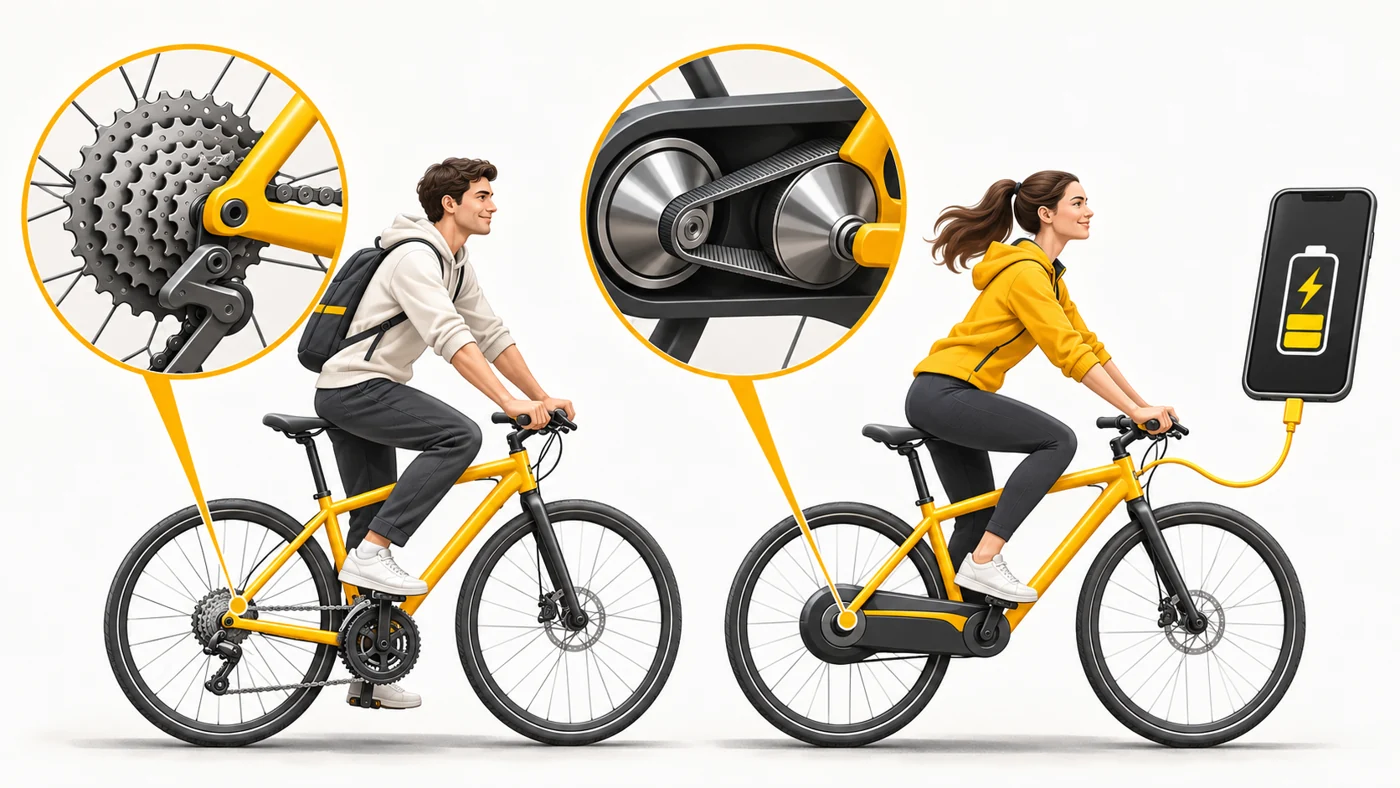
In plain words
Regular PD charging is like a bike with a few gears: 5, 9, 15, 20 V. PPS is like a continuously variable transmission: the phone can ask for 8.4 V, then 8.6, then 8.9 - exactly what the battery needs at that moment. Less wasted energy turns into heat inside the phone.
How it works
- The phone and charger connect over USB-C with PD support.
- The phone learns that the charger supports PPS.
- It requests a precise voltage and current, in steps of tens of millivolts.
- The charger constantly adjusts to the battery's state.
- Fewer conversions inside the phone mean less heat and faster charging.
Where you'll see it
PPS is needed for fast charging on Samsung phones (25 W and 45 W "Super Fast Charging"), Google Pixel and others. Chargers are marked "PPS" or "PD 3.0 PPS". PPS support is often listed in the specs of power banks and GaN chargers.
Does it matter when buying
Yes, if you have a Samsung or Pixel: without PPS the phone will charge, but more slowly. When buying a charger or power bank, look for PPS and the voltage range in the specs (for example, 3.3-21 V). You also need a cable rated for the current - for 45 W that means 5 A.
Myths
- Myth: Any PD charger gives maximum speed. Reality: Some phones specifically require PPS.
- Myth: PPS is a Samsung technology. Reality: It is part of the open USB PD standard.
FAQ
How do I know if a charger supports PPS?
Look for "PPS" on the charger or in its specs.
Do I need a special cable?
For 45 W, yes - a 5 A USB-C cable with an e-marker.
Does PPS work with iPhone?
iPhone uses regular PD; it does not need PPS, but PPS does no harm.
Related terms
USB Power Delivery (PD), GaN charger, USB-C, USB4 and Thunderbolt, Charge cycles and battery wear