
Servo motor: a motor that knows where it stopped
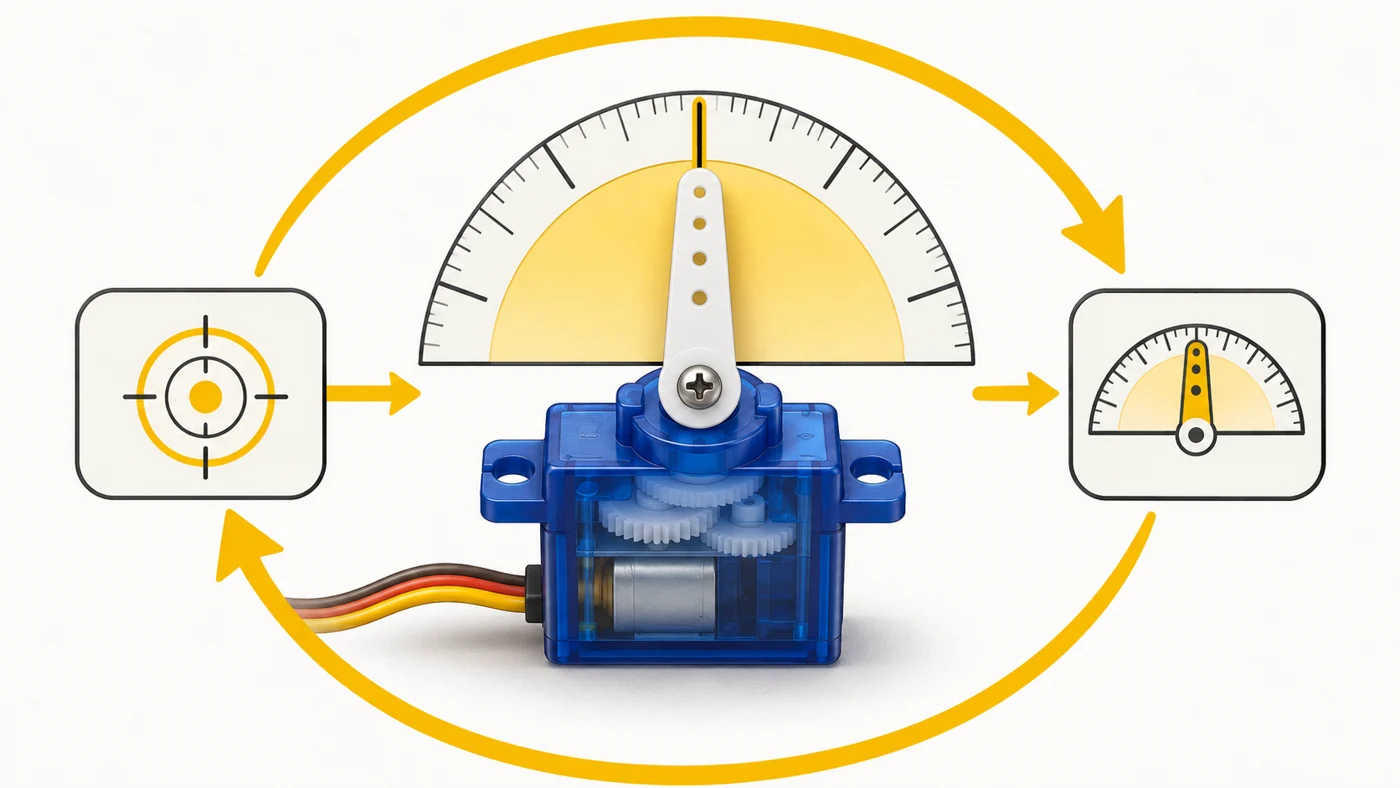
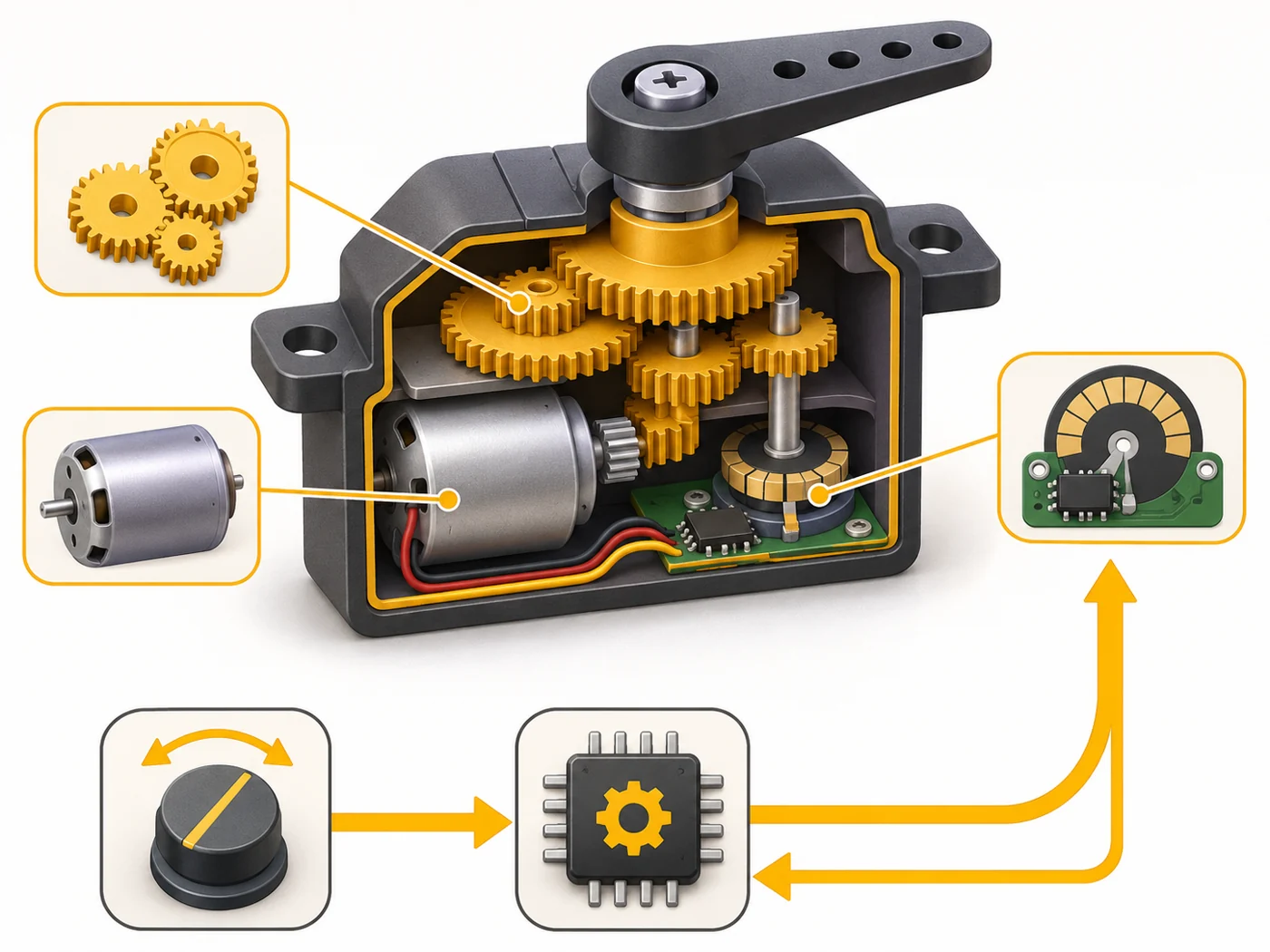
A servo motor (servo) is a motor combined with a gearbox, a position sensor and a control circuit that turns exactly to a set angle or holds a set speed and force.
In plain words
A regular motor is like a kid on a swing who got a push: it keeps going while there is energy, and nobody knows where it will stop. A servo is like a gymnast: you say "turn 90 degrees" and it lands exactly on 90 - and if you push it, it returns to its place by itself.
How it works
- The controller sends the servo a command: the desired angle or position.
- The motor starts turning, and the gearbox increases the force.
- A position sensor (a potentiometer or encoder) constantly reports the actual angle.
- The control circuit compares the actual and desired position and corrects the movement.
- When the angles match, the servo holds its position against outside forces.
Where you'll see it
In educational robots and Arduino kits (small servos like the SG90), radio-controlled models (steering, flaps), camera gimbals, industrial robots and machine tools (powerful servo motors) and the joints of humanoids.
Does it matter when buying
If you get a robotics kit, servos will be among the first parts you meet. Cheap plastic ones are fine for learning; for serious projects, choose models with metal gears - they are stronger and more precise.
Myths
- Myth: A servo can spin endlessly. Reality: Classic hobby servos turn within a range, usually up to 180°. There are separate models for continuous rotation.
- Myth: Any motor with a sensor is a servo. Reality: A servo is specifically a system with feedback control, not just a motor plus a sensor.
FAQ
How is a servo controlled?
Mostly with a PWM signal: the pulse length sets the angle.
What is servo torque?
The force with which it can turn a load - given in kg·cm.
Why does a servo buzz when standing still?
It keeps correcting its position to hold the load.