
UWB: how a phone finds things to within centimetres
UWB (ultra-wideband) is a short-range radio technology that measures the distance and direction between devices very precisely - down to a few centimetres.
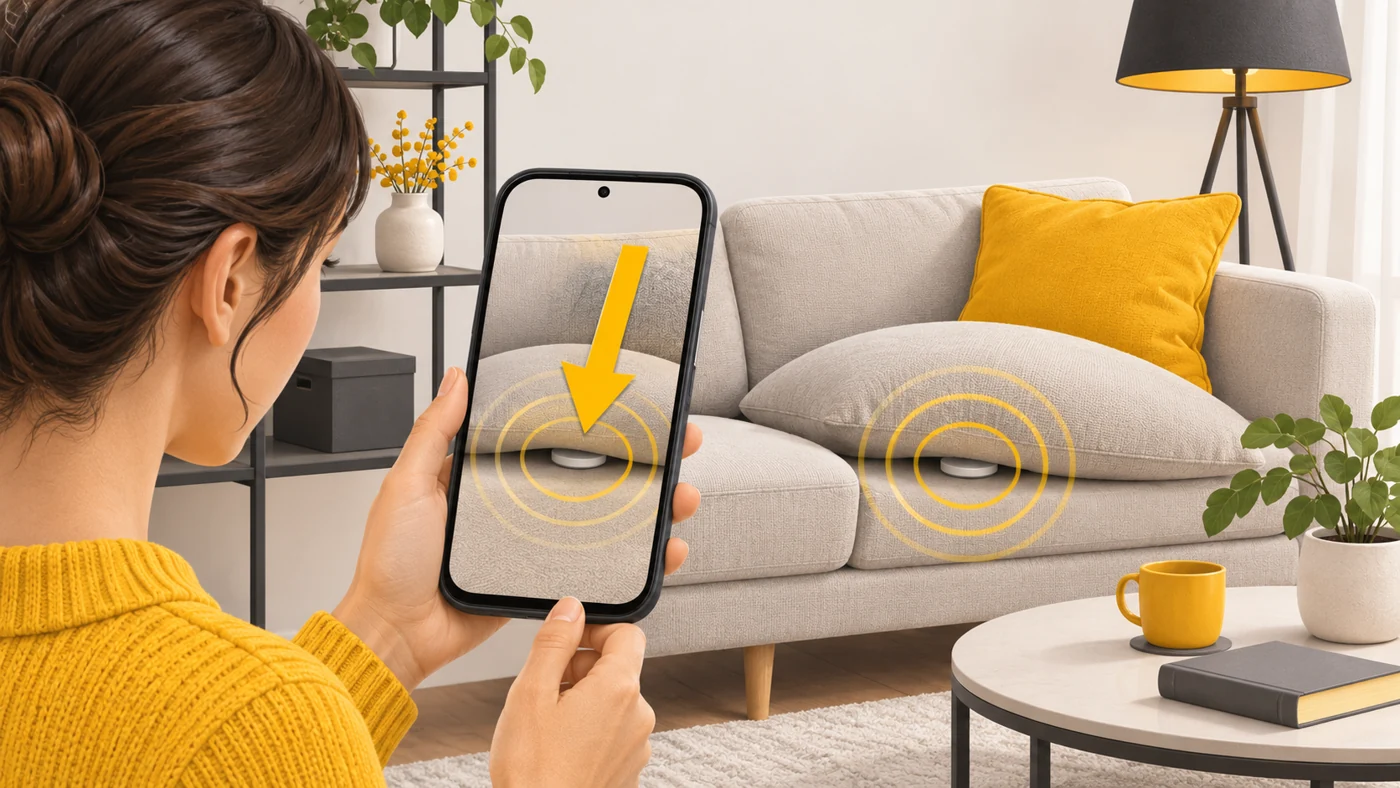
In plain words
Bluetooth says: "Your keys are somewhere in this room." UWB says: "Your keys are 1.4 metres to the left, under the cushion." It works like a very precise tape measure with a compass: it sends ultra-short radio pulses and times how long they take to arrive. That is why your phone can show an arrow pointing straight at a lost item.
How it works
- UWB transmitters send very short pulses across a wide frequency band.
- The devices measure the signal's time of flight between them.
- From the time of flight, distance is calculated to within centimetres.
- Multiple antennas also make it possible to work out direction.
- Power use is low, and the range is up to a few dozen metres.
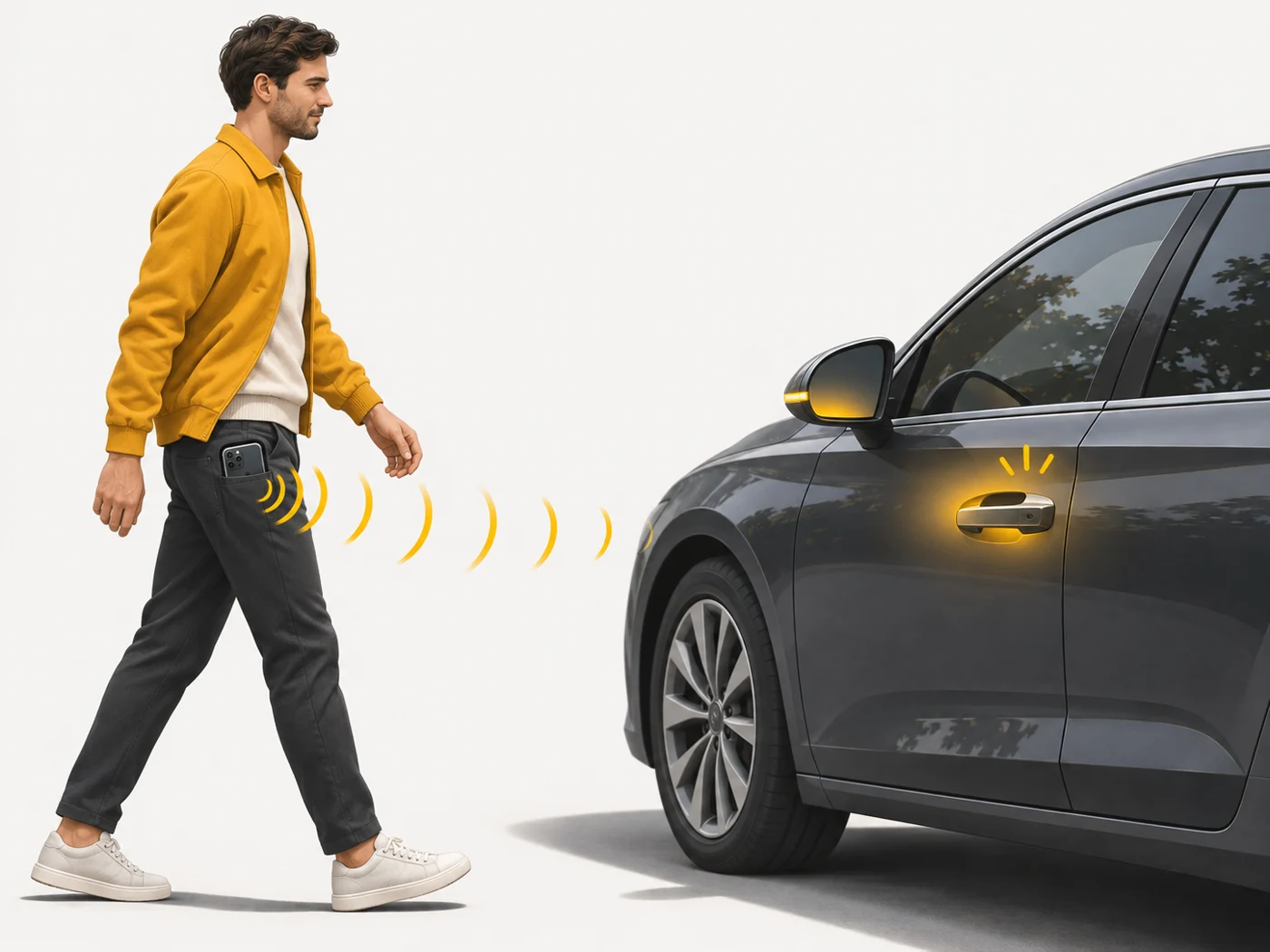
Where you'll see it
UWB is in iPhones (from the 11 series), Apple Watch, Samsung Galaxy flagships (Plus and Ultra) and Pixel Pro, AirTag and Galaxy SmartTag2 trackers, digital car keys and some smart locks.
Does it matter when buying
If you use item trackers, yes - UWB gives precise finding with an on-screen arrow, not just "somewhere nearby". It is also useful for digital car keys. For other uses, UWB is rarely decisive yet.
Myths
- Myth: UWB replaces Wi-Fi. Reality: No, it is not for internet; it is for precise distance measurement.
- Myth: Any tracker gives precise finding. Reality: Precise arrow-guided finding only works with UWB trackers and UWB phones.
FAQ
How do I know if my phone has UWB?
Look for UWB or Ultra Wideband in the specs.
Is UWB dangerous?
No, the power is very low - lower than Wi-Fi.
Does UWB work through walls?
Partly, but accuracy drops.
Related terms
Item tracker (AirTag, SmartTag), Bluetooth LE Audio and Auracast, NFC