
NFC on phones and watches: how contactless payment works
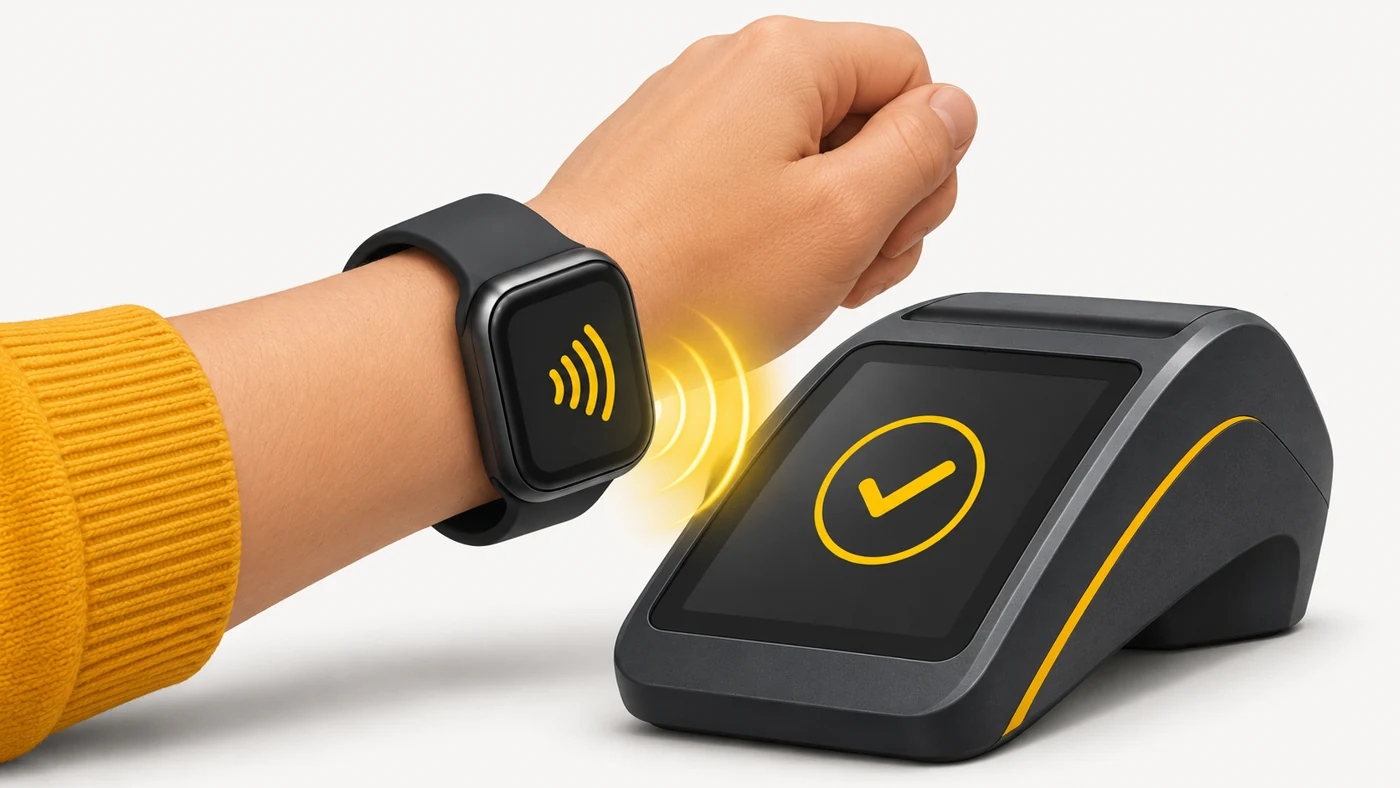
NFC (near-field communication) is a technology for wireless data exchange over a very short distance - a few centimetres. It is used for contactless payments (Google Pay, Apple Pay), transport, keys, tags and quick device pairing.
In plain words
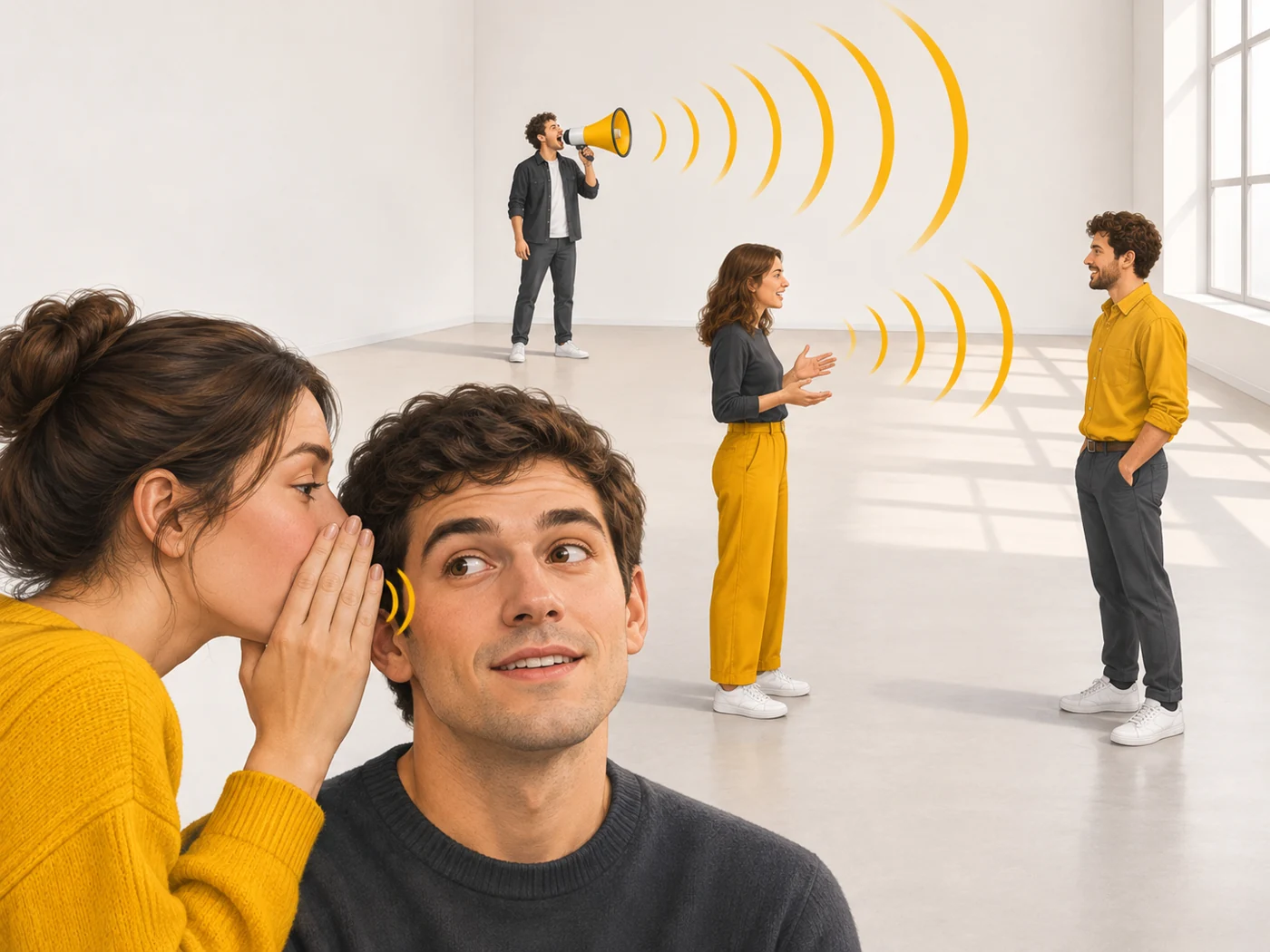
Bluetooth is like talking across a room; Wi-Fi is like a loudspeaker for the whole house. NFC is like whispering in someone's ear: it only works up close. That is exactly why it suits payments: to "overhear" your payment, a scammer would have to press up almost against your phone at the moment you pay.
How it works
- The phone or watch has a small NFC antenna.
- When you hold it to a terminal, a weak magnetic field forms between them.
- The devices exchange data in a fraction of a second.
- For payments, a one-time secure token is sent instead of your card number.
- Before paying, the phone usually requires unlocking or confirmation.
Where you'll see it
NFC is in most mid-range and higher phones, in watches (Garmin Pay, Apple Pay, Google Wallet, Huawei and Xiaomi with bank support) and in some fitness bands. Our watch and phone comparisons have an NFC row.
Does it matter when buying
Yes. If you pay with your phone or watch, NFC is essential. For a watch, check not only NFC but also whether the payment service works with your bank. On a phone, NFC is also handy for transport and quickly pairing earbuds.
Myths
- Myth: Someone can steal money via NFC just by walking past. Reality: The range is tiny, and payments require unlocking and one-time tokens.
- Myth: NFC drains the battery quickly. Reality: It uses practically no power when not in use.
FAQ
Can I pay with my watch without my phone nearby?
Yes, if the watch supports payments and your card is added to its wallet.
Does NFC work through a case?
Usually yes, if the case is not metal or very thick.
What are NFC tags?
Small stickers you can program with an action - for example, turning on Wi-Fi.
Related terms
Bluetooth, Passkeys, UWB (ultra-wideband), Wear OS