
Phone form factor: from flip phones to folding screens
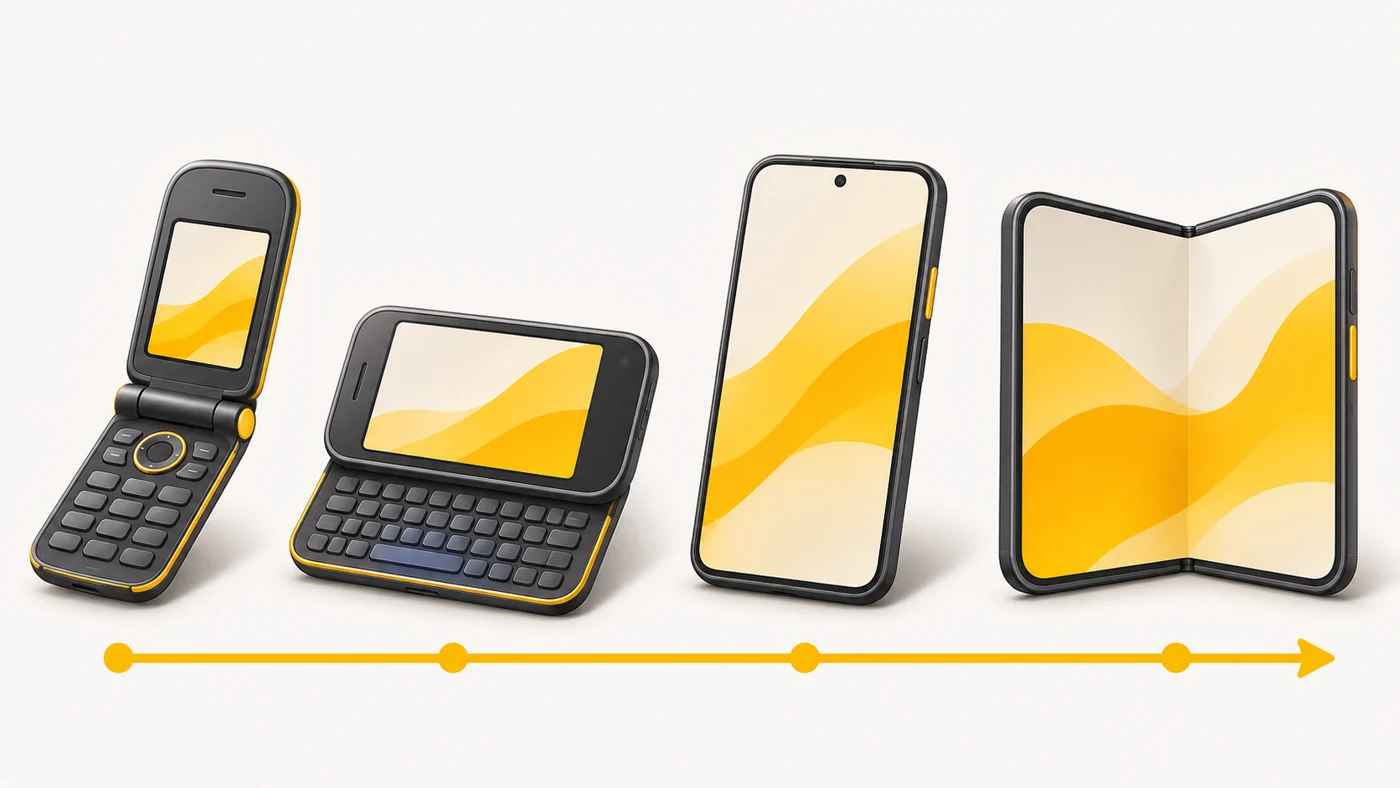
Form factor is the physical shape and design of a device: its size, how it opens, and where the screen and keyboard are. Classic phone form factors are the candybar, the flip phone and the slider; modern ones are the slab smartphone, folding "book" and "flip" phones and rugged phones.
In plain words
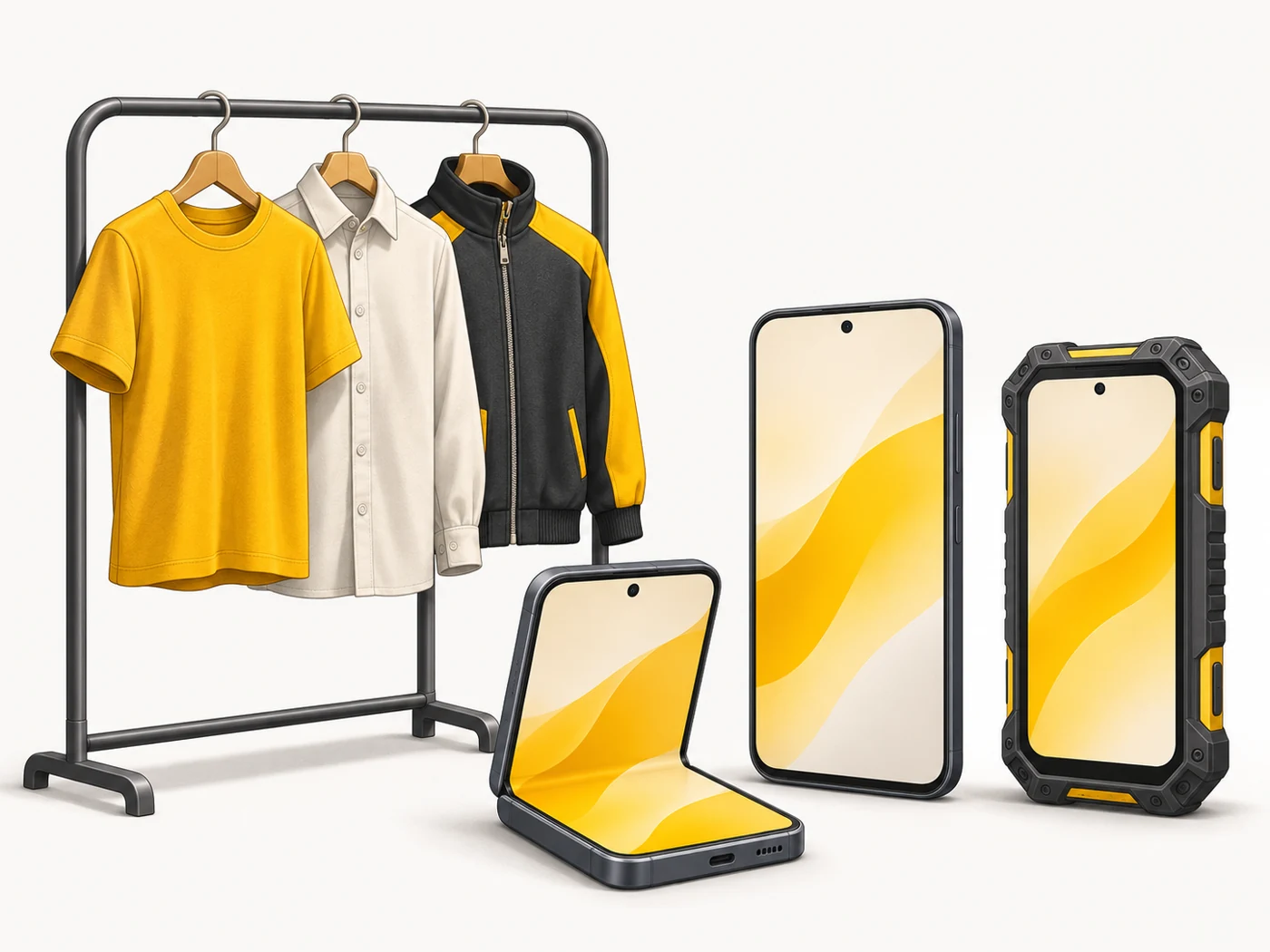
A form factor is like the cut of a garment: a T-shirt, a shirt, a zip-up jacket. The fabric (the technology) can be the same, but each is worn differently. Phones once came in many "cuts" - folding, with slide-out keyboards. Then they all became slab "T-shirts", and now folding is back in fashion.
How it works
- A slab (candybar) is a single solid body with the screen covering the front.
- A flip phone has two halves on a hinge.
- A slider has a part that slides out with a keyboard or camera.
- A foldable phone has a flexible screen that folds like a book or in half.
- A rugged phone has a reinforced body with raised edges and seals.
Where you'll see it
Catalogues list the body type: "slab", "flip", "foldable". Modern examples include the Galaxy Z Flip and Z Fold, Motorola razr and Honor Magic V, plus button flip phones for older people.
Does it matter when buying
Form factor affects everyday convenience: a compact flip fits a small pocket, a "book" gives you a tablet in your pocket, and a rugged phone survives a building site. Choose for your lifestyle, not just the specs.
Myths
- Myth: Flip phones are gone for good. Reality: They have come back as foldable smartphones and button phones.
- Myth: A foldable phone is just for show. Reality: For many people it is a genuinely practical format with a big screen.
FAQ
What is a slab phone?
A phone with a single solid body and no moving parts.
What are "book" and "flip" foldables?
A book opens into a tablet; a flip folds in half into a compact square.
Are there sliders today?
Hardly any - just a few enthusiast models.
Related terms
Foldable display, Smartphone, MIL-STD-810H, On-screen keyboard