
DRM: how films, music and games are protected from copying
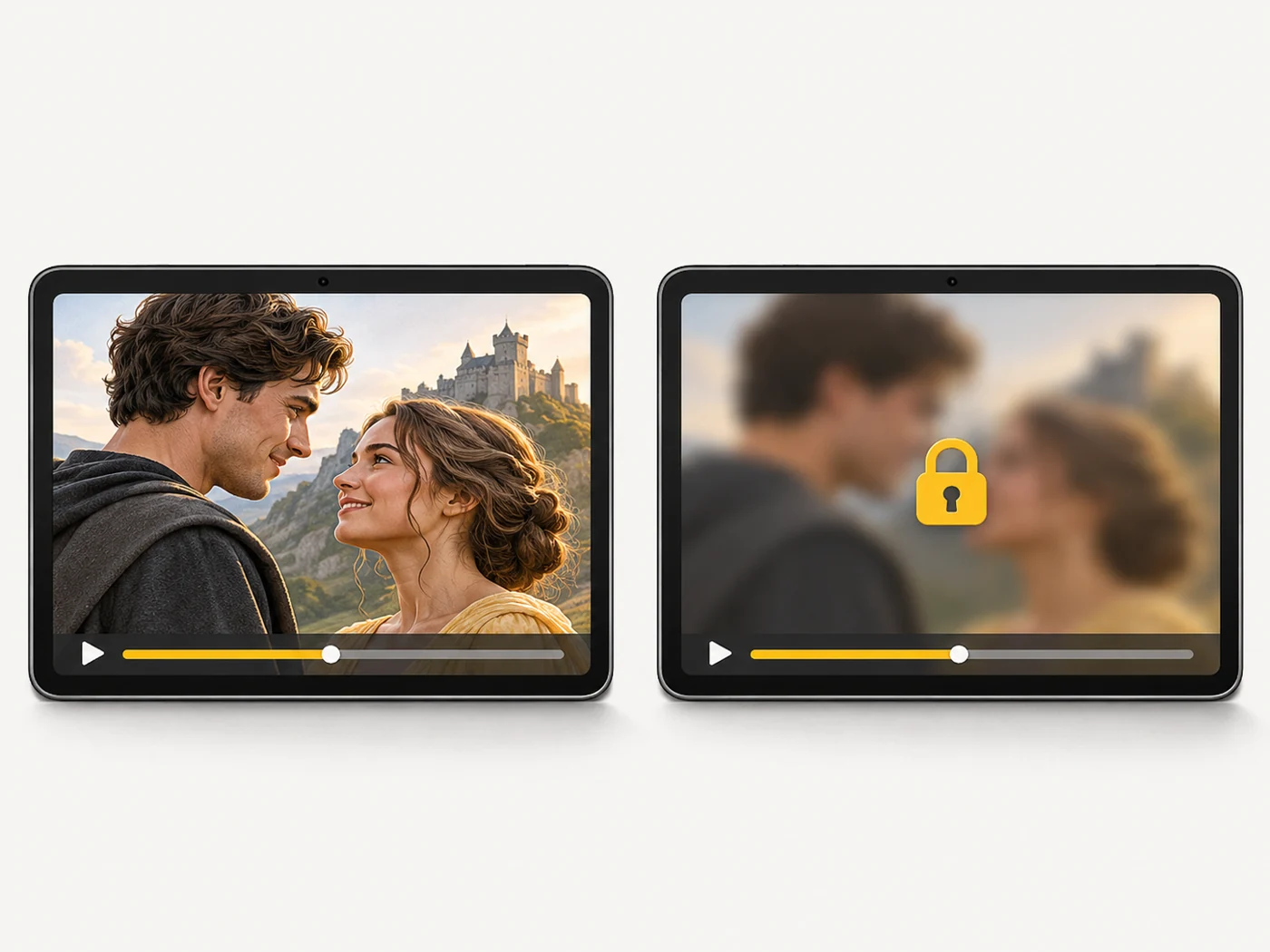
DRM (digital rights management) covers technologies that restrict copying and use of digital content: films, music, books and games. For example, streaming services check whether a device is secure enough to show video in high quality.

In plain words
DRM is like a cinema ticket with a hologram: you are let into the screening, but you cannot take the film home. If your "ticket" (the device's security level) is a cheaper one, you get worse seats - the film is shown in lower quality.
How it works
- Content is encrypted before it is sent.
- Decryption keys are issued only to verified devices and apps.
- On Android, Widevine is common: level L1 is hardware protection, L3 is software.
- With a weaker level, streaming services limit quality.
- An unlocked bootloader or root can lower the security level.
Where you'll see it
In streaming services (Netflix, YouTube Premium, Disney+, Prime Video), book and music stores and games. On Android you can check the Widevine level with the DRM Info app.
Does it matter when buying
If you watch series on a tablet or phone, check for Widevine L1 support: without it some services show video only in low resolution, even on a great screen. This is especially true of budget Chinese tablets.
Myths
- Myth: DRM is only a problem for pirates. Reality: It affects legal users too: quality, number of devices, offline downloads.
- Myth: Any Full HD tablet will show Netflix in Full HD. Reality: Often not, without Widevine L1 and certification.
FAQ
How do I check Widevine?
Install DRM Info from Google Play.
Why is Netflix low quality after rooting?
The security level drops to L3.
Do e-books have DRM?
Yes, some stores protect books from copying.
Related terms
Bootloader unlock and root, Tablet, HDR, HDR10+ and Dolby Vision