
Dual-band GPS (L1 + L5): why city tracks have become more accurate
Dual-band GPS (dual-frequency GNSS, L1 + L5) is a receiver that picks up navigation satellite signals on two frequencies at once. This noticeably reduces error, especially in cities with tall buildings, in canyons and in forests.
In plain words
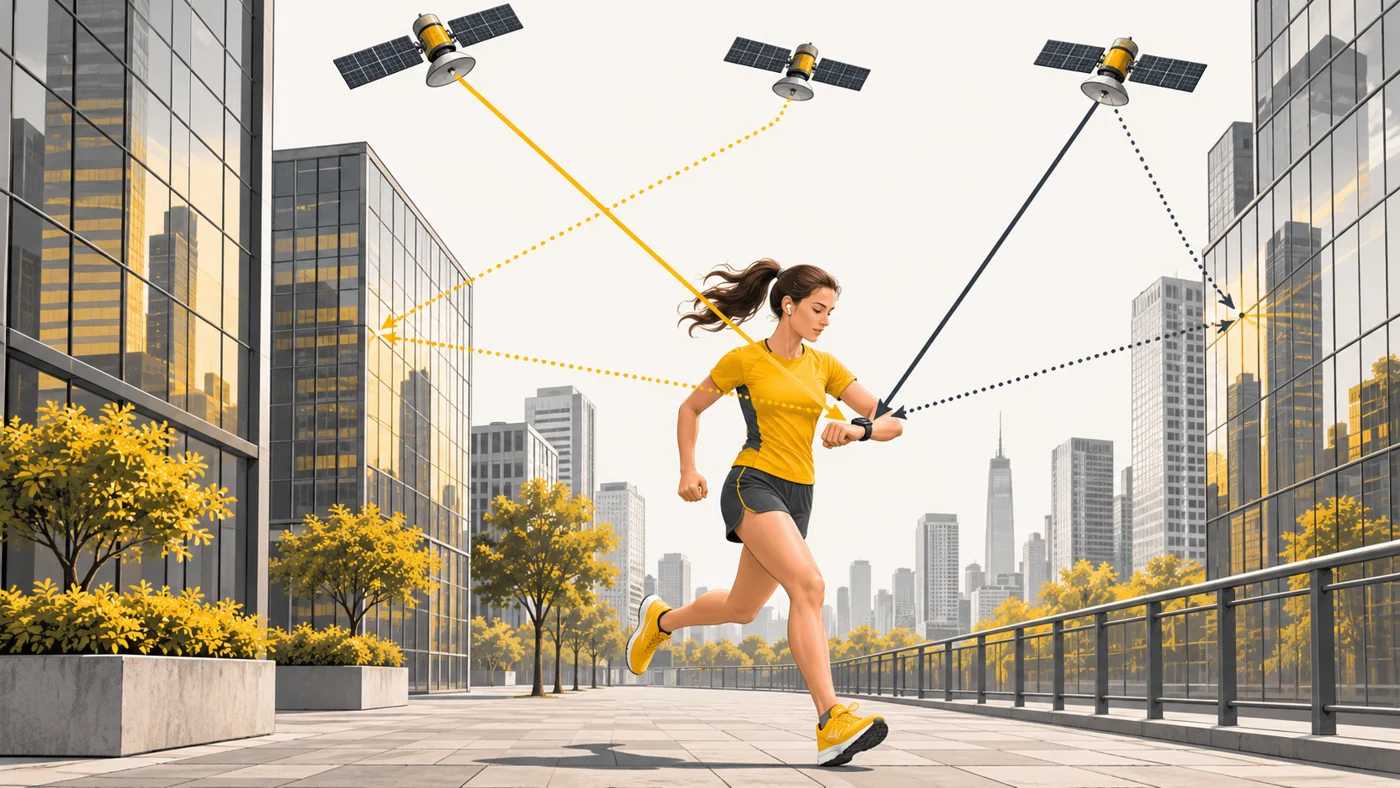
Imagine a friend calling you in a city where voices bounce off buildings: it is hard to tell where they are. Now imagine they call with their voice and a whistle at the same time - the two sounds bounce differently, and by comparing them you find them more precisely. L1 and L5 are that "voice and whistle" from each satellite.
How it works
- Navigation satellites transmit signals on several frequencies.
- A regular receiver only listens to L1.
- A dual-band one also receives L5 - a newer, more robust signal.
- By comparing the two frequencies, the receiver filters out signals reflected off buildings.
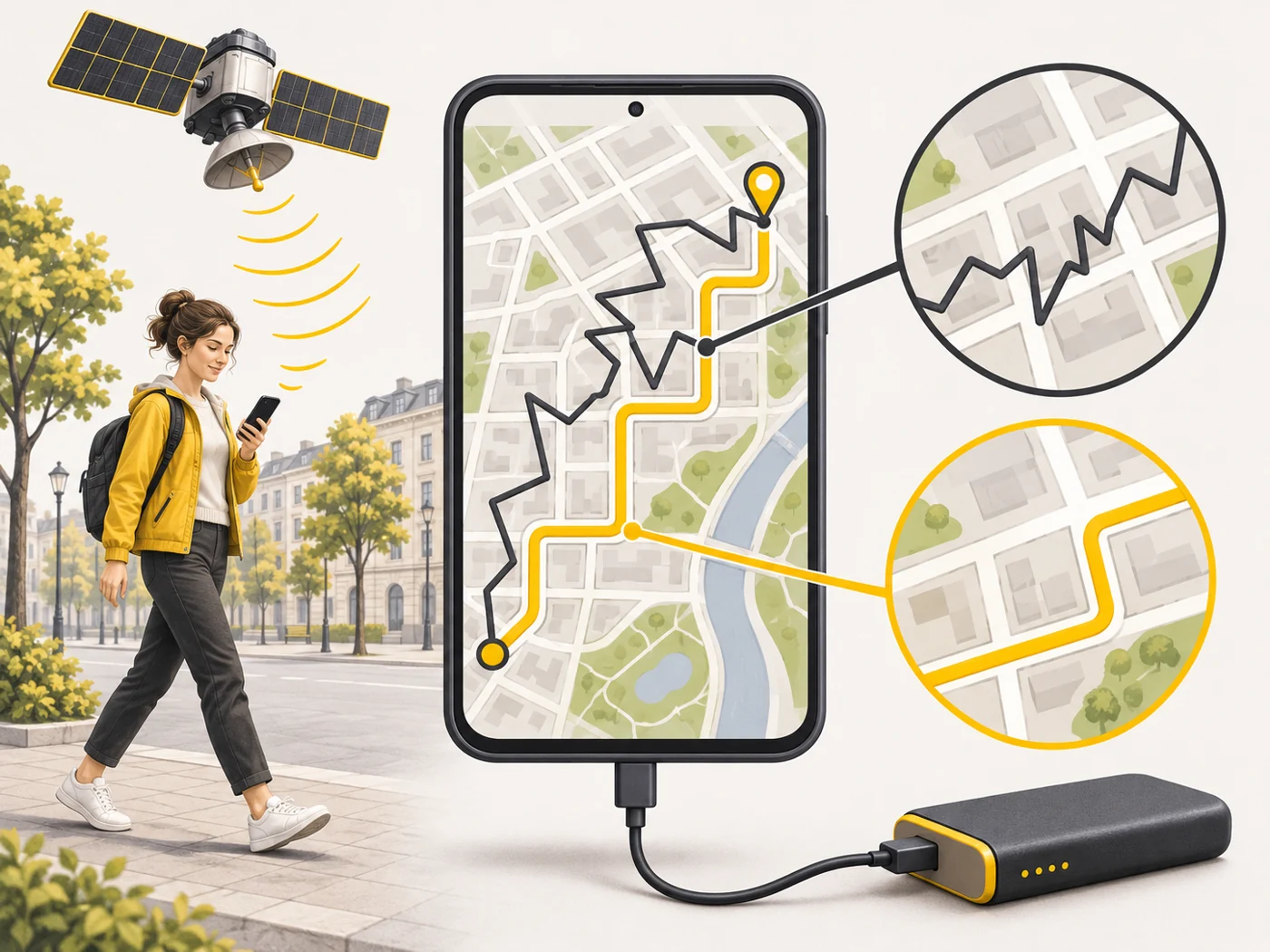
- It also corrects atmospheric errors better, so the position is more accurate.
Where you'll see it
In sports watches (Garmin, Huawei, Amazfit, Coros, Apple Watch Ultra) and in flagship and many mid-range phones. Specs say "L1 + L5", "dual-band GNSS" or "dual-frequency GPS". In our watch comparisons, the Navigation row.
Does it matter when buying
If you run or ride in a city with tall buildings or in the mountains, yes - your track jumps around less, and distance and pace are more accurate. For walks in the park and car navigation the difference is less noticeable. Remember: dual-band mode drains a watch slightly faster.
Myths
- Myth: Dual-band GPS works indoors. Reality: No, satellite signals still get through roofs and walls poorly.
- Myth: L5 is a separate system, like Galileo. Reality: L5 is a frequency used by several systems: GPS, Galileo and BeiDou.
FAQ
Does L1+L5 affect battery life?
Yes, a little; on watches it is often turned on only for workouts.
Do smartphones have dual-band GPS?
Yes, many flagships and mid-range models do.
Do I need it for car navigation?
It helps in cities with tall buildings, but regular GPS is usually enough.
Related terms
GNSS (GPS, Galileo, BeiDou), Sensor fusion, Solar charging watch