
E Ink: how a paper-like screen works
E Ink (electronic ink, electronic paper) is a screen technology in which the image is formed by tiny pigment particles that move under an electric field. The screen does not emit light; it reflects it, like ordinary paper.

In plain words
Remember the magnetic drawing board from childhood: you move the magnet and a line appears that stays until you wipe it. E Ink is similar: ink particles move, form text and stay in place without power. Energy is only needed to "turn the page".
How it works
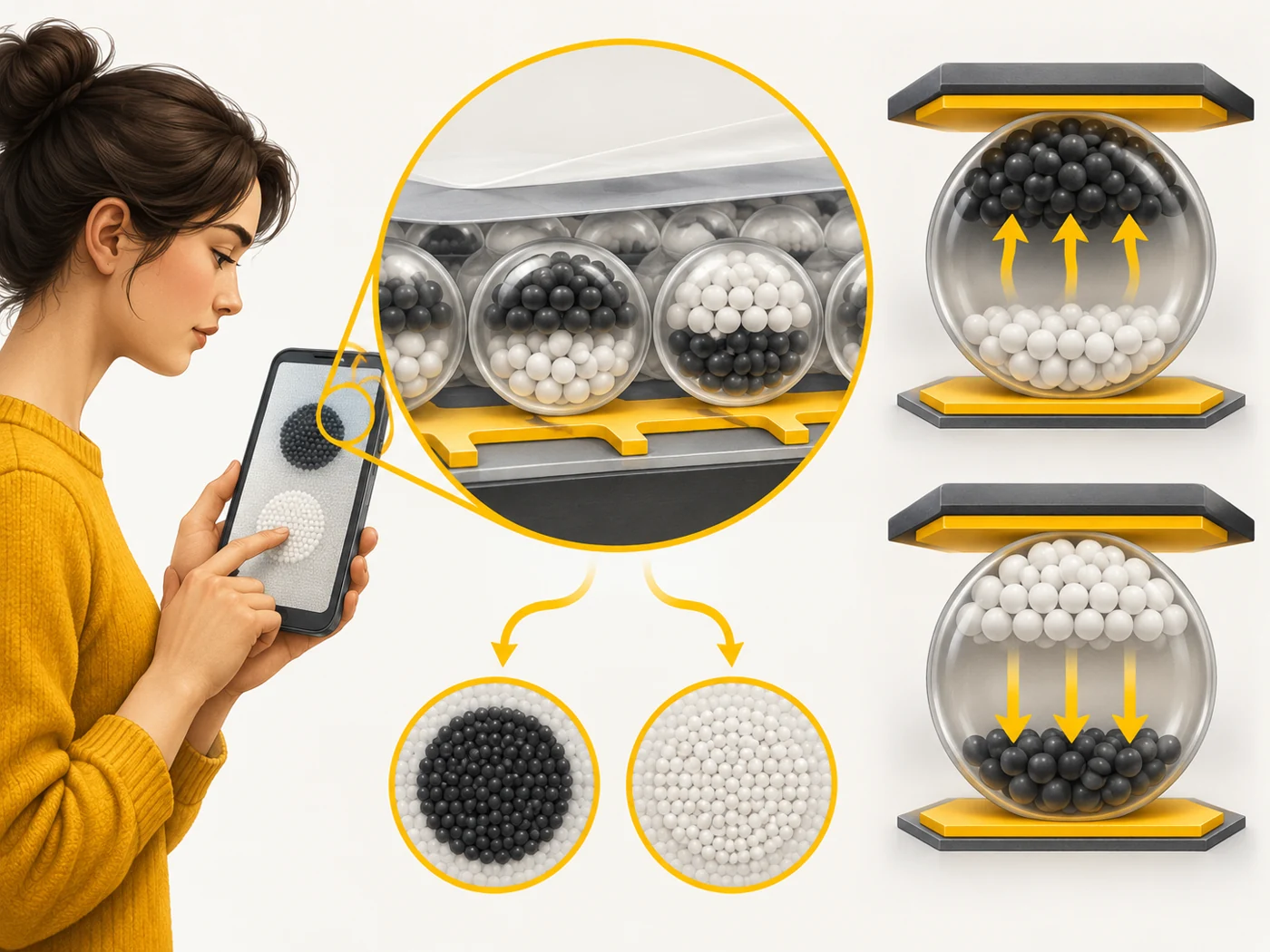
- The screen is made of millions of microcapsules or cells containing black and white particles.
- The particles carry different charges.
- An electric field moves the right particles to the top, turning a pixel black or white.
- After that, the image stays without power.
- Colour E Ink uses colour filters or coloured particles.
Where you'll see it
In e-readers (Kindle, PocketBook, Onyx Boox), note-taking e-paper tablets, shop price tags, some smartwatches and fitness bands, and phones with an extra second screen.
Does it matter when buying
If you read a lot, yes - E Ink is much easier on the eyes for long reading sessions and lasts weeks on a charge. Downsides: slow refresh (not for video or games) and modest colours. For reading in sunlight, E Ink is even better than any phone.
Myths
- Myth: You cannot read E Ink in the dark. Reality: Most modern e-readers have a front light with adjustable brightness and warmth.
- Myth: E Ink is just a black-and-white LCD. Reality: It is an entirely different technology: it does not emit light and keeps the image without power.
FAQ
Why does E Ink sometimes "flash"?
That is how it clears leftover images from the screen (ghosting).
Can I watch video on E Ink?
Technically sometimes, but the slow refresh makes it uncomfortable.
How long does an e-reader last on a charge?
Usually weeks, depending on the front light and how much you read.