
Screen brightness in nits: what 1000, 3000 and 4500 nits mean
A nit (cd/m²) is the unit of screen brightness. Peak brightness is the maximum a screen can reach on a small area or for a short time, for example in HDR video or in bright sunlight.

In plain words
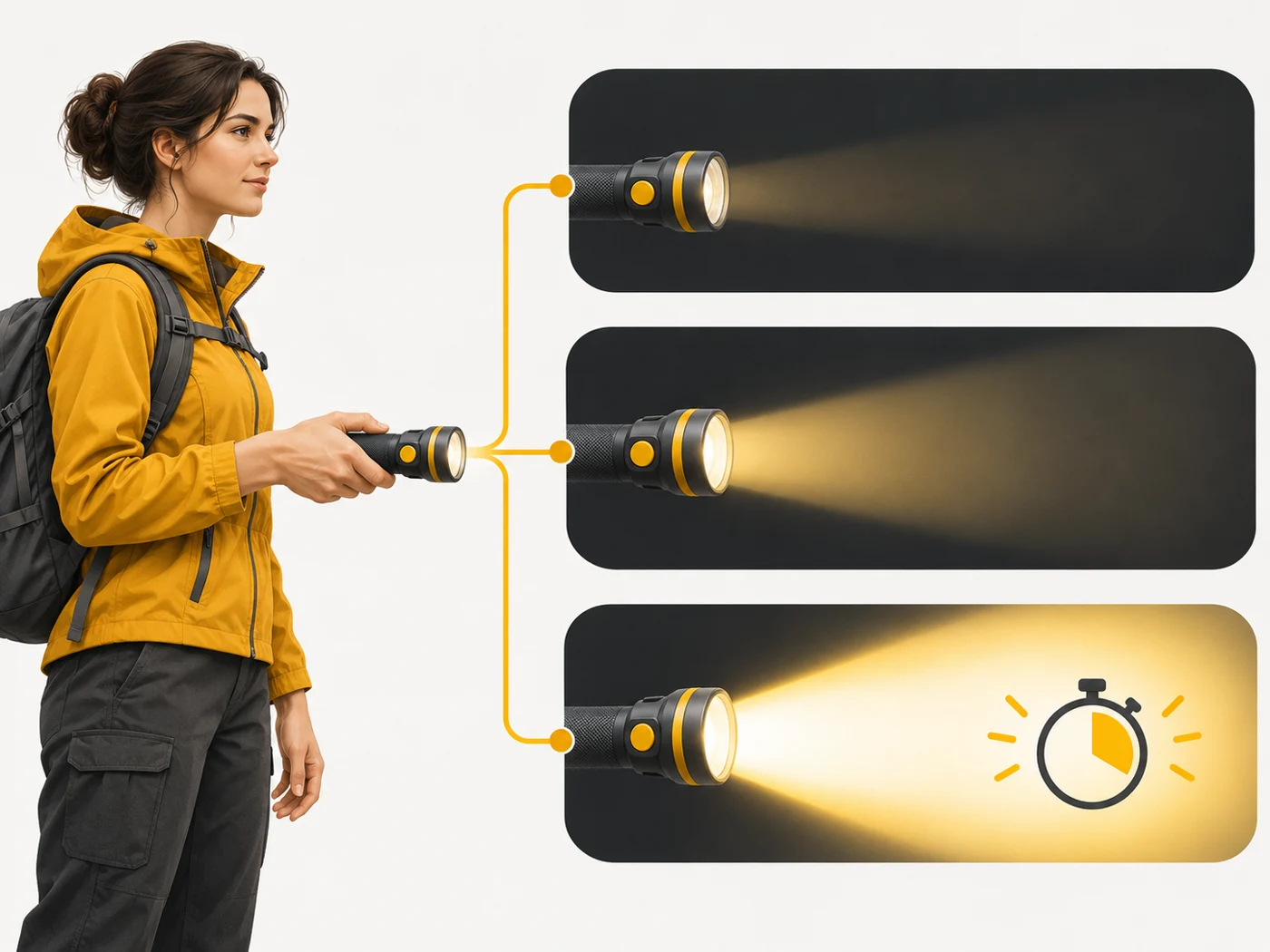
Imagine a torch with several modes: normal, bright and a "turbo" that lasts a few seconds. Peak brightness is the "turbo": very bright, but brief and not across the whole screen. What you see every day in sunlight is the "bright" mode, and that number is usually lower.
How it works
- Screen brightness is measured in nits - how much light a square metre emits.
- Manual brightness is usually capped at a few hundred nits.
- In sunlight, auto-brightness raises it to a "high brightness mode".
- Peak brightness is reached on small areas - for example, the sun in an HDR video.
- Manufacturers often advertise the peak, which the full screen cannot reach.
Where you'll see it
In the specs of smartphones, tablets, laptops and watches: "3000 nits peak brightness", "HBM 1600 nits", "600 nits typical". In our comparisons brightness appears in screen descriptions.
Does it matter when buying
Yes, if you use your phone outdoors a lot. For reading in sunlight, full-screen brightness in HBM matters (from about 1000 nits it is comfortable). A peak of 3000-4500 nits is mostly for HDR video. Compare like with like: peak with peak, HBM with HBM.
Myths
- Myth: Peak brightness is brightness in sunlight. Reality: The peak is usually reached only on a small area in HDR content.
- Myth: Brighter is always better. Reality: In the evening, an overly bright screen tires your eyes; the minimum brightness level matters too.
FAQ
How many nits do I need for sunlight?
Usually around 1000 nits full-screen with auto-brightness.
Why can I not set the maximum manually?
The highest modes only switch on automatically in sunlight, to avoid overheating the screen.
Does brightness affect the battery?
Yes, a bright screen is one of the biggest energy users.
Related terms
HDR, HDR10+ and Dolby Vision, Matte anti-glare (nano-texture), PWM flicker and DC dimming, Tandem OLED