
Tandem OLED: two layers of light in one screen
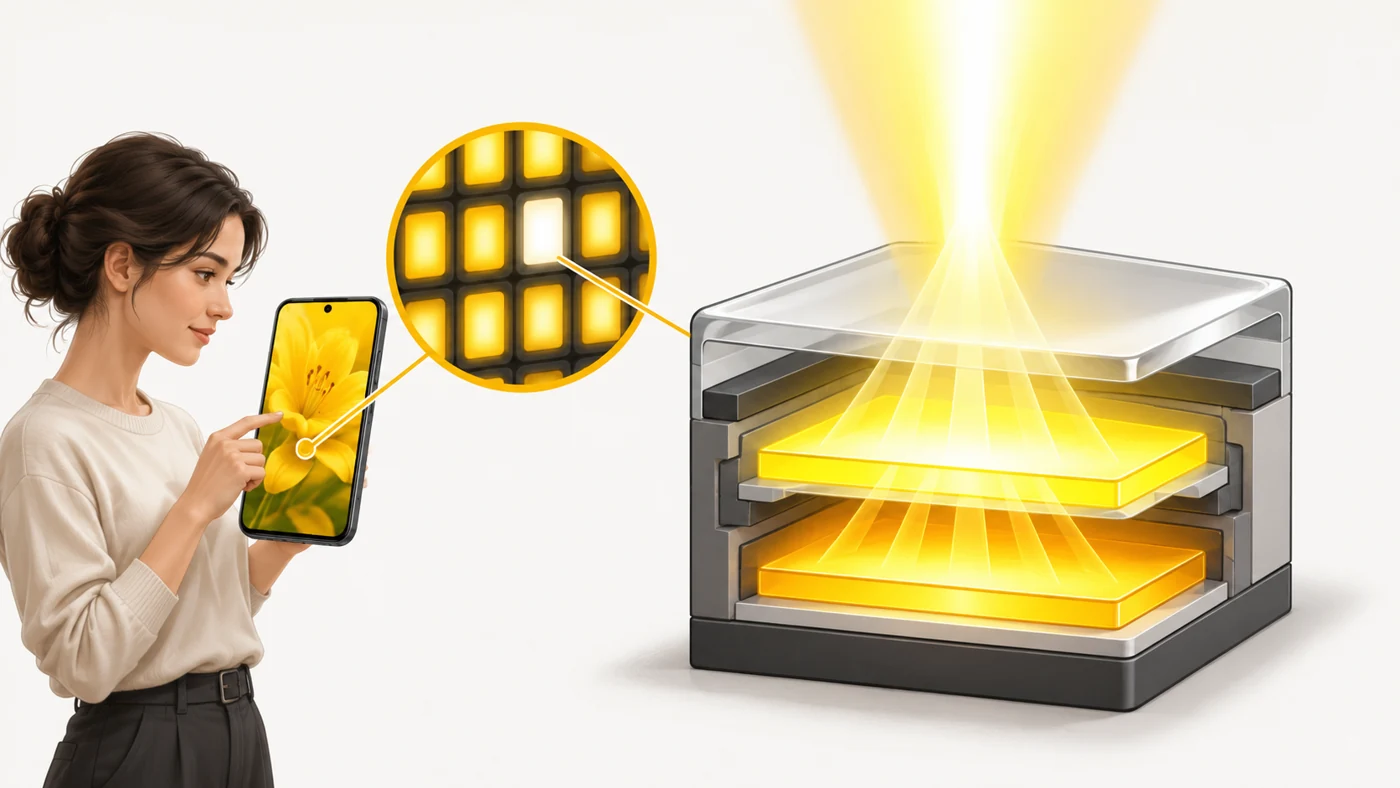
Tandem OLED is an OLED screen technology in which the light-emitting layers are stacked two on top of each other. This makes the screen brighter, more efficient and longer-lasting than regular OLED.
In plain words
Imagine one torch is not bright enough, so you crank it to maximum - it drains faster and heats up. Put two torches together and each can run at half power while giving the same light or more. Tandem OLED is those two "torches" in every pixel.
How it works
- In a regular OLED, each pixel has one layer of light-emitting organic material.
- In Tandem OLED there are two such layers, connected in series.
- To get the same brightness, each layer works under less strain.
- So the screen can be brighter and "burns in" more slowly.
- The technology is more complex and expensive to manufacture.

Where you'll see it
Tandem OLED is used in the iPad Pro, some premium laptops, car displays and some smartphones and monitors. In our tablet comparisons it appears in the iPad Pro screen description.
Does it matter when buying
If you draw, edit video or watch HDR, yes - Tandem OLED gives high brightness and deep blacks. For a regular user it is a nice premium bonus, but not a must-have.
Myths
- Myth: Tandem OLED is a completely different screen type. Reality: It is a type of OLED with a two-layer structure.
- Myth: Tandem OLED never burns in. Reality: It burns in much more slowly, but in theory it is still possible.
FAQ
How is Tandem OLED better than regular OLED?
Higher sustained brightness and a longer pixel lifespan.
Does it use more power?
No, at the same brightness it can even be more efficient.
Where else is Tandem OLED used?
In cars, where displays must last a long time and stay bright.
Related terms
OLED, Peak brightness (nits), HDR, HDR10+ and Dolby Vision, Mini-LED