
Mini-LED: thousands of tiny lights behind an LCD screen
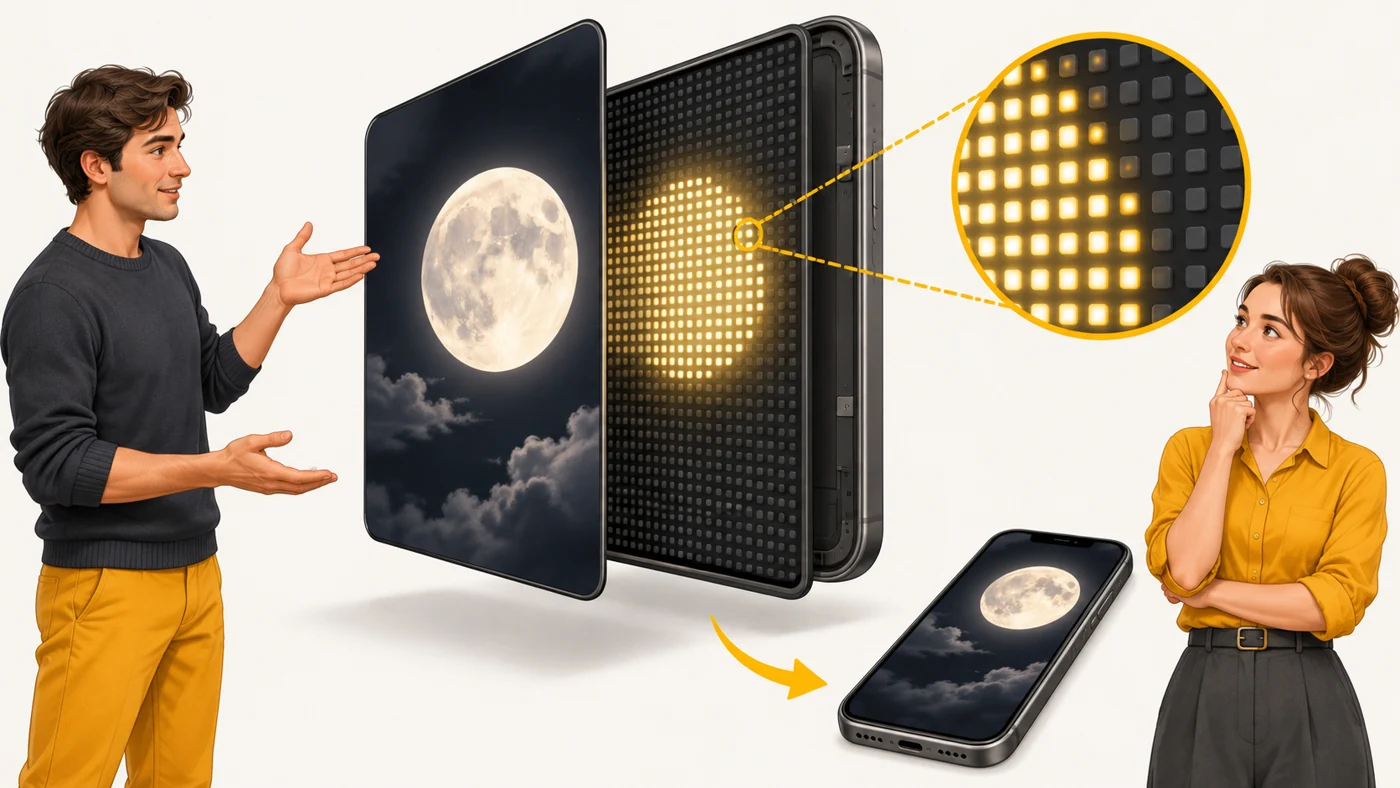
Mini-LED is an LCD backlighting technology that uses thousands of miniature LEDs grouped into zones instead of a few dozen. Each zone brightens and dims separately, giving deeper blacks and higher brightness.
In plain words
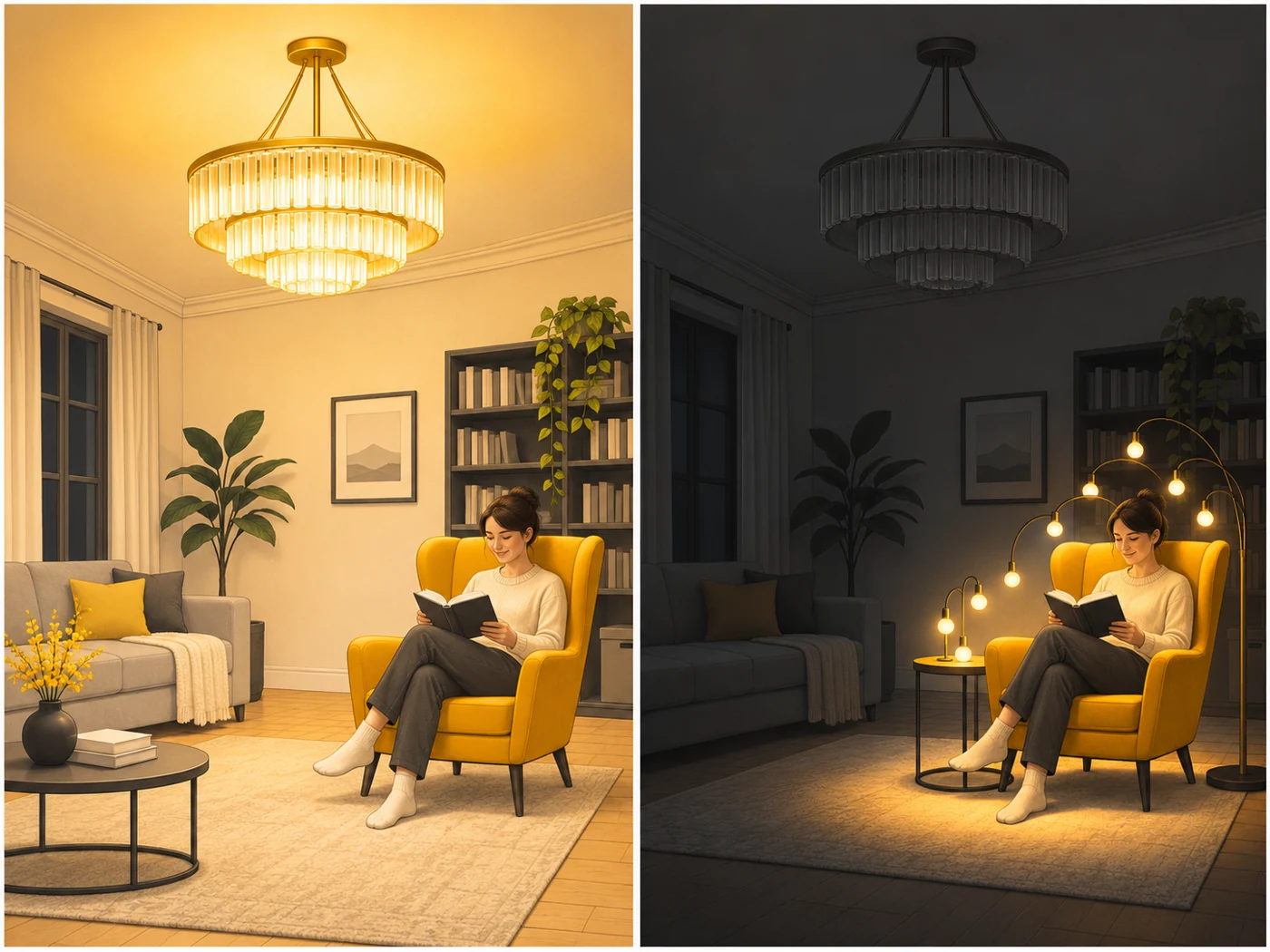
A regular LCD is like a room with one big chandelier: switch it on and the light is everywhere, even where you do not need it. Mini-LED is like thousands of little bulbs that light up only where something on screen is bright. But there are still fewer bulbs than pixels, so a slight glow can appear around bright objects on a black background.
How it works
- Thousands of miniature LEDs are placed behind the LCD panel.
- They are grouped into local dimming zones - from hundreds to several thousand.
- Zones dim for dark areas and shine at full power for bright ones.
- The LCD layer above the backlight creates the colours and detail.
- The result is high brightness and contrast close to OLED.
Where you'll see it
Mini-LED is found in TVs, monitors, laptops (including the MacBook Pro), some tablets (earlier iPad Pro generations) and gaming monitors. Specs list the number of dimming zones.
Does it matter when buying
If you need very high brightness and HDR without the risk of burn-in, Mini-LED is a good choice, especially for monitors and TVs. The downsides are a "halo" effect around bright objects and a thicker body. The more dimming zones, the better.
Myths
- Myth: Mini-LED is a type of OLED. Reality: No, it is LCD with improved backlighting.
- Myth: Mini-LED gives perfect blacks. Reality: Close, but because of the zones a slight glow around bright objects is possible.
FAQ
What is the "halo" effect?
A slight glow around a bright object on a black background, because the backlight zone is bigger than the object.
Does Mini-LED burn in?
No, LCD technologies are not prone to burn-in the way OLED is.
What matters more - the number of LEDs or zones?
The number of local dimming zones.
Related terms
Micro LED, Tandem OLED, HDR, HDR10+ and Dolby Vision, Peak brightness (nits)