
Micro LED: screens of the future where every pixel is an LED
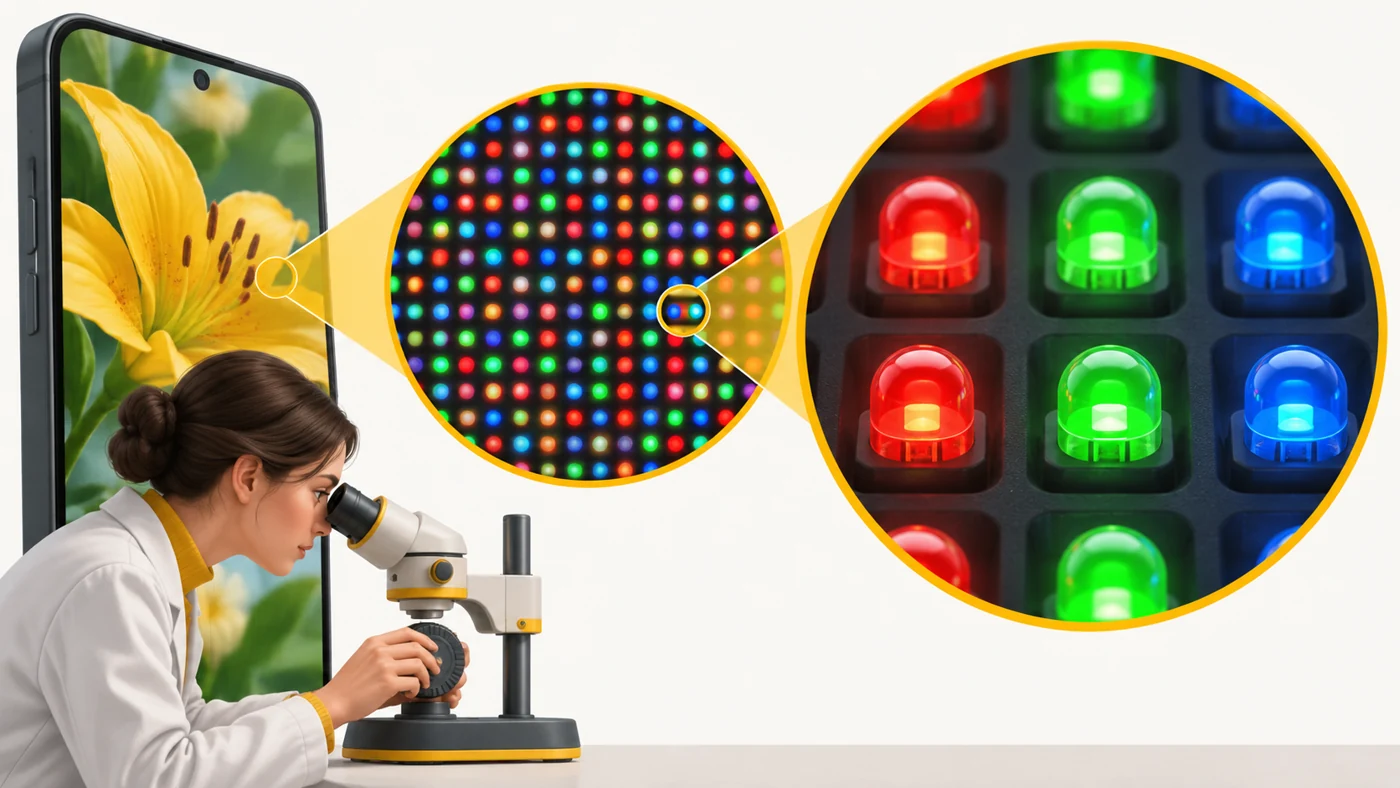
Micro LED is a display technology in which every pixel is made of its own microscopic inorganic LEDs. As with OLED, the pixels emit their own light, but without organic materials that burn in.
In plain words
OLED is like a string of tiny candles: each one glows on its own and looks beautiful, but the candles burn down over time. Micro LED is like a string of tiny everlasting bulbs: each still glows on its own, but they are brighter and hardly wear out. The problem is that placing millions of such bulbs perfectly is very difficult and expensive.
How it works
- Each subpixel is a separate microscopic red, green or blue LED.
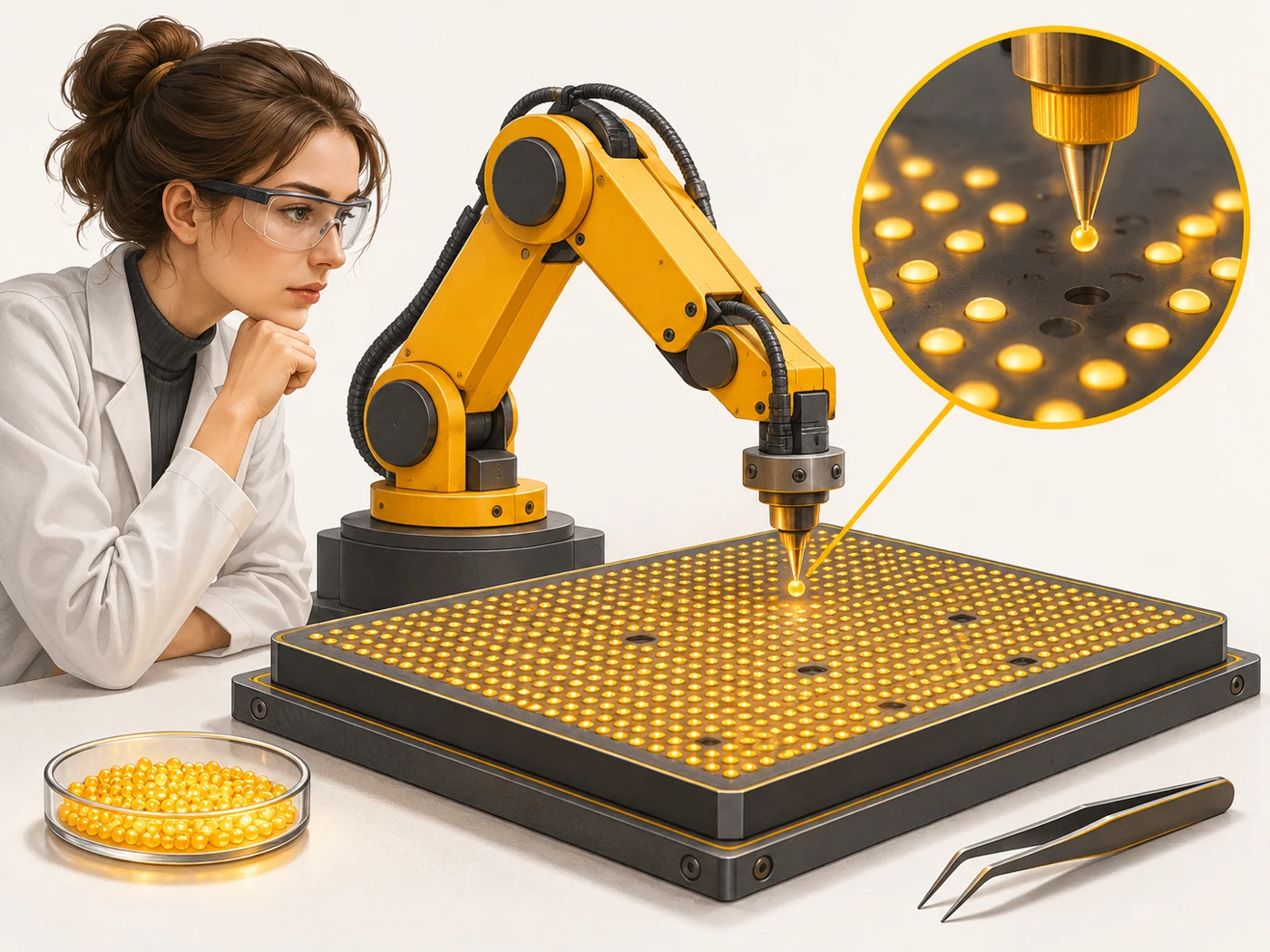
- The LEDs are made separately and transferred onto the backplane by the million.
- The pixels emit their own light, so black really is black.
- Inorganic materials give very high brightness and a long lifespan.
- The main challenge is placing millions of tiny LEDs precisely and without defects.
Where you'll see it
So far, in very expensive large TVs, advertising displays, experimental watches and prototypes. Manufacturers are working on mass-market Micro LED for watches, augmented reality glasses and smartphones.
Does it matter when buying
Not for buying yet - it is a technology of the future. But when you see news about "the first smartphone or watch with Micro LED", you will know it is an attempt to combine the strengths of OLED (true black) and LCD (durability, brightness).
Myths
- Myth: Micro LED and Mini-LED are the same thing. Reality: Mini-LED is a backlight for LCD; Micro LED makes the pixels themselves out of LEDs.
- Myth: Micro LED will soon be in every phone. Reality: Manufacturing is still complex and expensive.
FAQ
Does Micro LED burn in?
Far less than OLED, thanks to inorganic materials.
Why are Micro LED displays so expensive?
It is hard to place millions of tiny LEDs precisely without defects.
Where will Micro LED first go mainstream?
Most likely in watches and AR glasses, where screens are small.