
GPU (graphics processor): what draws the picture on your screen
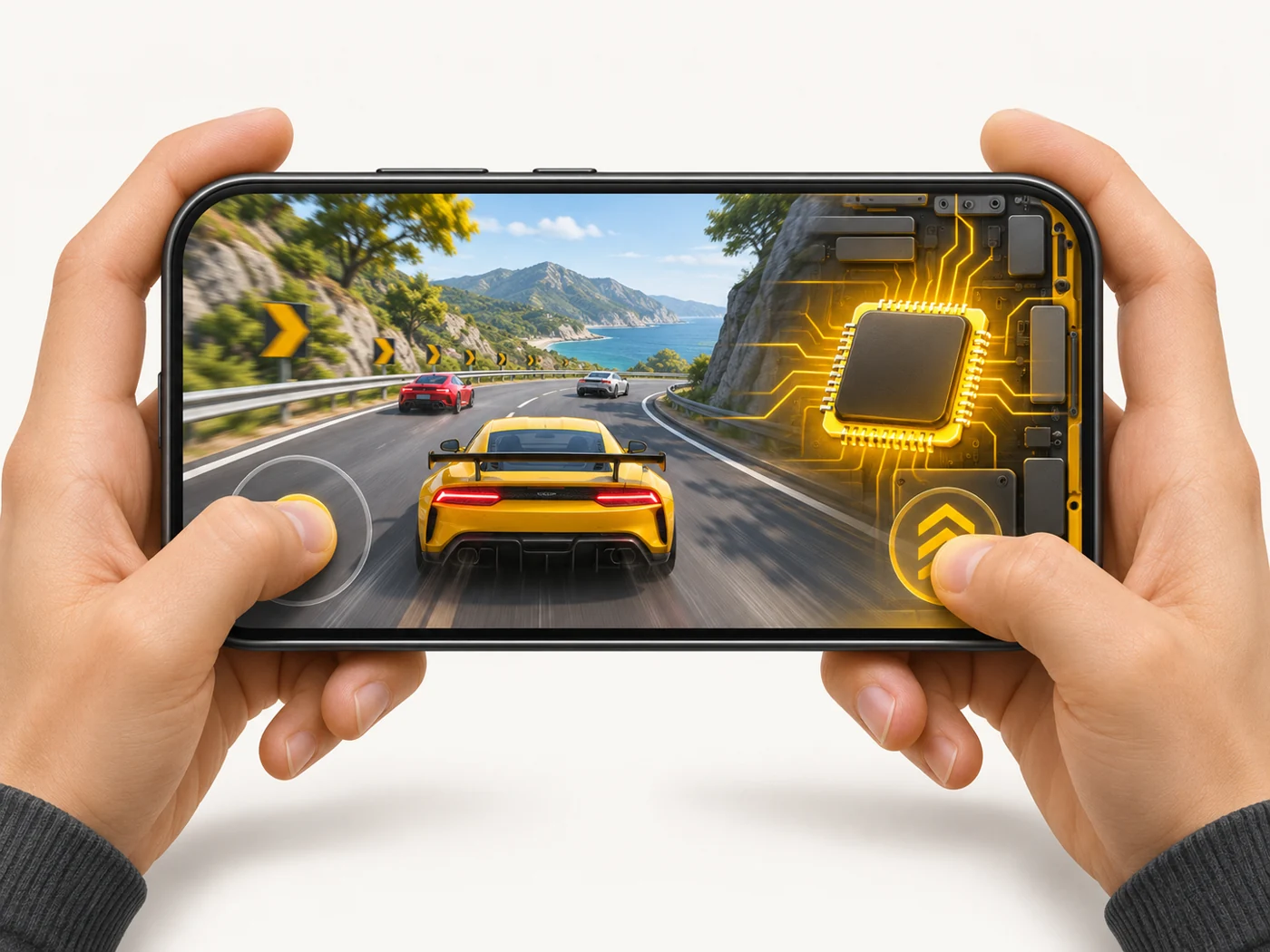
A graphics processing unit (GPU) is a computing block that processes images: it draws the interface, 3D graphics in games and video effects. In smartphones it is built into the system-on-chip; in computers it can be a separate graphics card.

In plain words
The CPU is like a professor who solves hard problems one at a time. A GPU is like a whole stadium of schoolkids, each colouring one tiny square of a picture. Each of them is simple, but thousands working at once colour in a game frame in an instant. That is also why GPUs suit AI so well - it too involves millions of simple, identical operations.
How it works
- A game or app sends the GPU a description of the scene: objects, textures, light.
- The GPU works out how each object looks from the player's camera.
- Thousands of computing blocks colour the pixels in parallel.
- The finished frame goes to the screen - 60, 120 or more times a second.
- For complex effects (shadows, reflections), some GPUs have hardware ray tracing.
Where you'll see it
In smartphones and tablets the GPU has its own name: Adreno (Qualcomm), Mali or Immortalis (MediaTek, Samsung Exynos), Apple GPU. In laptops and PCs it is integrated graphics or a discrete NVIDIA, AMD or Intel graphics card.
Does it matter when buying
If you play demanding games or edit video, yes - look at the GPU and graphics test results. Any modern GPU is enough for social media and YouTube. Remember: a powerful GPU in a thin body heats up, so stability in long gaming sessions matters more than peak test scores.
Myths
- Myth: A GPU is only needed for games. Reality: It draws the whole interface, processes video and helps the camera and AI.
- Myth: The more GPU cores, the faster it is. Reality: Cores from different manufacturers cannot be compared directly. Look at the tests.
FAQ
What is a discrete graphics card?
A separate GPU with its own memory in a laptop or PC - more powerful than integrated graphics.
How can I check a smartphone's GPU power?
With graphics tests such as 3DMark and stress tests for sustained performance.
Why are GPUs used for AI?
Because neural networks consist of millions of identical operations, which a GPU does in parallel.
Related terms
System on a Chip (SoC), Hardware ray tracing, Thermal throttling, Benchmark, Deep learning