
Handover: how your phone switches towers without dropping a call
Handover (handoff) is the process of passing a phone's active connection from one base station (cell) to another without dropping the call or data as you move.

In plain words
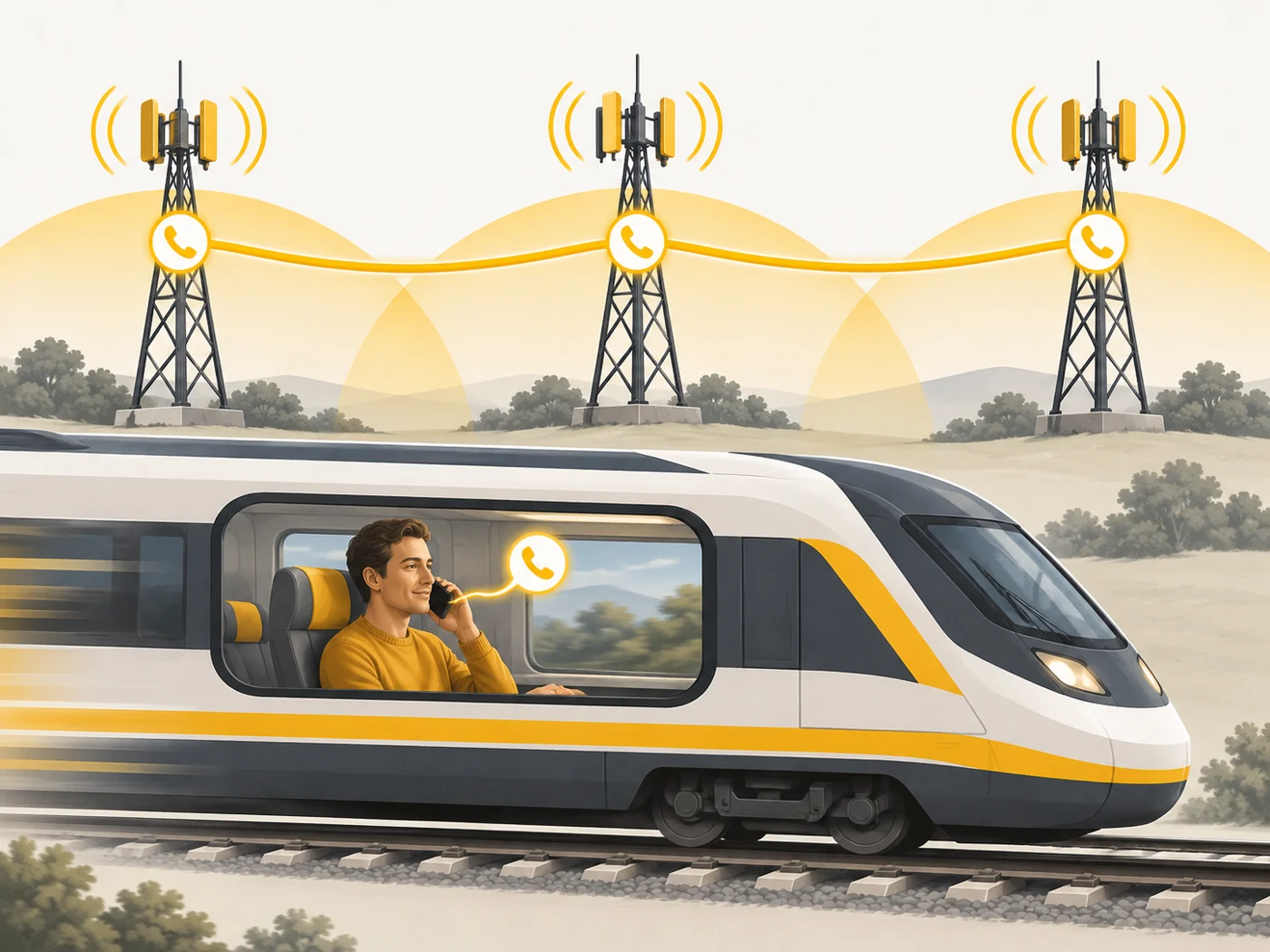
Imagine a relay race where the runner runs alongside the next one for a few metres while passing the baton, so no speed is lost. Your phone "runs" with you, and the network arranges things with the next tower in advance so the call is handed over before the old signal fades.
How it works
- The phone constantly measures the signal of the current and neighbouring stations.
- It reports these measurements to the network.
- The network decides when a neighbouring station will be better.
- The new station prepares resources and the connection switches over.
- Handover can also happen between networks (5G to 4G).
Where you'll see it
It happens automatically while you move: in a car, on a train, in the underground. Failed handovers are why calls drop on motorways and in places with poor coverage.
Does it matter when buying
Understanding it explains why calls drop at speed or at the edge of coverage. Phones with good modems, VoLTE and an operator with dense coverage along your routes all help.
Myths
- Myth: A dropped call is always the phone's fault. Reality: It is often down to coverage and network load.
- Myth: Handover is only for calls. Reality: Mobile data switches between stations too.
FAQ
Why do calls drop on a train?
High speed and widely spaced towers make handover harder.
What is a 4G-5G handover?
Switching between networks of different generations.
Does VoLTE affect handover?
Yes, in modern networks VoLTE moves between stations more smoothly.