
Base station: how mobile phone towers work
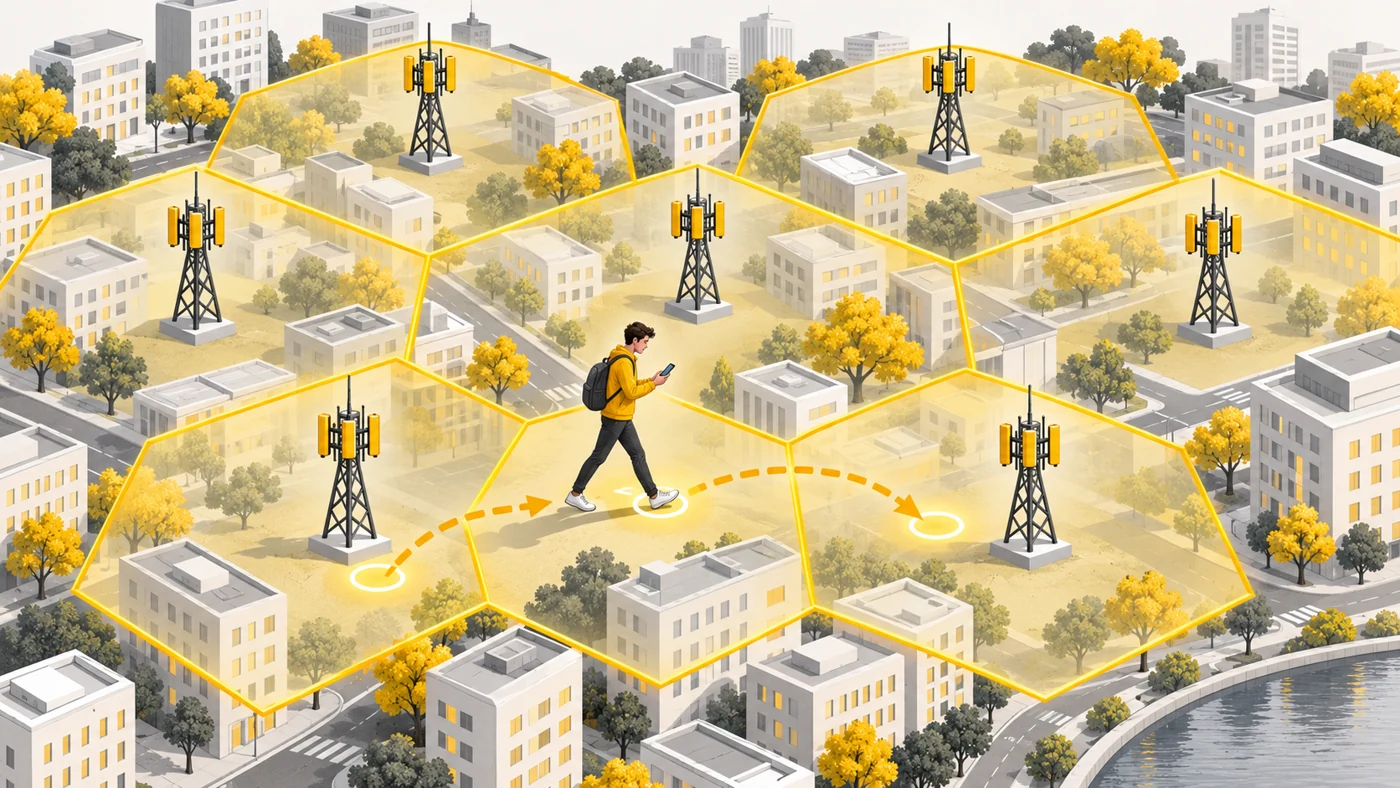
A base station (BTS, eNodeB in 4G, gNodeB in 5G) is an operator's equipment with antennas on a tower or rooftop. It sends and receives radio signals from phones in its area (cell) and connects them to the operator's network.
In plain words
A mobile network is like a mosaic of hexagonal cells, with a base station at the centre of each - like a teacher in a classroom passing messages between the student-phones and the head teacher, the network. As you walk down the street, you are quietly "passed" from one classroom to the next.
How it works
- Antennas on the tower cover sectors around it.
- The phone connects to the nearest or best station.
- The station sends data to the operator's core network over fibre or a microwave link.
- As you move, the phone switches between stations (handover).
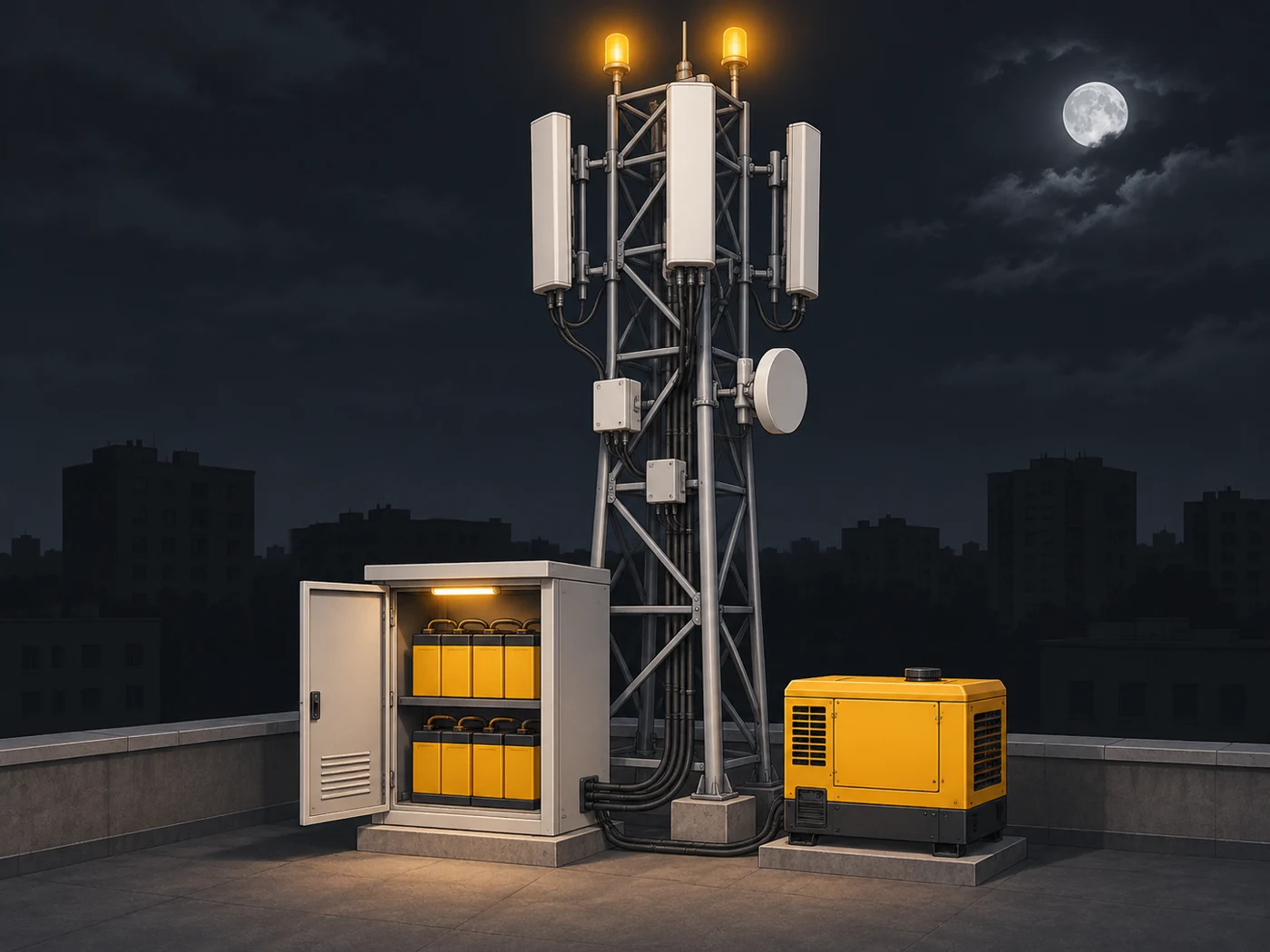
- Stations need power - during an outage, batteries or generators keep them going.
Where you'll see it
Towers and antennas on rooftops, masts along roads, in the underground and in shopping centres. Operators' coverage maps show station areas. During long power cuts, some stations run on backup power for a limited time.
Does it matter when buying
It helps to understand why the signal weakens in basements, lifts, the countryside and during long power cuts. Phones with better modems, Dual SIM with different operators, Wi-Fi calling and 4G routers with external antennas all help in such cases.
Myths
- Myth: A tower nearby is bad for your health. Reality: Emissions are regulated; a phone by your head has far more effect than a tower on the roof.
- Myth: More signal bars always mean faster internet. Reality: Speed also depends on how busy the station is.
FAQ
Why does coverage drop during a power cut?
The station's backup power runs out.
What is a cell?
The area served by one station or one of its sectors.
How do I find the nearest tower?
With network analysis apps or your operator's coverage map.