
Mobile (cellular) communication: how your call reaches a friend
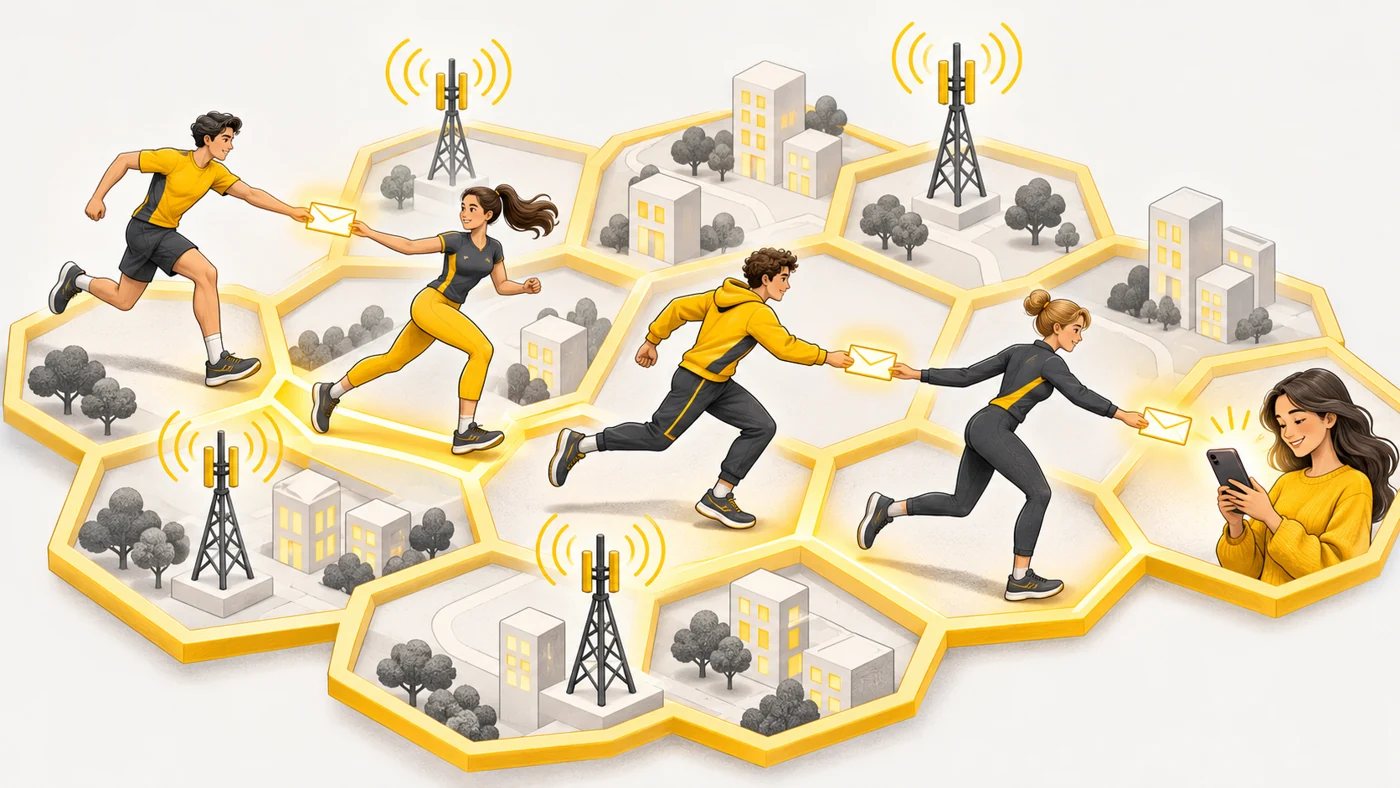
Mobile (cellular) communication is a wireless system in which an area is divided into zones called cells, each served by a base station. The phone connects to the nearest station, and the operator's network links it to other phones and the internet.
In plain words
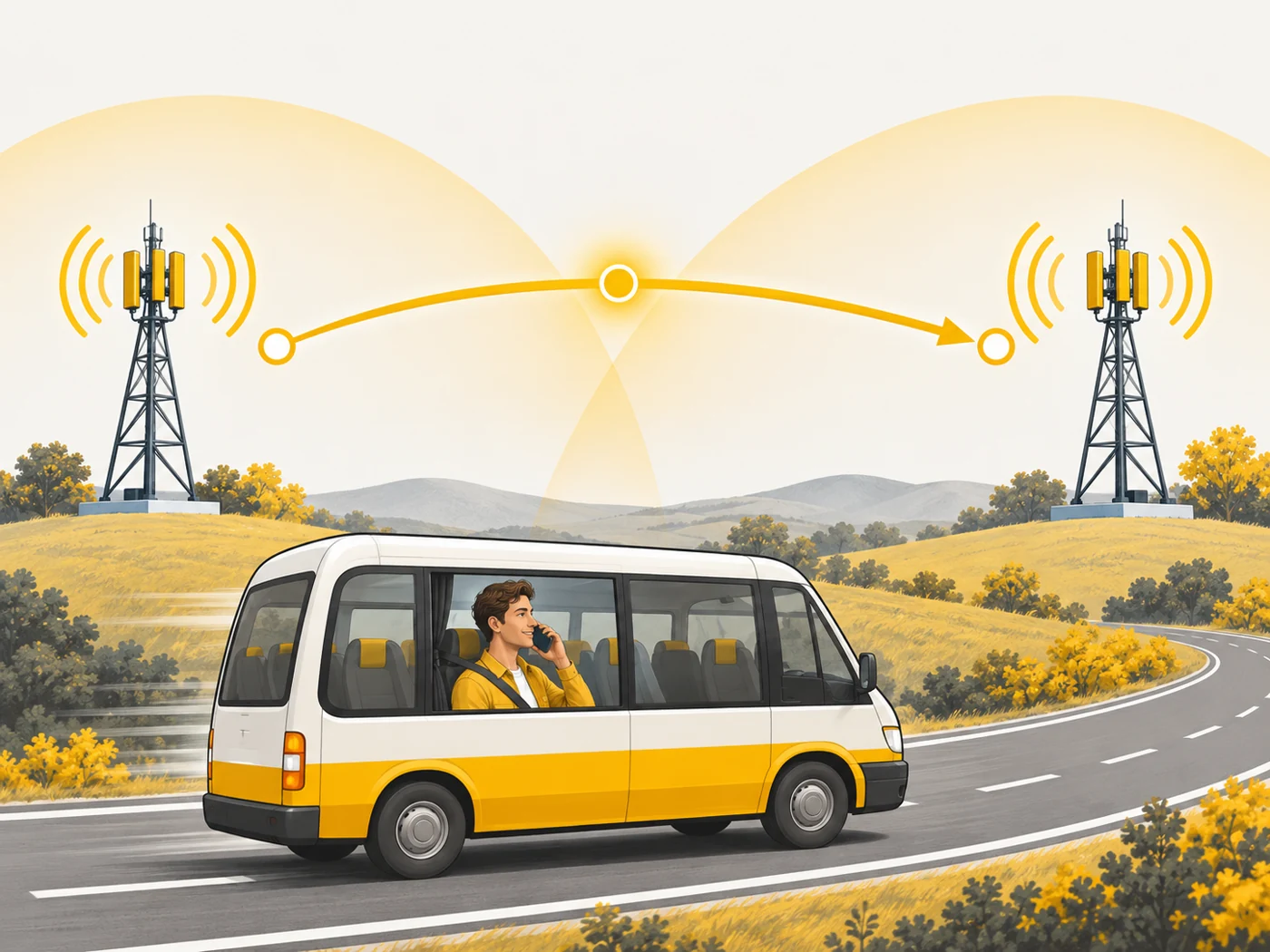
Imagine a relay race: you hand a note to the runner in your area, they hand it to the runner in the next area, and so on until it reaches the recipient. Base stations are the runners, each in its own "cell". When you are on a bus, you are passed from runner to runner so quickly that the call does not drop.
How it works
- The phone registers on the network through the nearest base station.
- During a call, your voice is digitised and sent to the station.
- The station sends the data to the operator's network core.
- The network finds the recipient and sends the data to their station.
- As you move, the phone switches between stations (handover).
Where you'll see it
Mobile communication is the basis of smartphones, watches with eSIM, 4G routers, car systems and smart meters. Generations: 1G, 2G, 3G, 4G, 5G.
Does it matter when buying
Understanding it helps: signal is worse in basements and the countryside because stations are far away or the signal cannot get through concrete, and during power cuts stations may go down. A second SIM from another operator, Wi-Fi calling and FM radio are good backups.
Myths
- Myth: Mobile communication works via satellites. Reality: Ordinary service uses ground towers; satellite service is separate.
- Myth: The closer the tower, the more harmful it is. Reality: A nearby tower lets the phone transmit at lower power.
FAQ
Why does the signal drop in a lift?
The metal cabin blocks radio signals.
Why is it called "cellular"?
Because the network is made of cells - like a honeycomb of hexagons.
How can I improve signal at home?
Wi-Fi calling, a 4G router with an external antenna or a different operator.