
What is 4G: the fourth generation of mobile networks in plain words
4G is the fourth generation of mobile network standards. In practice, 4G almost always means LTE and LTE-Advanced networks, which gave smartphones fast mobile internet for video, video calls and streaming.
In plain words
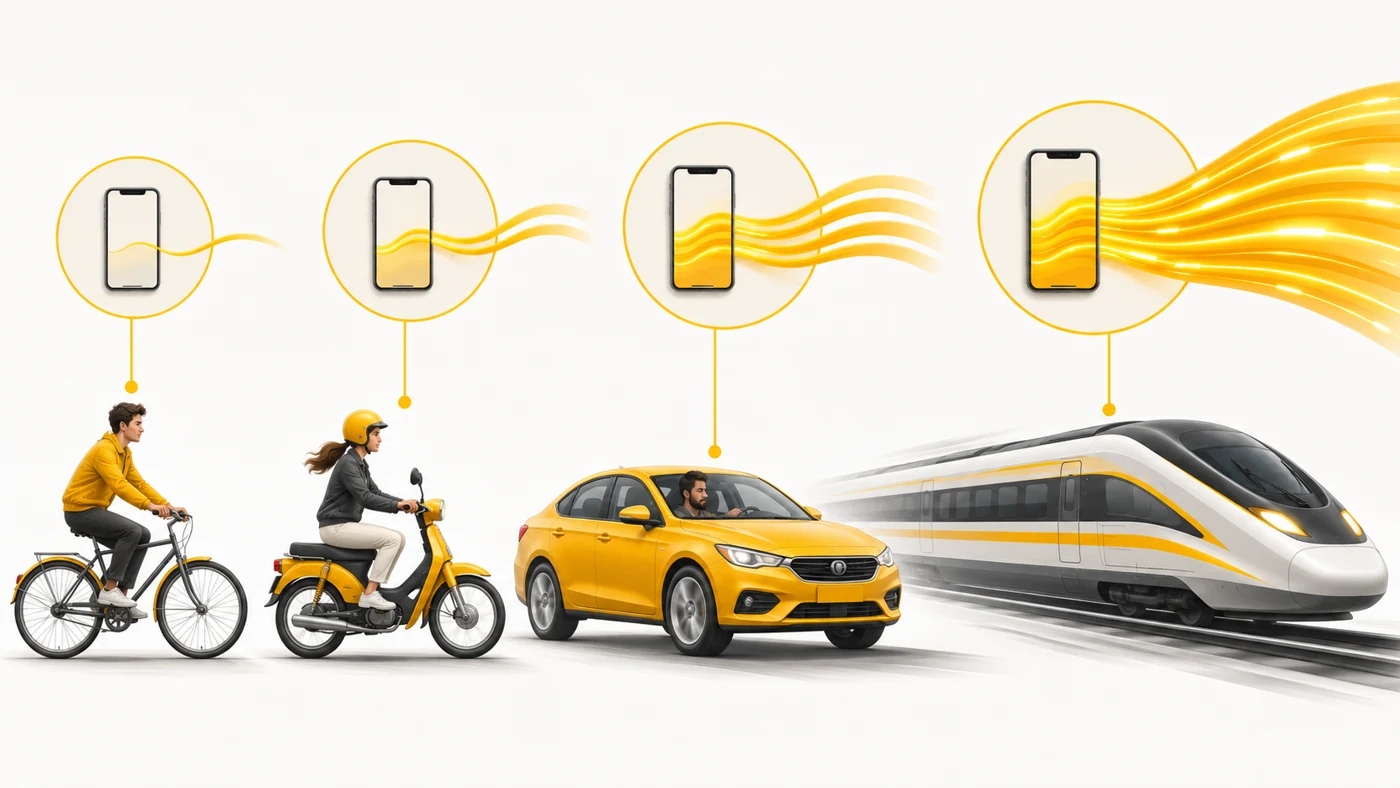
Network generations are like generations of transport. 2G is a bicycle: you can call and text. 3G is a moped: you can slowly browse websites. 4G is a car: YouTube, Instagram and video calls run smoothly. And 5G is a high-speed train still laying its tracks in cities.
How it works
- The phone connects to the operator's base station on 4G frequencies.
- All data, even voice (with VoLTE), travels as internet packets.
- New encoding methods and multiple antennas (MIMO) increase speed.
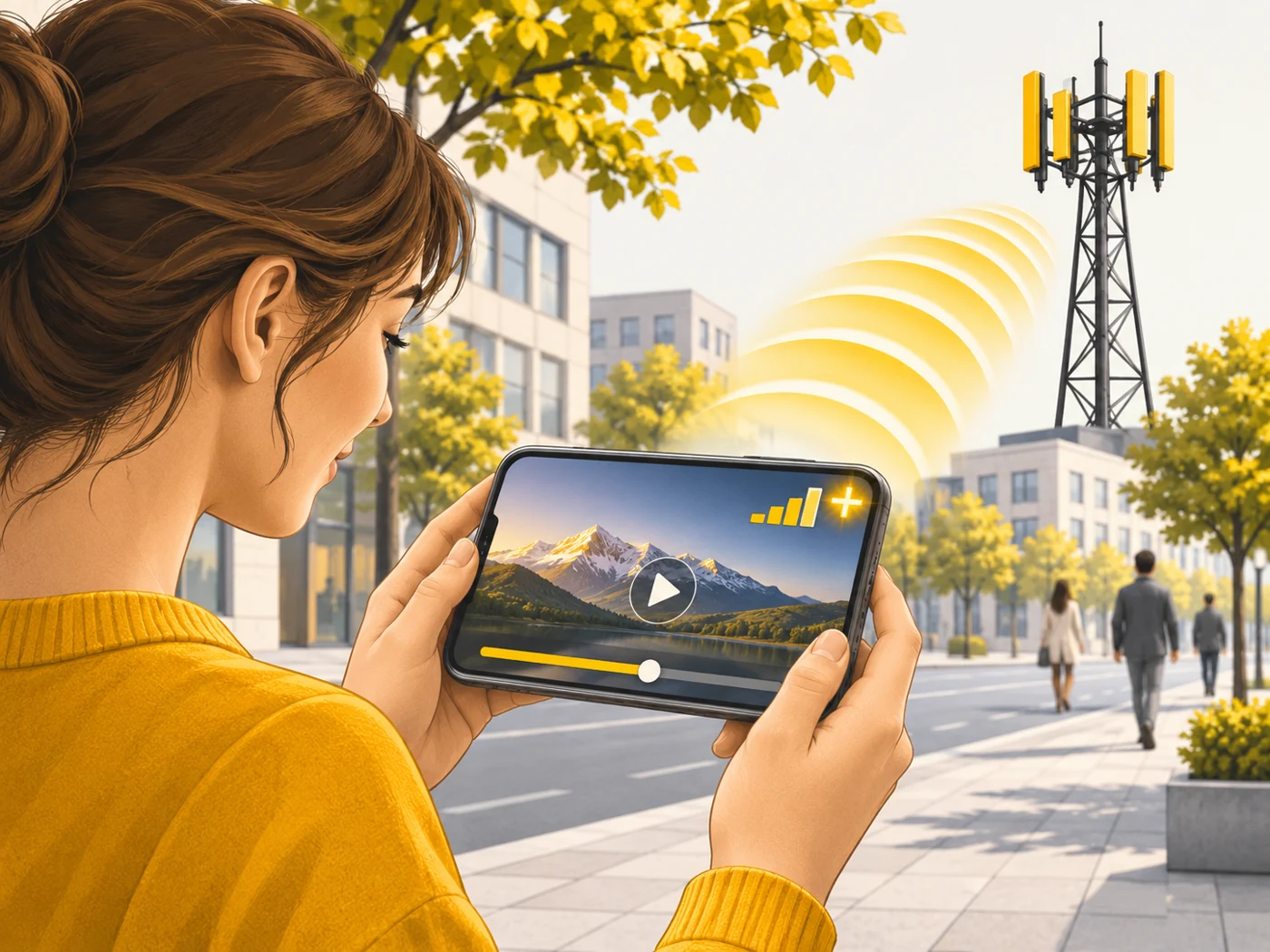
- Carrier aggregation combines several frequencies - and the 4G+ icon appears.
- If there is no 4G, the phone falls back to 3G or 2G.
Where you'll see it
You see the 4G or LTE icon in your phone's status bar. 4G support is listed in the specs of phones, tablets with a SIM, 4G routers and watches with eSIM. In most countries, 4G is the main mobile network for all operators.
Does it matter when buying
Today every new smartphone has 4G, so it is no longer an advantage but the bare minimum. What matters more is which frequency bands the phone supports and whether it has VoLTE. If you are buying a tablet, check for a SIM (LTE) version so you do not depend on Wi-Fi.
Myths
- Myth: 4G and LTE are different networks. Reality: In everyday use they are synonyms; LTE is the technology, 4G the generation.
- Myth: 4G+ is almost 5G. Reality: 4G+ is LTE-Advanced with carrier aggregation - in other words, faster 4G.
FAQ
What does the 4G+ icon mean?
The phone is using several frequencies at once, so speeds are higher.
Will 4G be switched off?
Not in the coming years - 4G will remain the backbone of mobile networks for a long time.
Does a 5G phone work on 4G?
Yes, all 5G smartphones fully support 4G.
Related terms
LTE (4G), 5G, 3G, VoLTE and VoWiFi, Carrier aggregation