
3G: the third generation of mobile networks in plain words
3G is the third generation of mobile networks, which made mobile internet usable for email, websites and messaging. Its main standards are UMTS (WCDMA) and its faster versions HSPA and HSPA+ (the 3G, H and H+ icons).
In plain words
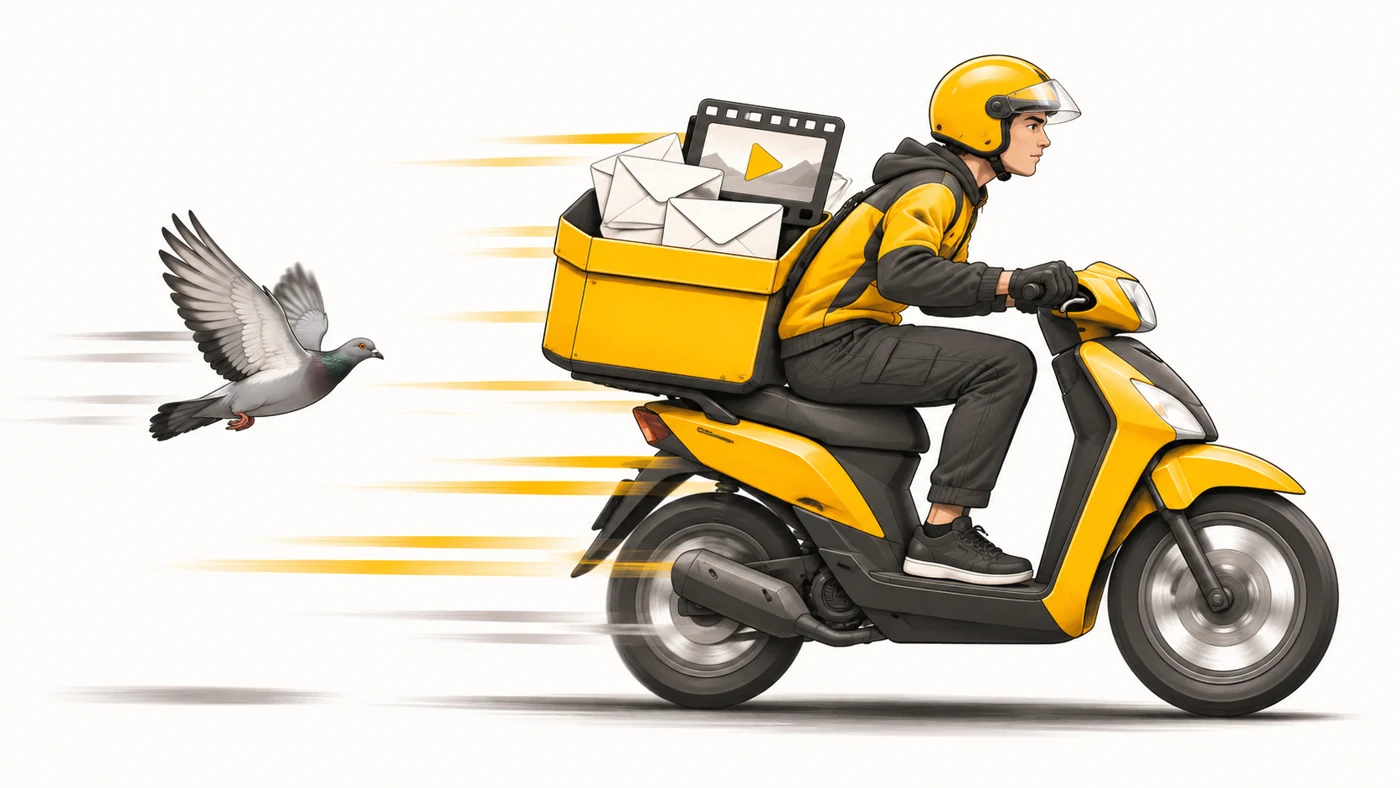
If 2G is a carrier pigeon, 3G is a courier on a moped: delivery is faster, so you can chat in messaging apps, read the news and even watch a short video. But a moped is not enough for HD streaming.
How it works
- 3G uses WCDMA - many users at once across a wide band of frequencies.
- Voice and data travel in parallel.
- HSPA and HSPA+ sped internet up to single and double-digit Mbps.
- 3G made video calls and the first fast smartphones possible.
- Today 3G is gradually being switched off and its frequencies moved to 4G and 5G.
Where you'll see it
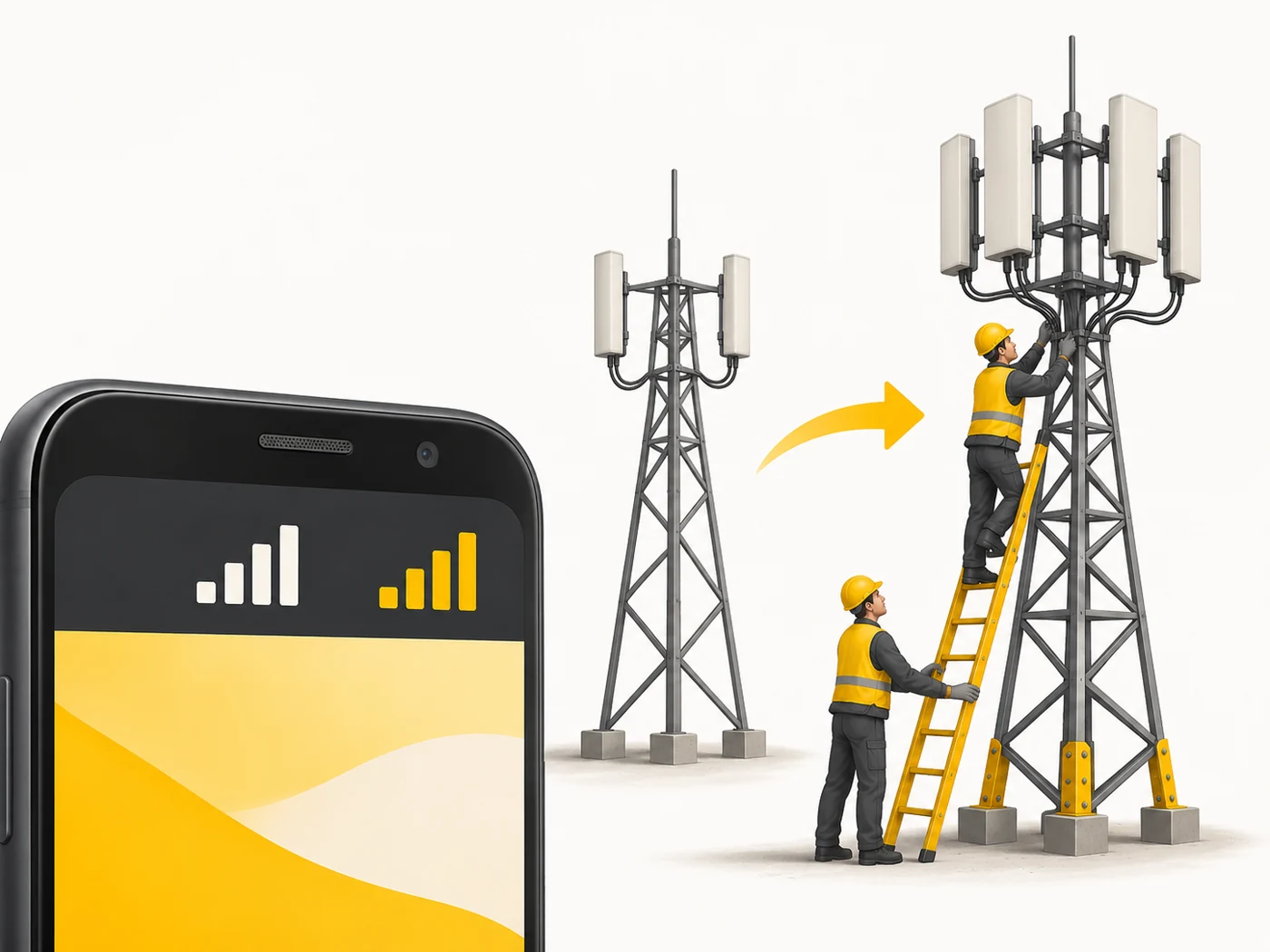
The 3G, H and H+ icons in the status bar of older and budget phones, or in places without 4G. In most countries 4G is now the backbone, and operators are winding 3G down.
Does it matter when buying
For new phones, no - they all support 4G. But if you have an old phone or modem that only does 3G, it may lose internet access once your operator switches 3G off in your area.
Myths
- Myth: H+ is almost 4G. Reality: It is the fastest version of 3G, but still far from 4G.
- Myth: You need 3G for calls. Reality: Modern phones make calls over 4G (VoLTE) or 2G.
FAQ
What does the H+ icon mean?
HSPA+ - faster 3G internet.
When did 3G appear?
Across most of Europe, in the early-to-mid 2000s.
Will my 3G modem keep working?
Only while your operator supports 3G in your area.