
Lithium-ion battery: how your phone's battery works
A lithium-ion (Li-ion) battery is a rechargeable battery in which lithium ions move between two electrodes as it charges and discharges. It is the most common type of battery in portable devices.
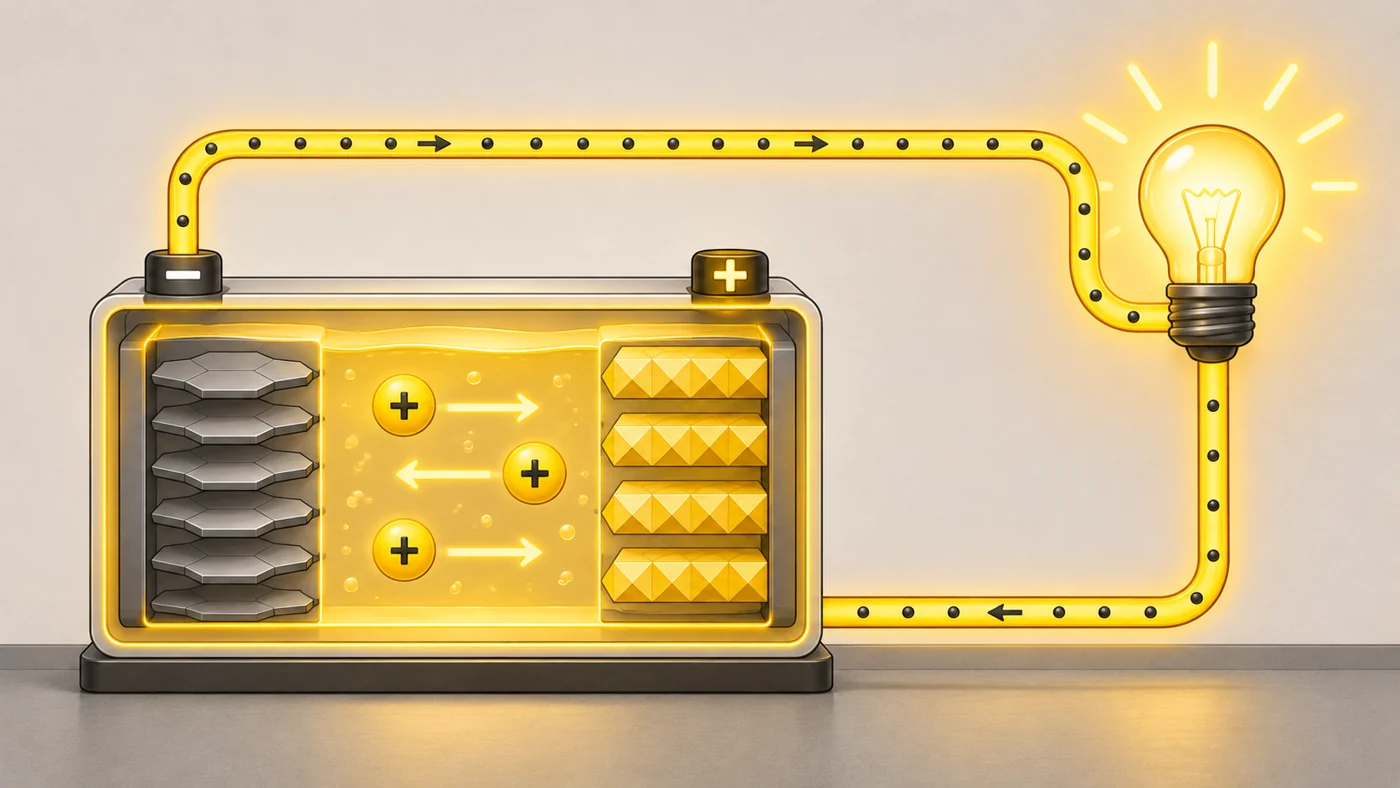
In plain words
Imagine two rooms with people walking between them. When charging, all the ion-people move into one room - the "energy store". When you use your phone, they walk back, and their movement creates current. Over the years, the doorway between the rooms gets slightly "overgrown" and fewer people get through - that is how a battery loses capacity.
How it works
- The battery has two electrodes: an anode (usually graphite) and a cathode (lithium metal oxides).
- When charging, lithium ions move into the anode.
- In use, they move back to the cathode, while electrons travel through the external circuit and power the device.
- The electrolyte and separator let ions through but keep the electrodes from touching.
- A controller monitors voltage and temperature so the battery runs safely.
Where you'll see it
In phones, tablets, laptops, watches, earbuds, power banks, e-scooters and electric cars. Specs give capacity in mAh or Wh. Variants include lithium-polymer and silicon-carbon batteries.
Does it matter when buying
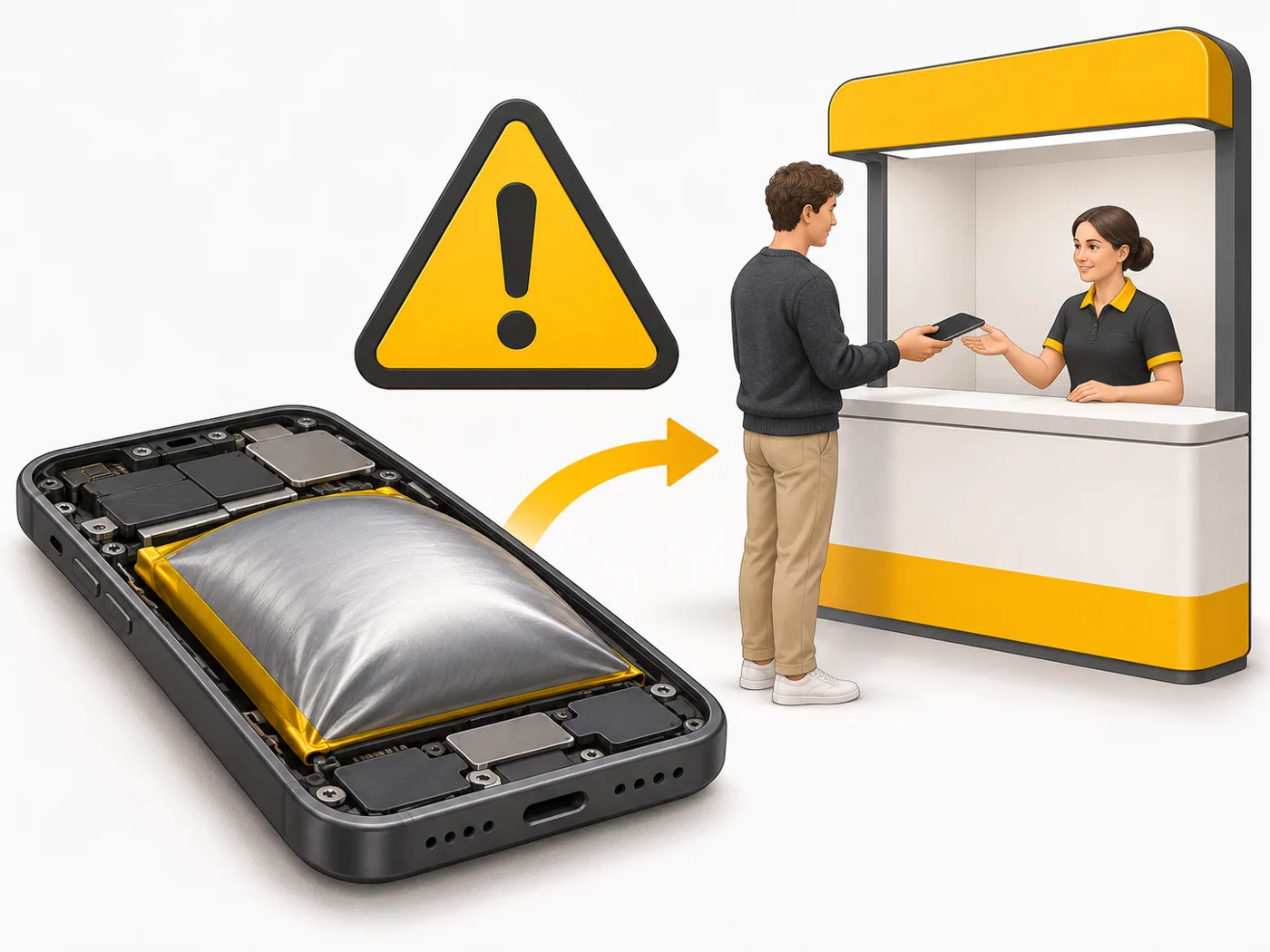
Yes, because how you treat the battery determines how many years your phone will last. My rules: avoid heat, do not leave it at 0% or 100% for long, and use quality chargers. And do not use a damaged or swollen battery - have it replaced at a service centre.
Myths
- Myth: You should fully drain the battery. Reality: That harms lithium-ion batteries; partial charges are better.
- Myth: Charging overnight instantly kills the battery. Reality: The controller prevents overcharging, and optimised charging also reduces wear.
FAQ
Why does a battery swell?
Wear, overheating or internal damage produce gases. Take such a phone to a service centre.
How do I dispose of old batteries?
Take them to a battery and electronics collection point - do not put them in the bin.
Can I take my phone out in freezing weather?
Yes, but in the cold the battery temporarily holds less; do not charge a frozen phone straight away.
Related terms
Battery, Lithium-polymer battery, Silicon-carbon battery, Charge cycles and battery wear, mAh and Wh