
Lithium-polymer battery: how it differs from lithium-ion
A lithium-polymer battery (Li-Po, LiPo) is a type of lithium battery in which the electrolyte is a gel or polymer and the casing is a flexible "pouch" instead of a metal cylinder. That means the battery can be made thin and in almost any shape.
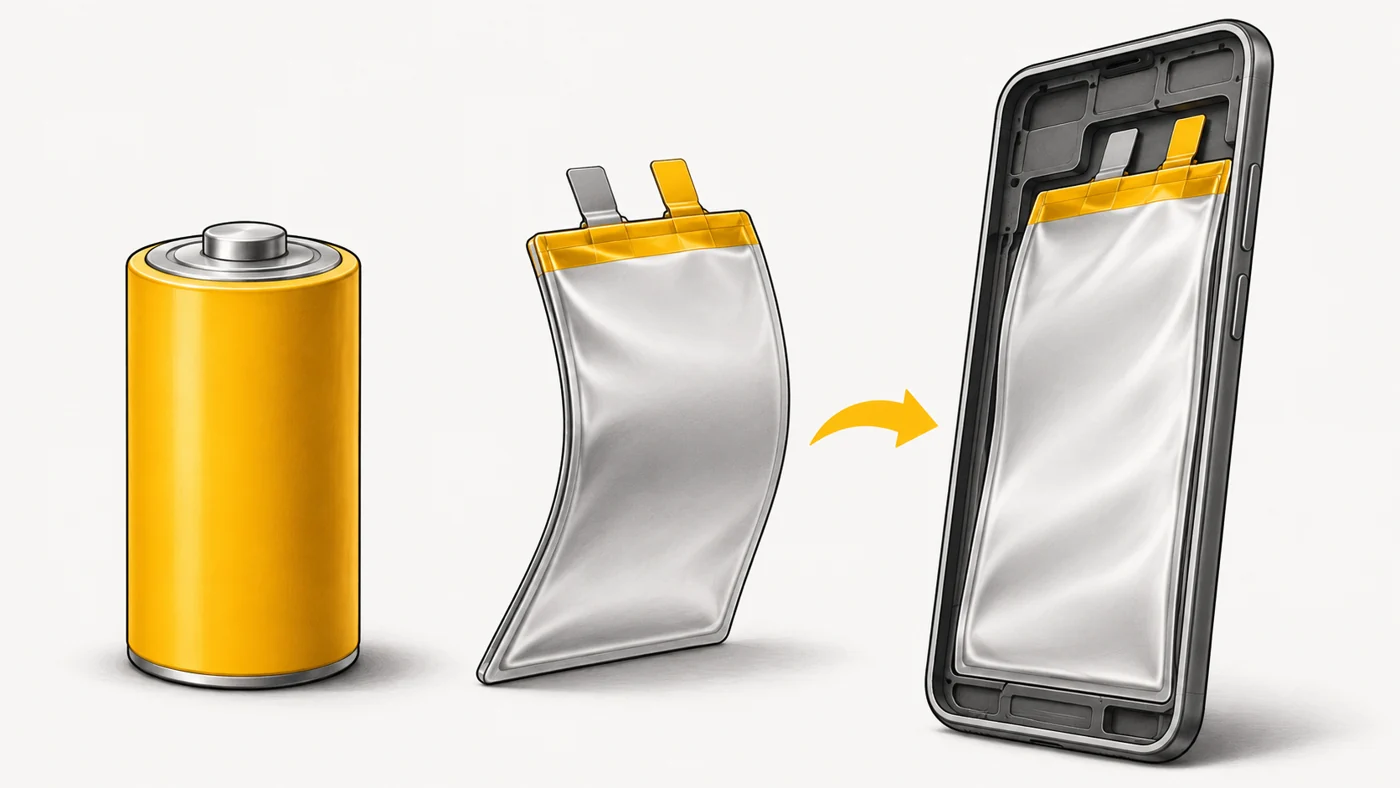
In plain words
A classic cylindrical lithium-ion battery is like a tin can: sturdy, but you cannot change its shape. A lithium-polymer one is like a juice pouch: it can be flat, long or curved to fit a thin phone or watch. But the pouch must be protected from punctures.
How it works
- It works on the same principle as lithium-ion: lithium ions move between the electrodes.
- The electrolyte is held in a polymer or gel.
- The casing is flexible laminated foil, not a metal can.
- The battery can be made very thin and shaped to fit the device.
- Damage or overheating can make the pouch swell.
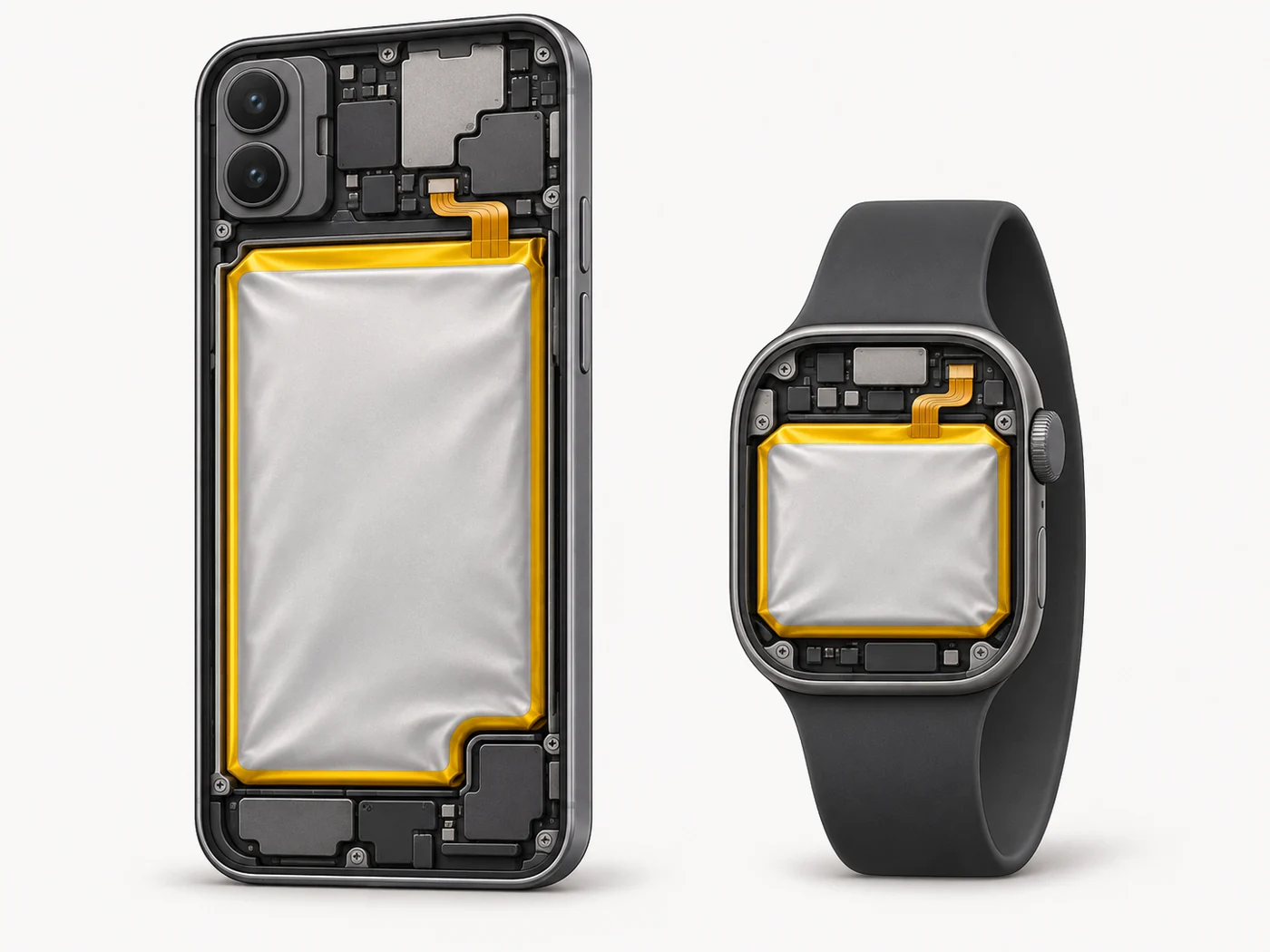
Where you'll see it
Almost all modern phones, tablets, watches, earbuds and thin laptops use pouch-style batteries, often called Li-Po. Power banks use both Li-Po and cylindrical Li-ion cells (18650, 21700).
Does it matter when buying
For you as a user the difference from Li-ion is small: the care rules are the same. Important: a swollen battery is a signal to stop using the device at once and take it to a service centre. In power banks, Li-Po is often lighter and thinner for the same capacity.
Myths
- Myth: Li-Po is a completely different technology from Li-ion. Reality: It is a type of lithium battery with a different electrolyte and casing design.
- Myth: Li-Po batteries do not swell. Reality: The flexible casing is exactly what makes swelling visible.
FAQ
Which is better for a power bank - Li-Po or 18650?
Li-Po is thinner and lighter; 18650 cells are often cheaper and tougher.
Why did my battery swell?
Wear, overheating or damage produce gases inside.
Can a Li-Po battery be punctured?
No - it is dangerous and can catch fire.
Related terms
Lithium-ion battery, Battery, Silicon-carbon battery, Charge cycles and battery wear