
MP3, AAC, FLAC: the audio formats explained
MP3 is one of the best-known audio compression formats; it shrinks music files several times over. Alongside it are AAC and OGG/Opus (lossy) and FLAC and ALAC (lossless). Streaming services use AAC, Opus or their own formats.
In plain words
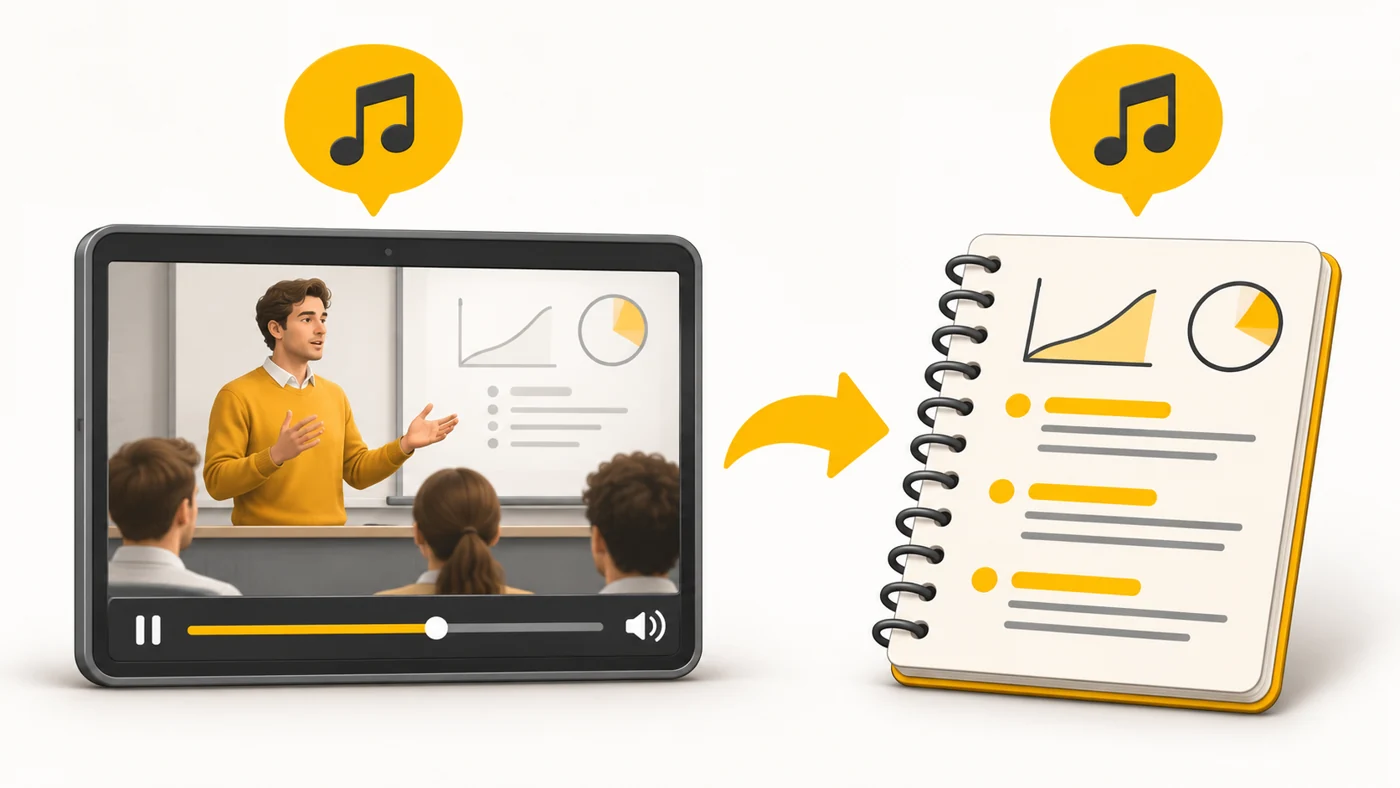
Audio compression is like taking lecture notes: you write down the main points and skip what almost nobody would notice. Good notes (MP3 at 320 kbps, AAC) read almost like the full lecture. FLAC is like a word-for-word transcript: it takes more space, but nothing is lost.
How it works
- Audio is digitised into an uncompressed format (WAV).
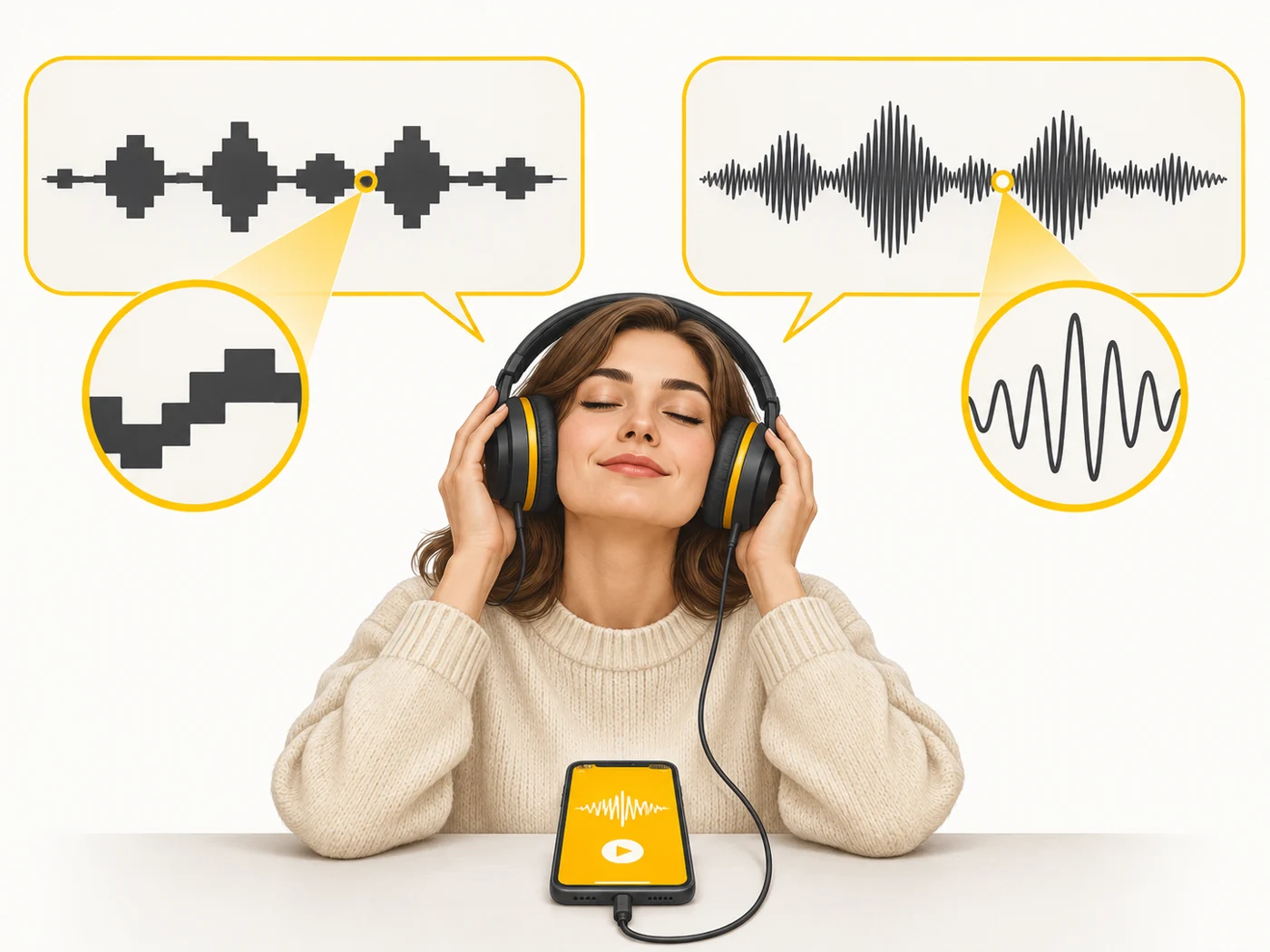
- The codec analyses which sounds the human ear barely hears.
- Those parts are removed or simplified, making the file smaller.
- Bitrate (kbps) shows how much data remains per second of sound.
- Lossless formats compress without loss, like a zip archive.
Where you'll see it
MP3 and AAC are used in music collections, podcasts and audiobooks; FLAC in audiophile collections and lossless streaming; Opus in calls and messaging apps. Video uses its own codecs (H.264, H.265, AV1).
Does it matter when buying
For streaming and wireless earbuds, high-bitrate AAC/MP3 is more than good enough. Lossless makes sense with good wired headphones and a DAC. For podcasts and audiobooks, ordinary compression is fine.
Myths
- Myth: MP3 always sounds bad. Reality: At a high bitrate, most people cannot tell it from the original.
- Myth: FLAC over Bluetooth sounds lossless. Reality: Bluetooth compresses the sound again with its codec.
FAQ
What is a good MP3 bitrate?
256-320 kbps.
What is lossless?
Compression with no loss of quality.
Does my phone support FLAC?
Most modern phones do.
Related terms
Bluetooth codecs (AAC, aptX, LDAC), Stereo speakers, Internal storage