
Optical zoom: how a camera gets closer without losing quality
Optical zoom magnifies the image using optics - by increasing the lens's focal length. Quality is almost unaffected. In phones it comes from a separate telephoto camera, often a periscope.
In plain words
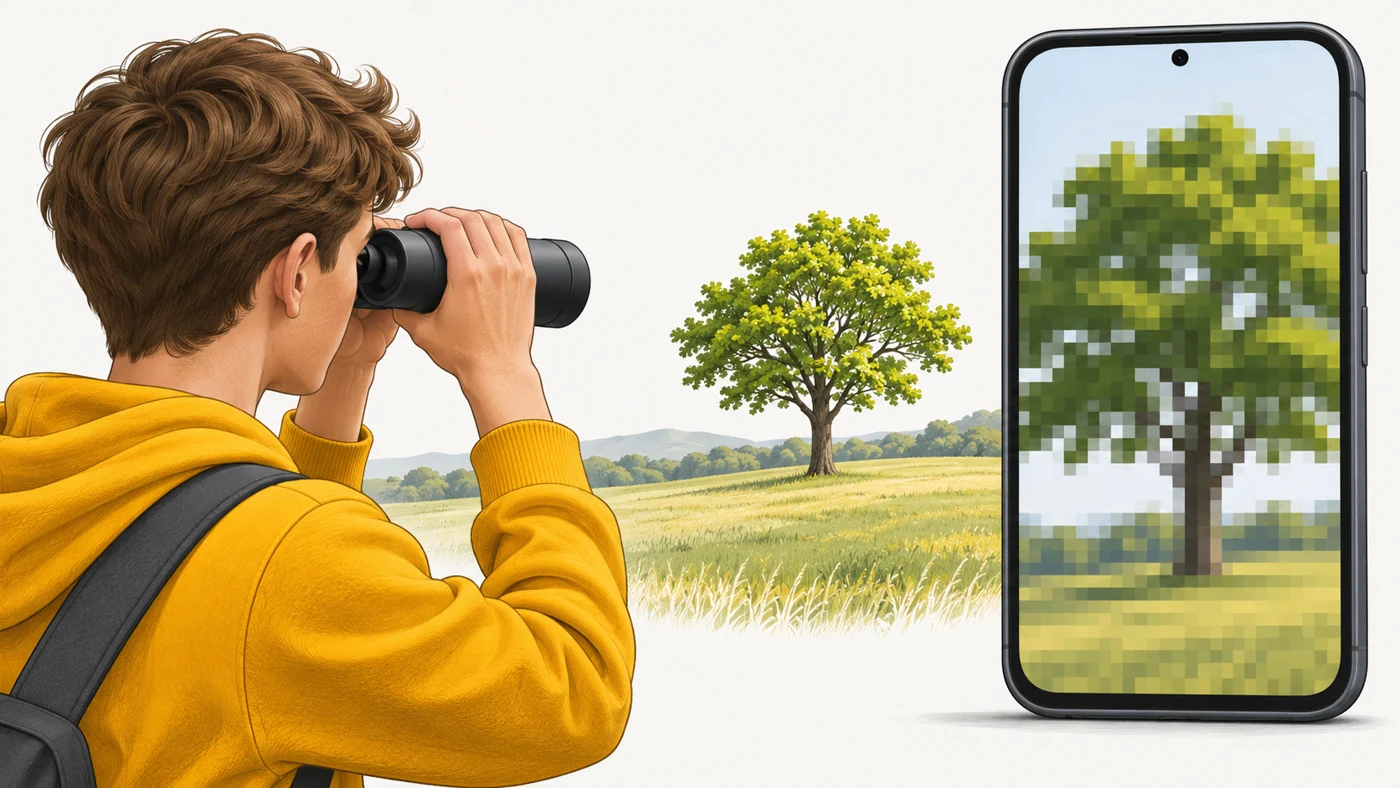
Imagine looking at a distant tree. You can photograph it and stretch the photo with your fingers - you get a blurry mosaic. Or you can pick up binoculars and see every leaf. Optical zoom is the binoculars; digital zoom is stretching the photo.
How it works
- In cameras, lenses inside the barrel move and change the focal length.
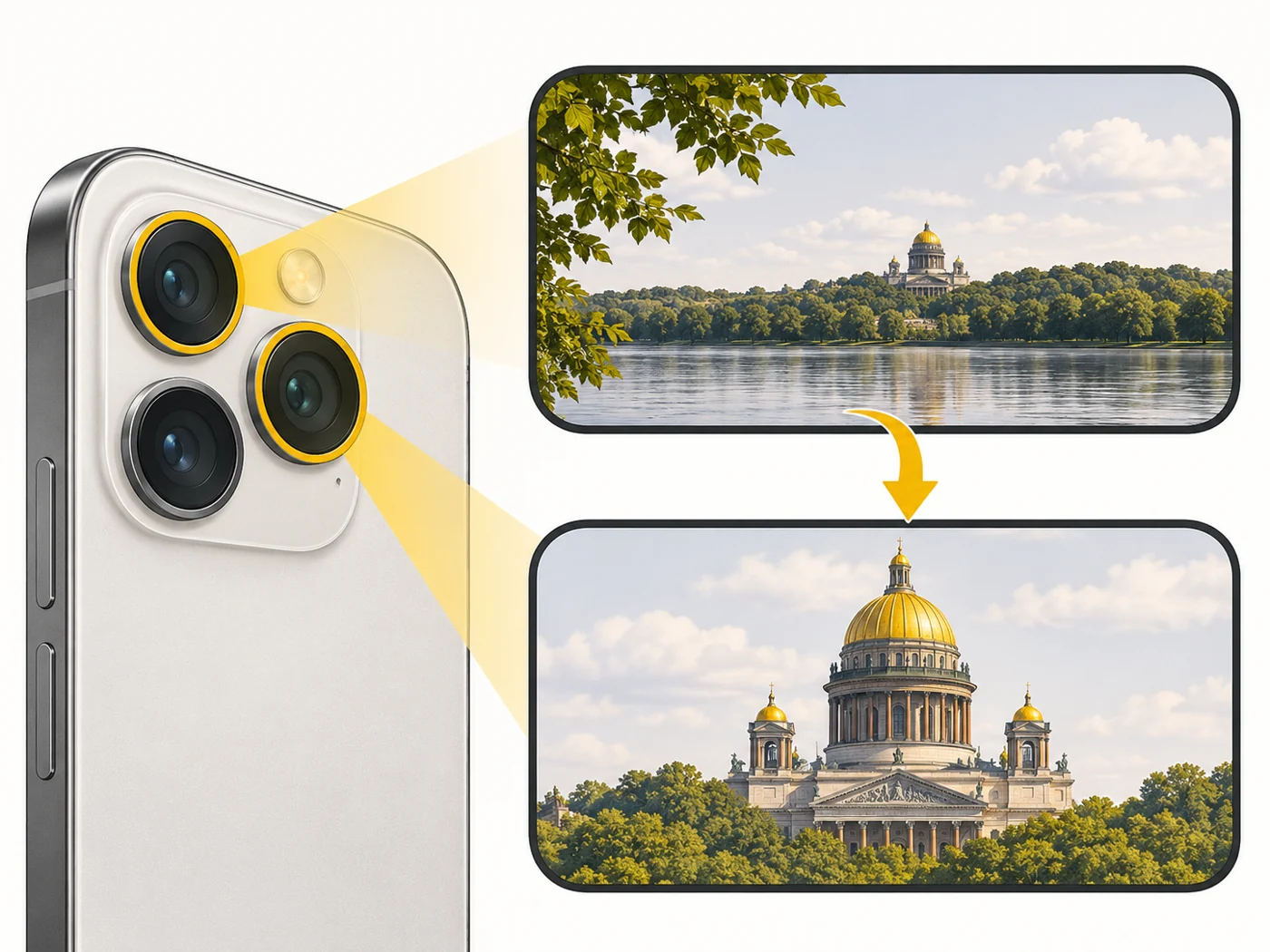
- Phones instead have several cameras with different focal lengths.
- Switching between 1x, 3x and 5x means switching between cameras.
- A periscope design fits a long telephoto lens into a thin body.
- In-between values (such as 2x) are often hybrid - a crop plus processing.
Where you'll see it
In camera specs: "3x telephoto", "5x periscope optical zoom", "100x zoom" (that one is digital). In our phone comparisons, the camera descriptions and quick answers.
Does it matter when buying
Yes, if you shoot portraits, concerts, animals or architecture. Look at the optical zoom factor and the size of the telephoto sensor. "100x zoom" on the box is marketing; genuinely useful results usually stop at 10-20x.
Myths
- Myth: 100x zoom is optical. Reality: Optics usually cover 3-10x; the rest is digital magnification.
- Myth: Any phone with three cameras has optical zoom. Reality: Often the third camera is a macro or depth sensor.
FAQ
What is hybrid zoom?
A mix of optics, cropping and processing for in-between zoom levels.
Does the front camera have optical zoom?
Almost never.
Can I record video with optical zoom?
Yes, the telephoto camera works for video too.
Related terms
Periscope telephoto, Digital zoom, Equivalent focal length, Camera sensor size