
Model quantisation: how to shrink AI so it fits on a phone
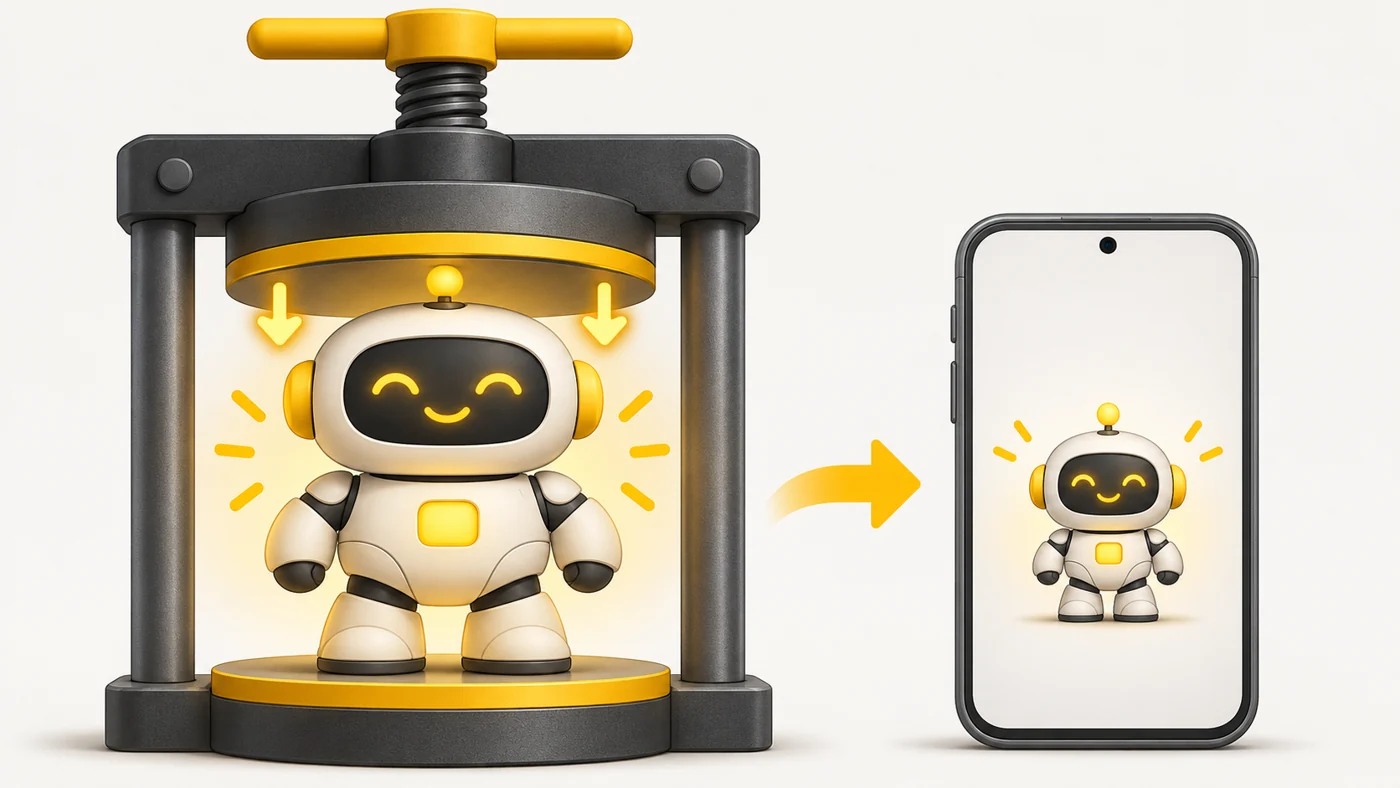
Quantisation is a way to reduce the size of a neural network by storing its parameters as less precise numbers (for example, 4 bits instead of 16). The model gets smaller and faster while losing only a little quality.
In plain words
Imagine a 50-megapixel photo you need to send in a messenger. You compress it - the file is dozens of times smaller, yet on a phone screen you can barely see a difference. Quantisation does the same with a model's parameters: it rounds the numbers, the model slims down several times, and it answers almost the same.
How it works
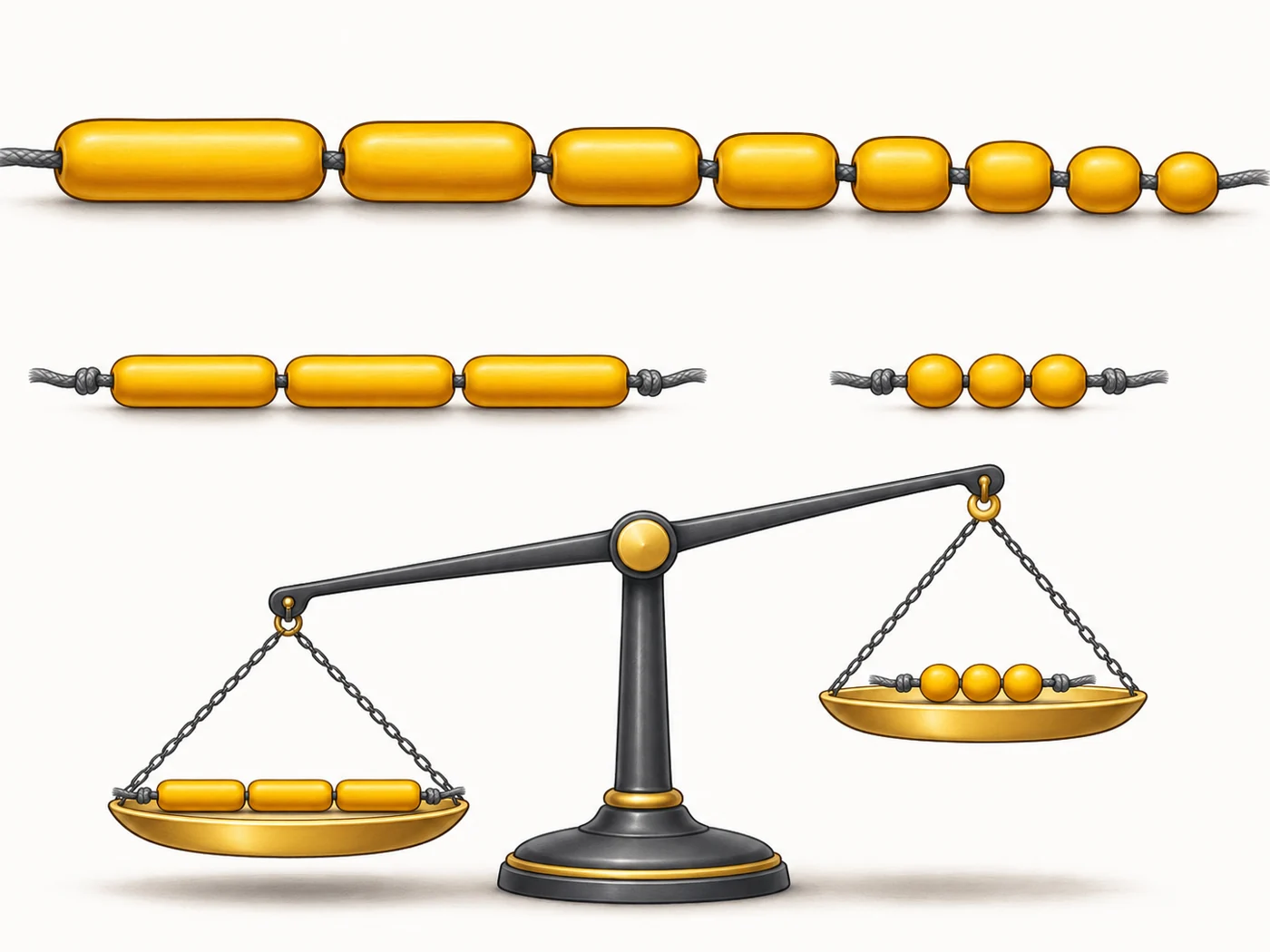
- Model parameters are usually stored as 16- or 32-bit numbers.
- Quantisation rounds them down to 8, 4 or even fewer bits.
- The model takes several times less memory and runs faster on an NPU or graphics card.
- Clever methods round smartly so the most important numbers keep their precision.
- The harder the compression, the more noticeably answer quality can drop.
Where you'll see it
Quantised models are the backbone of on-device AI: smartphones and laptops run compressed versions. Enthusiasts who run models on their own computers see labels like Q4, Q8, INT4 and GGUF - these refer to the quantisation level and file format.
Does it matter when buying
For a regular user, it is invisible work done by the manufacturer. But if you run local models, it matters: a 4-bit version gives a sensible balance of quality and size. It also explains why INT4 and INT8 support in a neural processor is a useful spec.
Myths
- Myth: A quantised model is a completely different, worse model. Reality: It is the same model, just with less precise numbers. For most tasks, the difference is small.
- Myth: You can compress down to 1 bit with no loss. Reality: The harder the compression, the more quality is lost - there are no miracles.
FAQ
What does Q4 in a model file name mean?
That the parameters are stored in roughly four bits - one of the most popular options.
Can I quantise a model myself?
Yes, there are ready-made tools for open models.
Why do phones like INT8 and INT4?
Because the NPU processes such short numbers faster and with less energy.
Related terms
Model parameters, On-device AI, Neural Processing Unit (NPU), Open-weight models