
RAM: how much memory a phone and laptop need
RAM (random-access memory) is fast temporary memory that holds the data of open apps, tabs and the system while the device is on. It is cleared when the device is switched off.

In plain words
Back to the desk. RAM is the desk itself: the bigger it is, the more notebooks and textbooks you can keep open. Built-in storage is the cupboard where everything is kept permanently. When the desk is small, you keep putting things back in the cupboard and taking them out again - that is what apps "reloading" is.
How it works
- The processor fetches data from RAM hundreds of times faster than from storage.
- Open apps stay in RAM so you can return to them quickly.
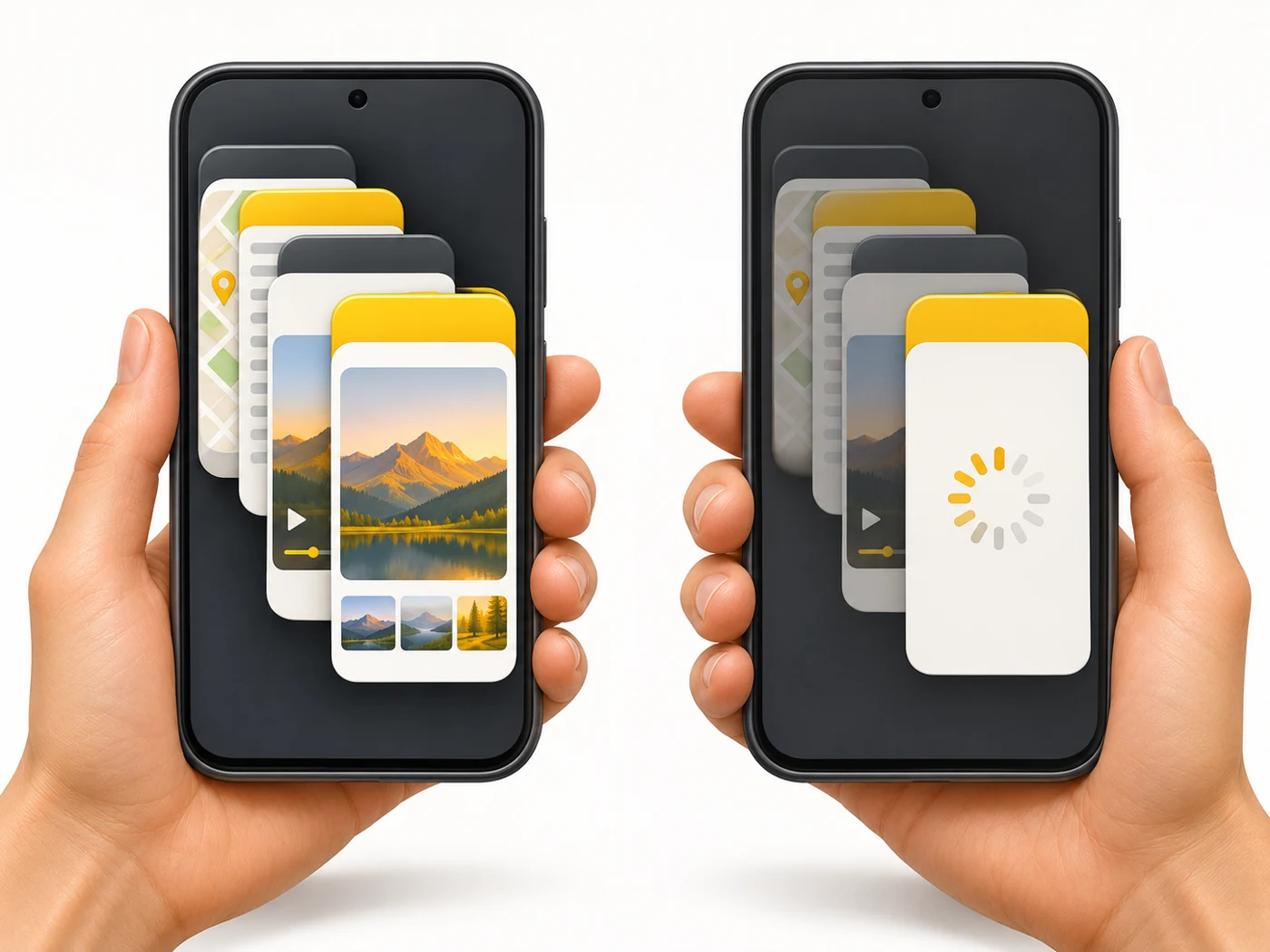
- When RAM fills up, the system closes older apps.
- Phones use power-efficient LPDDR4X, LPDDR5 and LPDDR5X.
- RAM in phones and most laptops is soldered on and cannot be replaced.
Where you'll see it
In specs: "8 GB RAM", "12 GB LPDDR5X". In our phone and tablet comparisons, the Memory row. Do not confuse it with virtual RAM: "8+8 GB" means 8 GB of real RAM.
Does it matter when buying
Yes. For an Android phone I recommend 8 GB, or 12 GB for gaming and AI features. iPhones need less thanks to optimisation. For a laptop, 16 GB minimum. It is worth getting extra RAM because you cannot add more later.
Myths
- Myth: RAM cleaner apps speed up your phone. Reality: Modern systems manage memory themselves; "cleaning" often just slows down the next launch.
- Myth: Virtual RAM is the same as real RAM. Reality: It is dozens of times slower.
FAQ
How is RAM different from storage for photos?
RAM is temporary working memory; storage is permanent memory for files.
Can I add RAM to a phone?
No, it is soldered to the board.
How much RAM do I need for gaming?
On Android, 8-12 GB or more for comfort in demanding games.
Related terms
LPDDR5X, Virtual RAM, Internal storage, Processor (CPU)