
Robot kinematics: forward and inverse problems in simple words
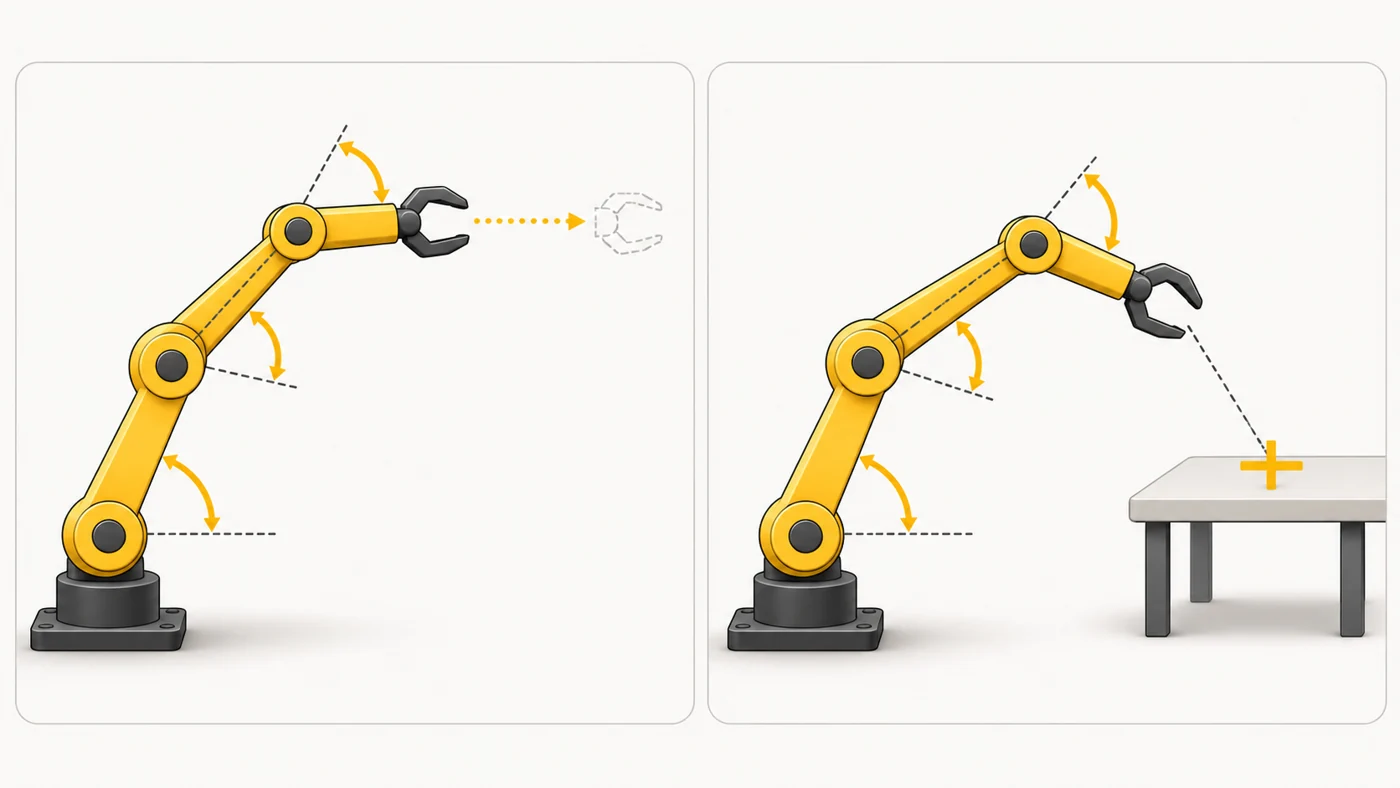
Robot kinematics is the maths linking joint angles to the position of the end of the arm. Forward kinematics answers "where will the hand be with these angles?"; inverse kinematics answers "what angles put the hand here?".
In plain words
You reach for a cup without thinking how many degrees to bend your elbow and shoulder - your brain solves the inverse kinematics problem by itself. A robot has to calculate it. The forward problem is like dance instructions: "do these moves - where do you end up?". The inverse one is like "stand on the X on the floor - which moves get you there?"
How it works
- The robot knows the lengths of its links and the angles of its joints (from the encoders).
- Forward kinematics: from the angles and lengths, work out where the end of the arm will be - that part is easy.
- Inverse kinematics: from the target point, work out the angles - harder, because there may be several solutions or none.
- The controller picks the most convenient solution, avoiding obstacles and joint limits.
- These calculations repeat hundreds of times a second to keep the motion smooth.
Where you'll see it
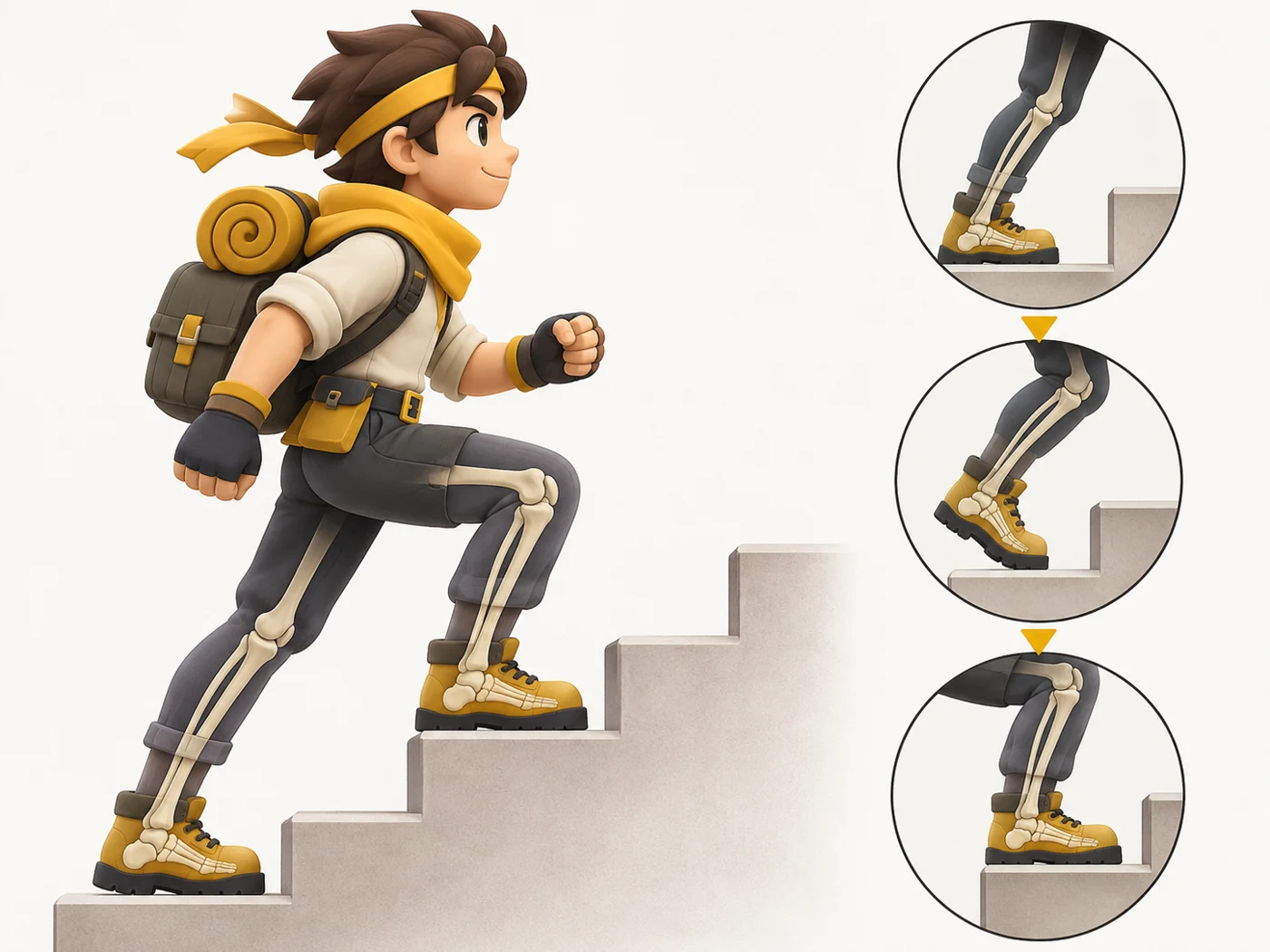
Kinematics is calculated in every robotic arm, humanoid and walking robot, as well as in animating characters in games and cartoons (so feet land on steps) and in VR avatars that copy your body's movements.
Does it matter when buying
Not for buying. But if you program robots or make games in Unity or Unreal, "IK" (inverse kinematics) is one of the first things you will meet. The good news: most engines and robotics libraries already have it built in.
Myths
- Myth: Kinematics is about speed. Reality: Kinematics describes positions and motion without considering forces. Forces are dynamics.
- Myth: The inverse problem always has one solution. Reality: Often there are several (elbow up or elbow down), and sometimes the point cannot be reached at all.
FAQ
What is IK in games?
Inverse kinematics, which helps a character place their feet and grab objects naturally.
Why does a robot need forward kinematics if it has inverse?
To know where it is right now and to check the result of a movement.
Is AI used for kinematics?
Yes, especially in humanoids: neural networks help calculate movements quickly and naturally.