
Humanoid robots: what they are and why robots need a human shape
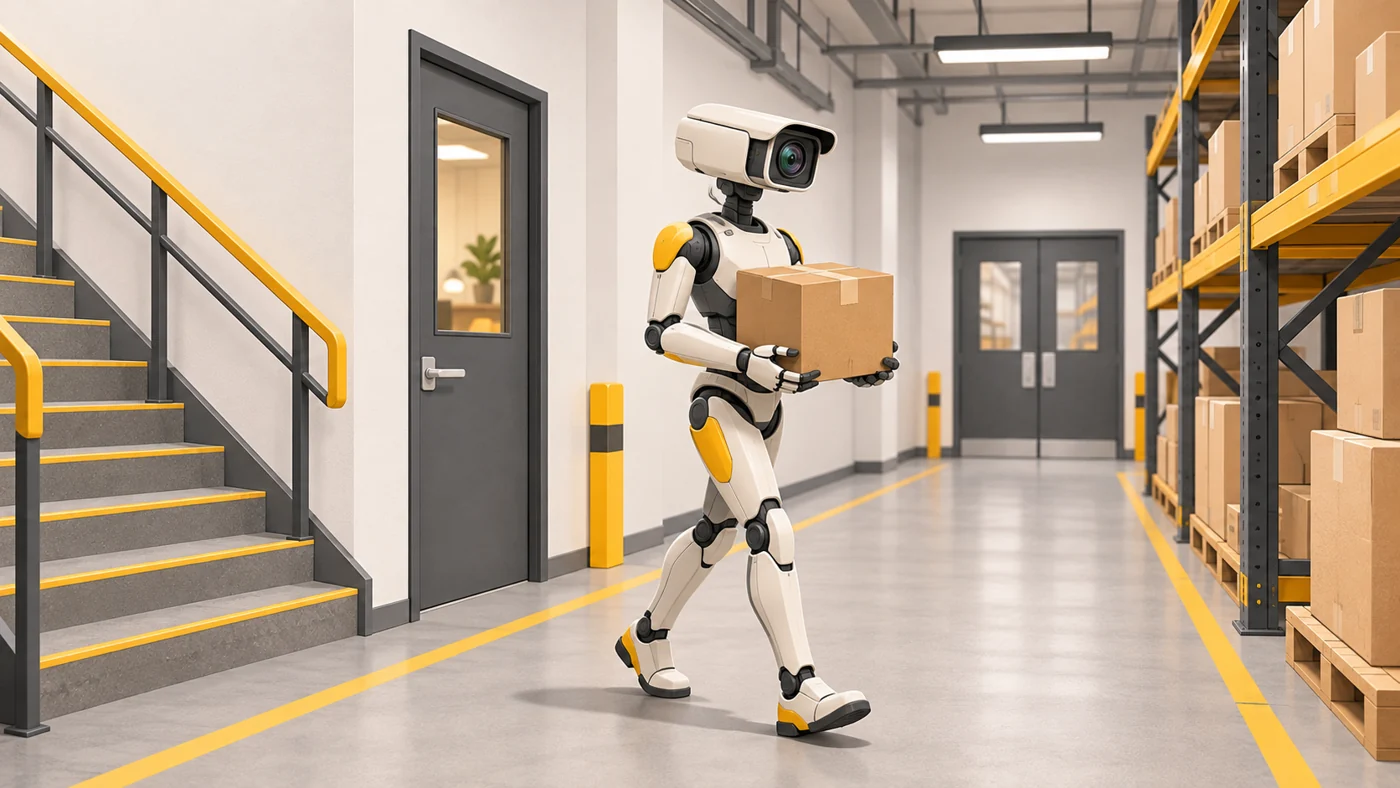
A humanoid robot is a robot built like a human: it has a torso, two arms, two legs and a "head" with cameras. Such robots are developed so they can work in spaces designed for people.
In plain words
Our world is built for humans: stairs, door handles, shelves, tools. A robot vacuum can't climb stairs, and a factory arm can't open a door. A humanoid is an attempt to make a "universal worker" that doesn't need a rebuilt house or warehouse - it just uses the same things we do.
How it works
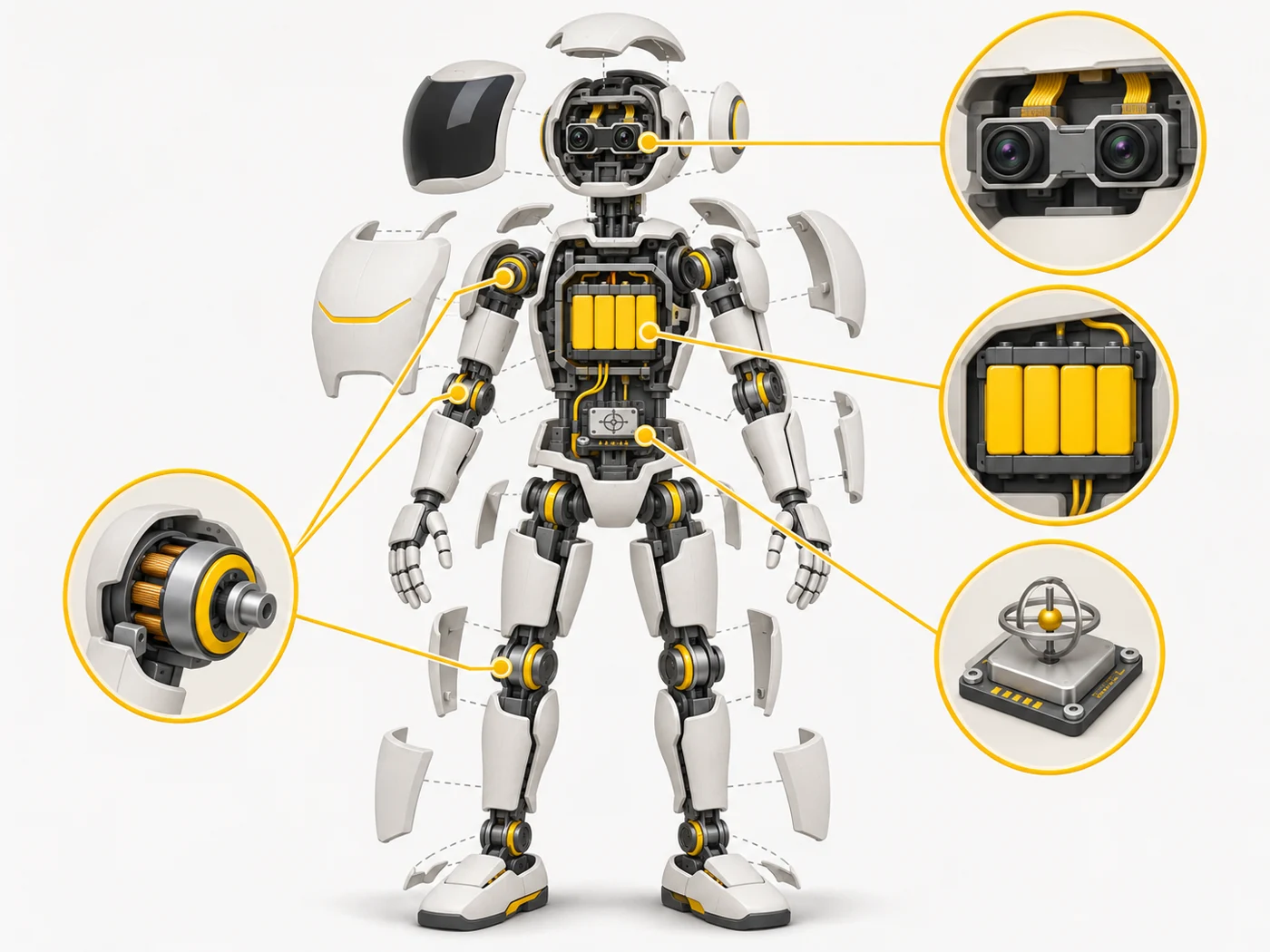
- Cameras, depth sensors and an inertial measurement unit (IMU) help the robot see the space and keep its balance.
- Dozens of actuators - motors in the joints - move the arms, legs and fingers.
- The number of independent movements is called degrees of freedom: the more, the more dexterous the robot.
- Artificial intelligence turns what it sees into movement: how to walk, how to pick up a box, how not to fall.
- Robots are often trained in simulation or by copying human movements through teleoperation.
Where you'll see it
The best-known humanoids are Tesla Optimus, Figure, Unitree, Boston Dynamics Atlas and Agility Digit. So far they mostly work in pilot projects in factories and warehouses or appear at trade shows. You can't yet buy a home humanoid helper that really cleans and cooks.
Does it matter when buying
For buying - not yet, it's a technology of the future. But for understanding the news - yes. When you see a video of a robot doing a backflip or folding laundry, it helps to know that some demos are filmed with a human controlling it remotely or after many attempts. I always look for the words "autonomous" or "teleoperated" in the description.
Myths
- Myth: Humanoids already live in people's homes. Reality: Not yet. These are mostly prototypes and test projects.
- Myth: A human shape is the most efficient one for robots. Reality: Not always. For one specific task, a wheeled robot or a single arm is often better. A humanoid wins where there are many different tasks.
FAQ
How is a humanoid different from an android?
An android usually means a robot that looks as human as possible on the outside, with "skin" and a face. A humanoid only has a human-like body layout.
Does a humanoid robot think for itself?
It's controlled by software and neural networks. It has no consciousness or wishes of its own.
How long does it run on battery?
Usually a few hours, then it needs charging or a battery swap.
Related terms
Robot, Embodied AI, Actuator, Degrees of freedom, Inertial measurement unit (IMU), Teleoperation