
Teleoperation: when a robot moves with a human's hands from a distance
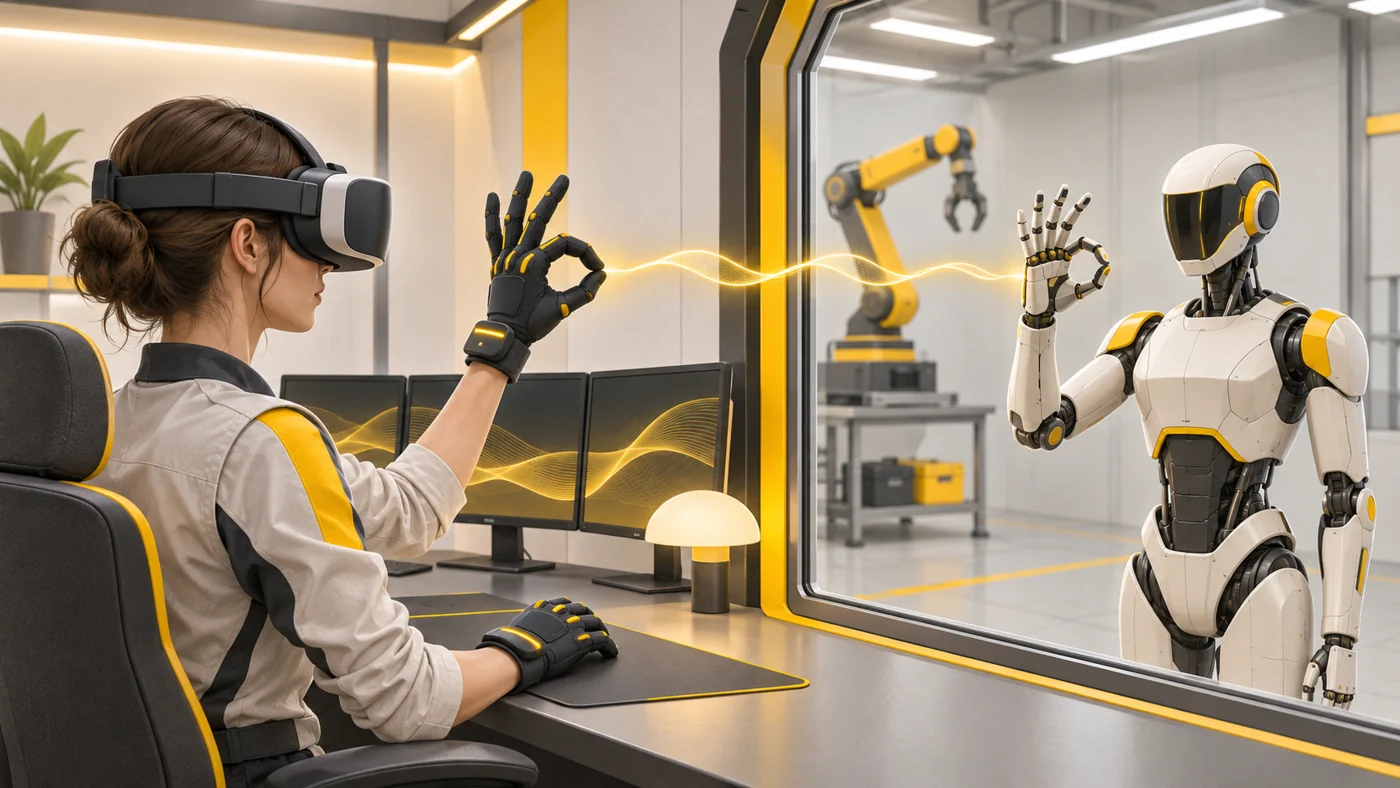
Teleoperation is remote control of a robot in which a person sets its movements in real time with joysticks, gloves, a VR headset or a copy arm, seeing everything through the robot's cameras.
In plain words
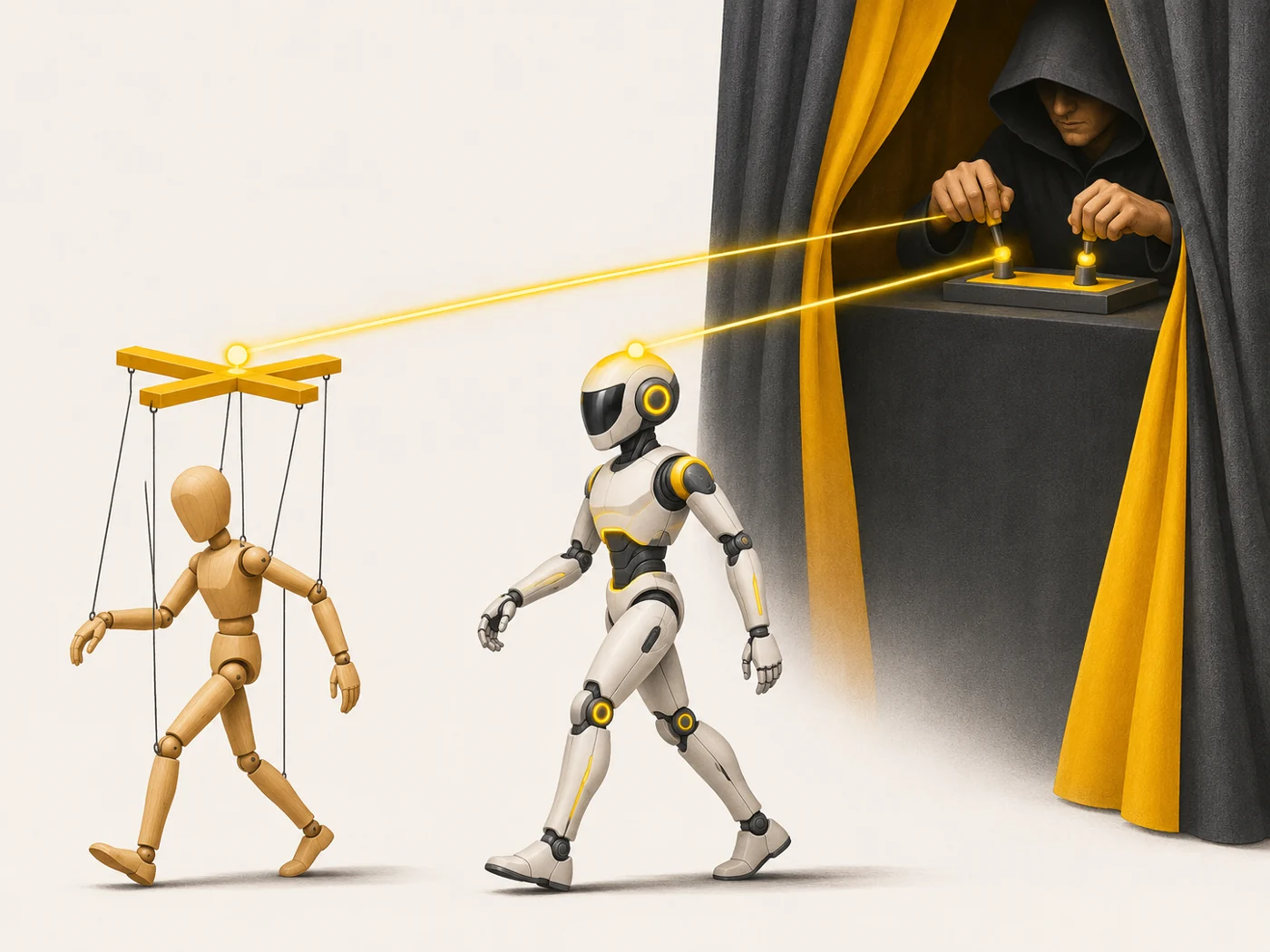
Remember a puppet on strings? The puppet dances, but a person is really moving it. Teleoperation is a modern puppet: instead of strings, the internet and sensors; instead of a puppet, a robot. And just as in the theatre, the audience does not always see who is behind the curtain.
How it works
- The operator sees the world through the robot's eyes - via cameras on a screen or in a VR headset.
- Their movements are read by joysticks, sensor gloves or a special suit.
- The commands are sent to the robot by cable or wirelessly.
- The robot copies the movements with minimal delay.
- Some systems send force feedback to the operator so they can "feel" the object.
Where you'll see it
Bomb disposal and work in hazardous areas, surgical robots (the surgeon controls them from a console), underwater and space vehicles, and robots for nuclear sites. Also training humanoids: teleoperation recordings become examples for AI.
Does it matter when buying
Not for buying - but yes for critical thinking. When you see a video of a humanoid deftly pouring tea, look in the description for "teleoperated" or "autonomous". Teleoperation is not cheating; it is a normal tool. It just matters to know who is really in control.
Myths
- Myth: If a robot moves skilfully, it must be autonomous. Reality: Many demos are performed with an operator.
- Myth: Teleoperation is a thing of the past; AI has replaced it. Reality: It is still essential for dangerous jobs and for collecting data to train AI.
FAQ
How is teleoperation different from radio control?
Radio-controlled toys follow simple commands; teleoperation often copies complex human movements.
Is there a delay?
Yes, and it is critical: the greater the distance and the worse the connection, the harder it is to control.
Why is teleoperation used to train AI?
Recorded human movements become examples from which a model learns to do the same on its own.