
Embodied AI: when artificial intelligence gets a body
Embodied AI is artificial intelligence that has a "body" - a robot, drone or car - and learns to perceive the physical world and act in it, rather than only working with text or images.
In plain words
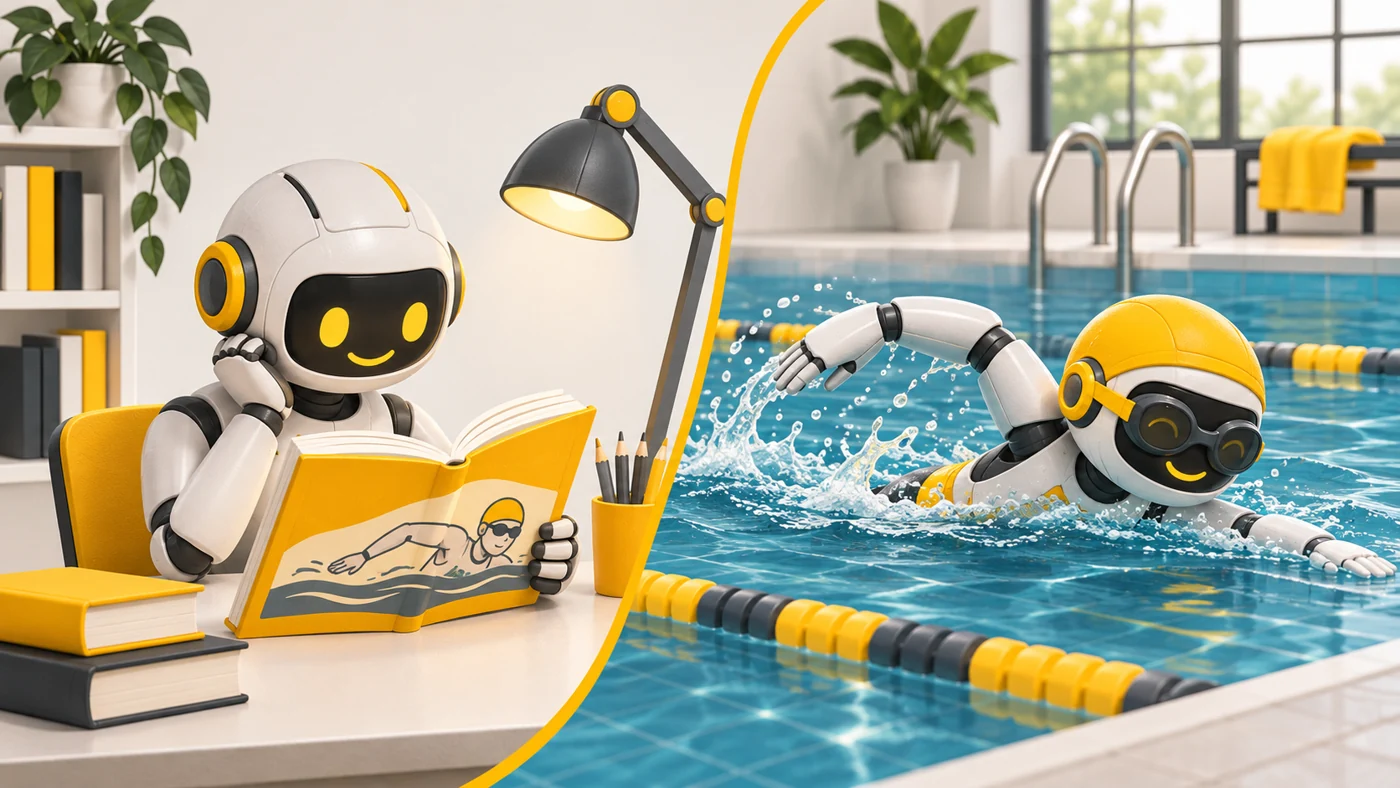
A chatbot is like someone who has read a thousand books about swimming but has never been in the water. Embodied AI is the one who has jumped into the pool: it has to feel the water, keep its balance and react instantly. Book knowledge helps, but you have to learn from your own experience.
How it works
- The robot gets data from cameras, microphones, an IMU and tactile sensors.
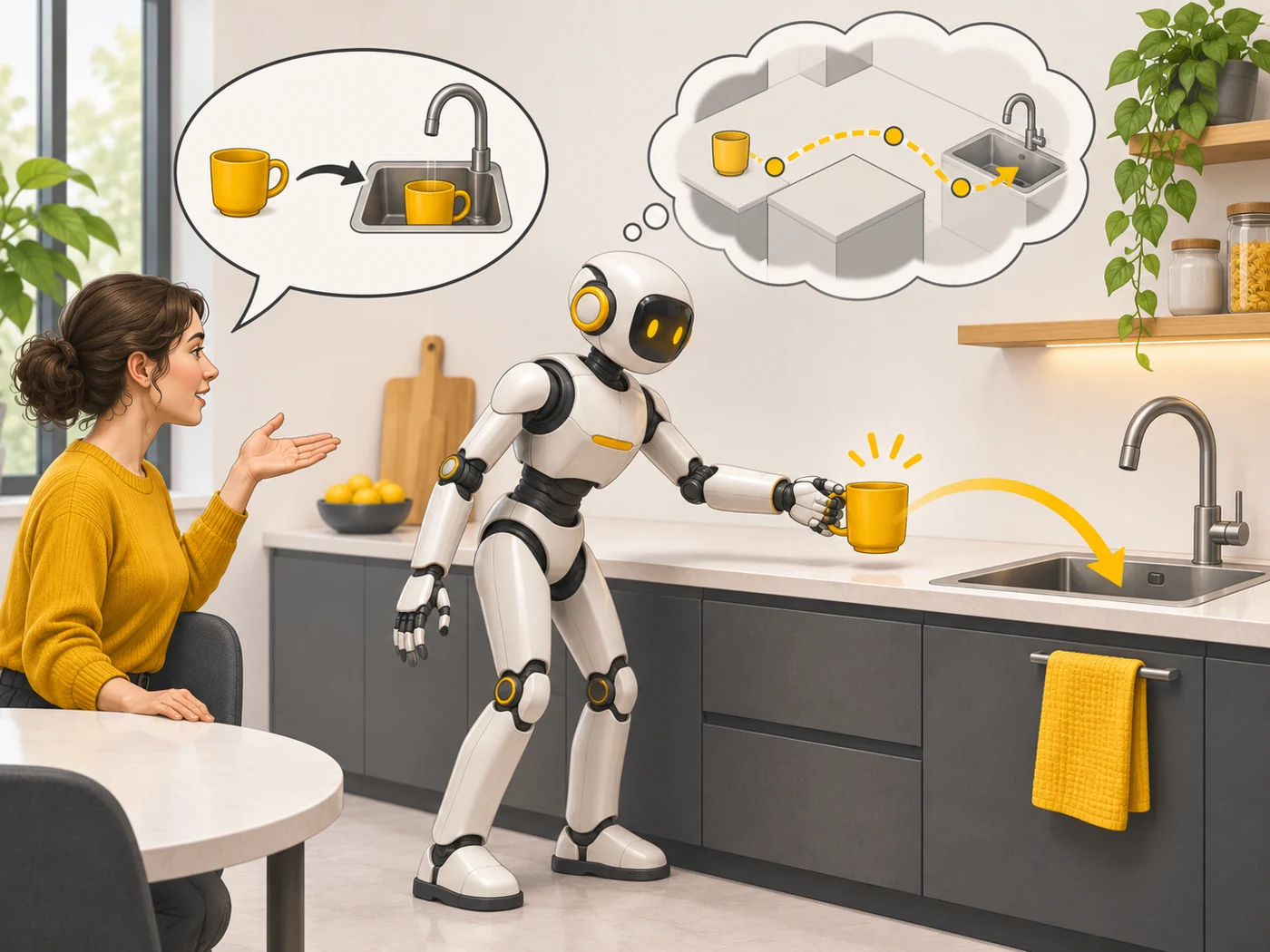
- An AI model matches what it sees with a person's command: "put the cup in the sink".
- It plans actions and turns them into joint movements.
- The robot carries out the movements, checks the result and corrects itself.
- These models are trained on human demonstrations, in simulations and through real attempts.
Where you'll see it
In humanoid robots, next-generation warehouse and home robots, robot chefs and self-driving cars. In AI news it is one of the hottest areas, because large language models have finally started helping robots understand commands in plain language.
Does it matter when buying
Not for buying yet. But it helps to understand why "AI that writes text" already exists while "a robot that cleans your flat" still does not. The physical world is unpredictable: things slip, fall and break. So I suggest being sceptical of videos where "a robot does all the housework".
Myths
- Myth: Just put ChatGPT in a robot and it will be able to do everything. Reality: A language model helps understand commands, but movement, touch and balance have to be learned separately.
- Myth: Embodied AI is only about humanoids. Reality: It is any machine that acts in the physical world with AI: a vacuum, a drone, a car.
FAQ
How is embodied AI different from an ordinary robot?
An ordinary robot follows a fixed program; embodied AI learns and adapts.
How are such models trained?
They are shown thousands of human demonstrations, trained in simulation and fine-tuned on real robots.
When will home robots with this kind of AI appear?
The first trial models are already being announced, but they will not become mainstream right away.
Related terms
Humanoid robot, Vision-language-action models, Teleoperation, Digital twin, Artificial Intelligence (AI)