
VLA models: AI that sees, understands a command and controls a robot
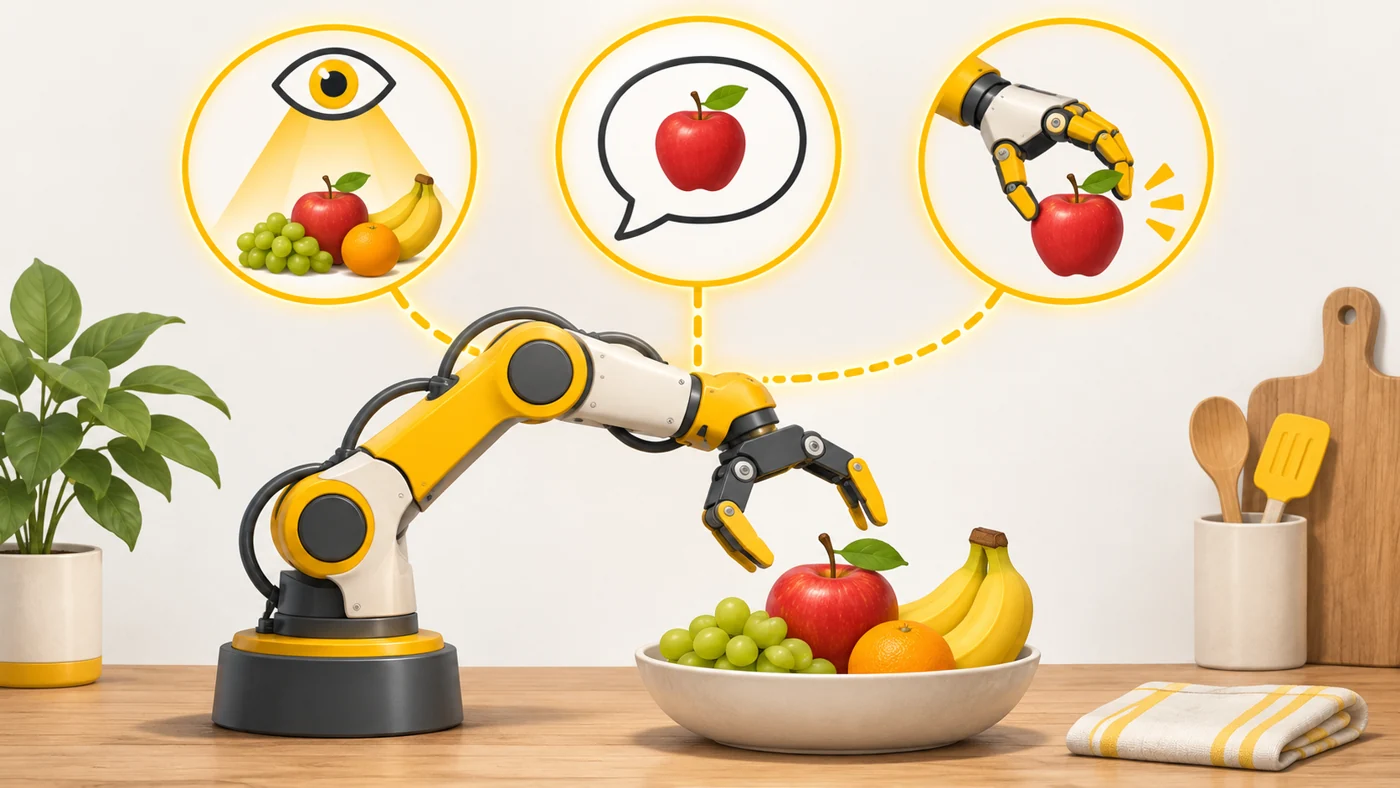
A vision-language-action (VLA) model is a neural network that analyses camera images, understands a text or voice command and outputs concrete actions for a robot at the same time: how to move the arm, gripper or wheels.
In plain words
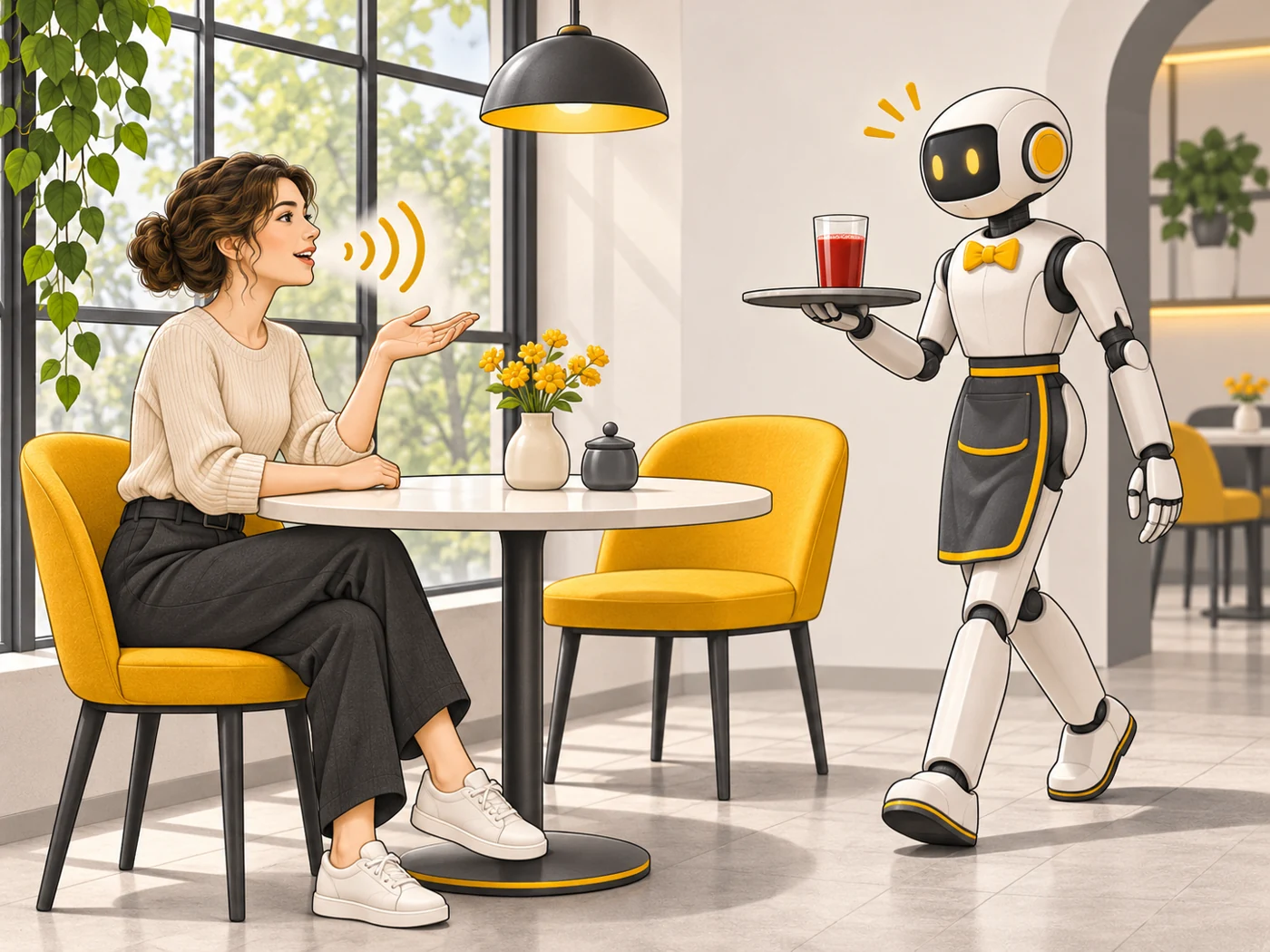
Imagine a waiter who is told: "Could you bring me that red juice by the window?" They have to see the table, understand the words and make the right movements. A VLA model does these three things together: eyes (vision), understanding words (language) and hands (action) in one "brain".
How it works
- The robot's cameras send images to the model.
- The model receives a person's command in plain language.
- It matches the words with what it sees: "apple" is this red object here.
- Instead of text, the model outputs a sequence of movements - just as a language model outputs words.
- The robot moves, the camera sees the new situation, and the loop repeats.
Where you'll see it
In research labs and companies developing humanoids and helper robots. These models are trained on large collections of robot recordings and videos of people. It is one of the main approaches in modern robotics.
Does it matter when buying
It does not affect buying yet. But the term explains why progress in robots suddenly sped up: the same ideas that made chatbots smart are now being applied to movement. If you are interested in robotics as a career, this is a topic worth following.
Myths
- Myth: A VLA model is just a chatbot inside a robot. Reality: It outputs commands for motors, not text, and learns from movement data.
- Myth: One model can already do everything. Reality: So far, VLA robots do well at familiar types of tasks but often make mistakes in new conditions.
FAQ
How is VLA different from a multimodal model?
A multimodal model answers with text; a VLA model answers with robot movements.
What are VLA models trained on?
Recordings of robots doing tasks, human demonstrations and videos.
Does a VLA model run on the robot itself?
Often yes, on an onboard computer, because internet delays interfere with movement.
Related terms
Embodied AI, Multimodal model, Computer vision, Humanoid robot