
Digital twin: a virtual copy of a real object
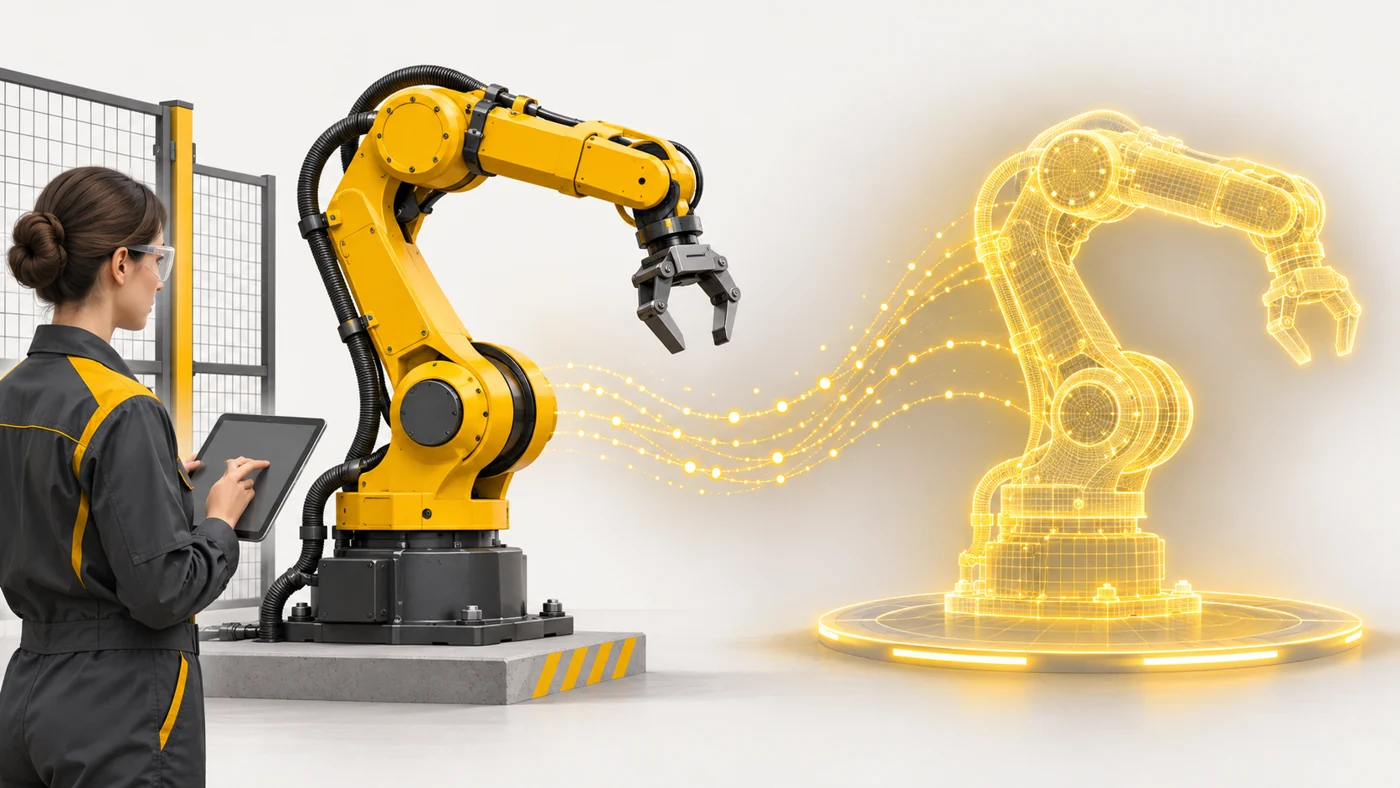
A digital twin is a virtual copy of a real object or system - a robot, an engine, a factory, a building or even a city - that receives data from sensors and behaves like the original.
In plain words
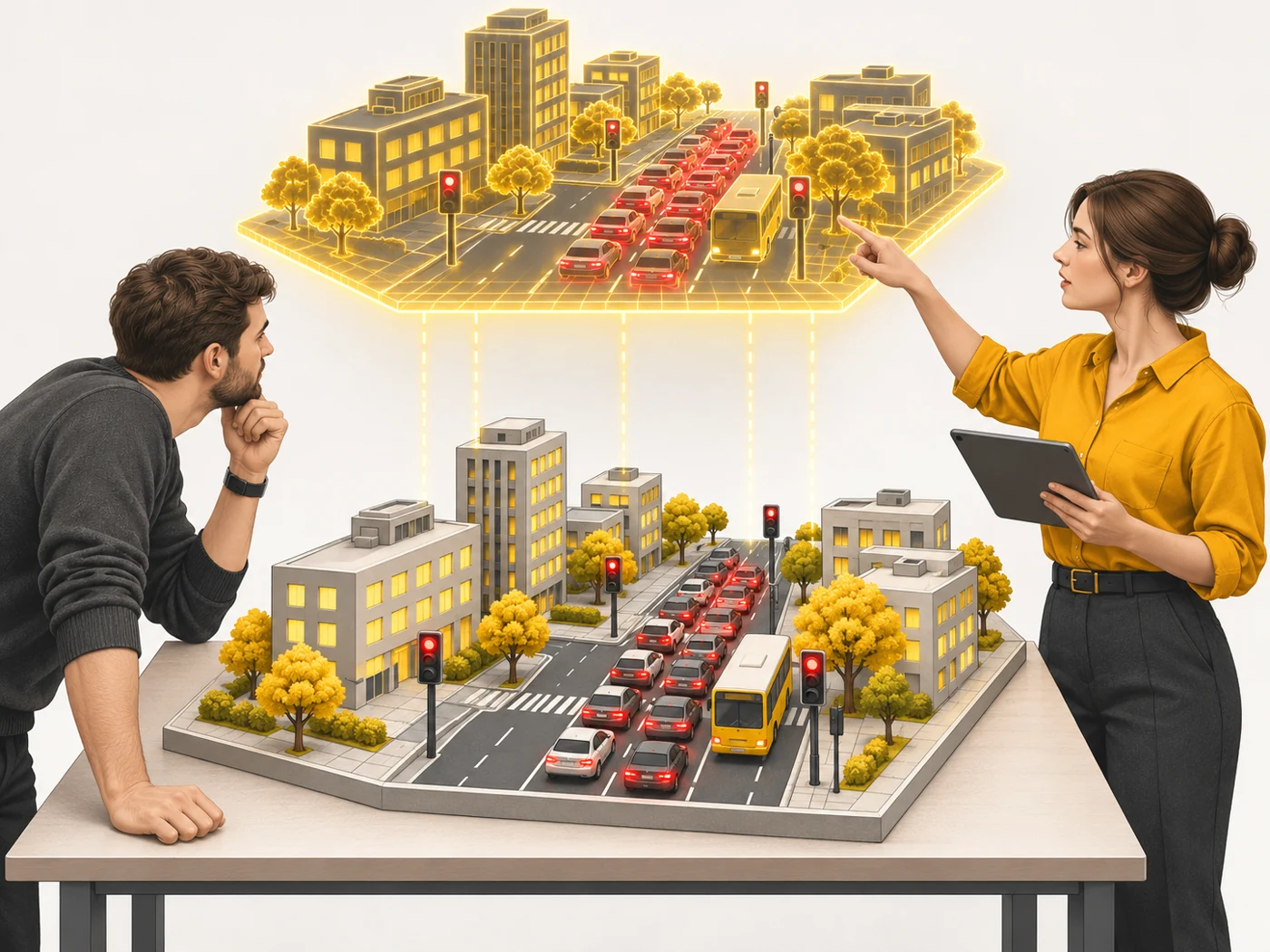
Imagine a simulation game in which your city is recreated down to every traffic light, and when there is a jam at a real junction, it appears in the game too. You can try changing the traffic lights in the game to see whether the jam clears - and only then change them in the real city. That is a digital twin.
How it works
- A detailed 3D model of the object is created with all its important characteristics.
- Sensors on the real object constantly send data: temperature, motion, load.
- The model updates and shows the current state of the original.
- Engineers run experiments on the twin without risking the real object.
- For robots, AI is trained in this "virtual world" before being let loose in reality.
Where you'll see it
In factories (modelling production lines), energy (turbines, grids), aviation (aircraft engines), construction and cities (transport, utilities), robotics (training robots in simulation) and medicine (organ models).
Does it matter when buying
Not for an ordinary user. But it is an important technology behind the scenes: it makes devices more reliable and robot training faster and safer. If you are into engineering or game development, digital twins combine both worlds.
Myths
- Myth: A digital twin is just a 3D model. Reality: A 3D model is static; a twin is alive - it gets real data and changes along with the original.
- Myth: A simulation always reproduces reality exactly. Reality: The gap between simulation and reality is a well-known problem, so results are checked in the real world.
FAQ
Why do robots need digital twins?
To train them millions of times in simulation - quickly, cheaply and without breakages.
Are there twins of people?
There is research on models of organs and health, but a full "human twin" does not exist.
What software is used for twins?
Game engines and specialised physics simulation platforms.