
Robotics: what it studies and why teenagers find it exciting
Robotics is the field of science and engineering that deals with designing, building, programming and using robots. It combines mechanics, electronics, programming and artificial intelligence.
In plain words
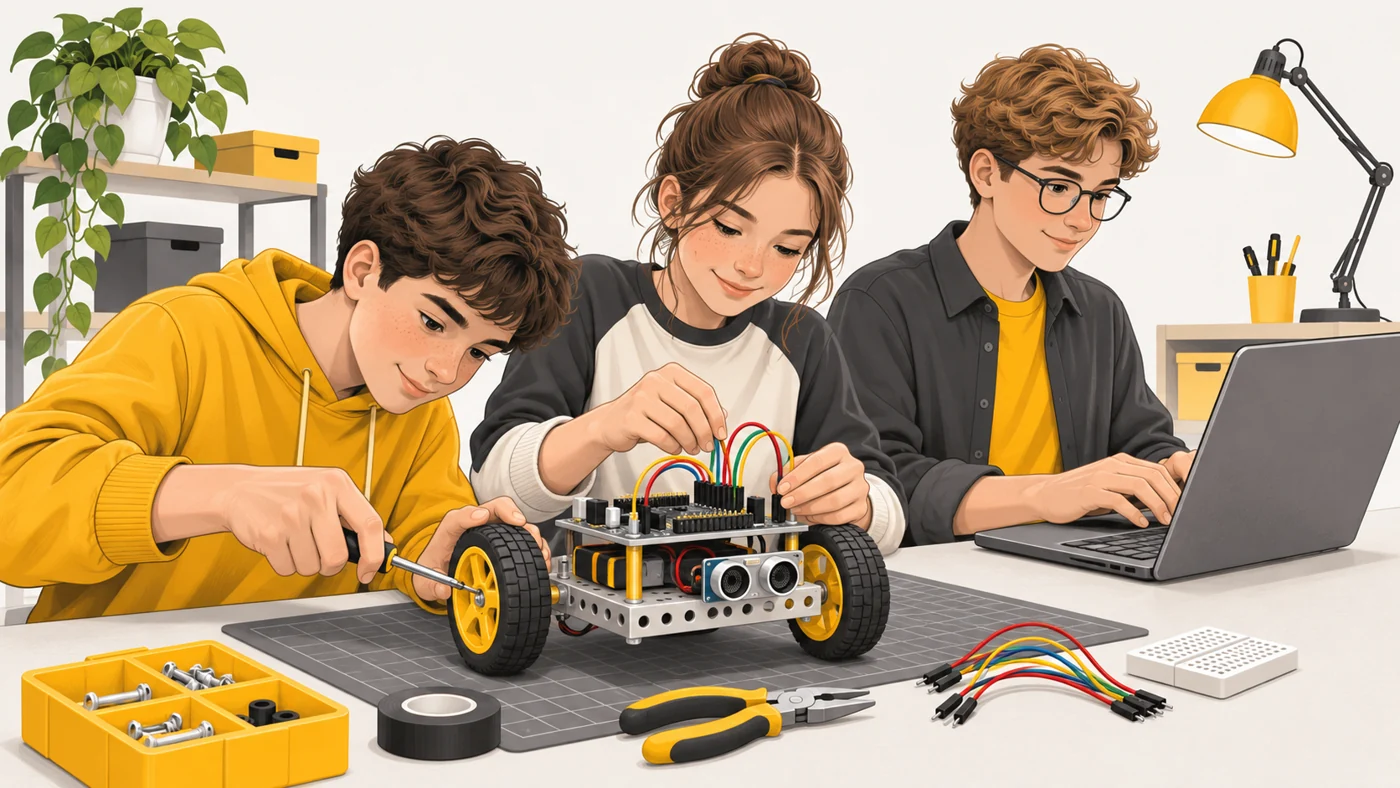
Robotics is like a team of three specialists. The mechanic builds the "body" - the frame, wheels, joints. The electronics engineer builds the "nervous system" - wires, sensors, the board. The programmer builds the "mind" - the code that decides what to do. None of them can build a robot alone. Together they can build anything from a toy to a Mars rover.
How it works
- Engineers define the robot's task and its design.
- Mechanical engineers design the body, drives and moving parts.
- Electronics engineers choose sensors, motors, batteries and the control board.
- Programmers write the code - from simple rules to neural networks.
- The robot is tested in simulation and in the real world, and bugs are fixed.
Where you'll see it
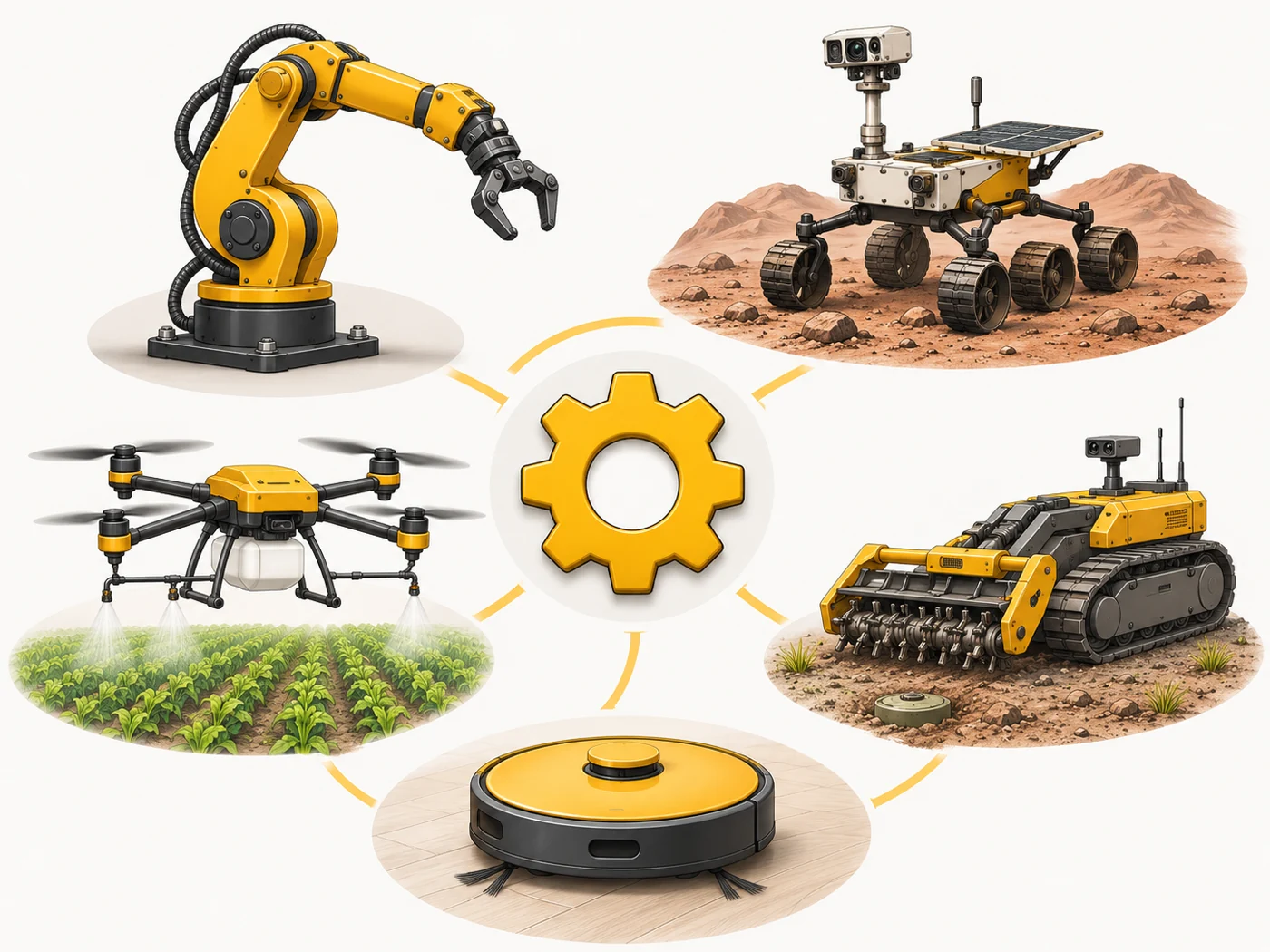
Robotics is found in factories (car assembly), warehouses, farming (picking robots, spraying drones), medicine, space (Mars rovers), safety (bomb and mine disposal) and the home. It is also especially important today for drones and unmanned ground vehicles.
Does it matter when buying
If you are curious about how machines "come to life", robotics is a great start towards a career. You can begin with a club, online courses or a learning kit: Arduino, micro:bit, LEGO. I am convinced that building your first line-following robot is far more fun than it sounds.
Myths
- Myth: Robotics is only for maths geniuses. Reality: You can start with basic knowledge and learn the harder parts as you go.
- Myth: You need expensive parts. Reality: First projects can be built from cheap kits and even parts from old electronics.
FAQ
At what age can you start robotics?
There are learning kits even for young schoolchildren, and complex projects for teenagers and older.
Which programming language should I learn?
To start, visual blocks or Python; for microcontrollers, C/C++.
Where do roboticists work?
In manufacturing, IT companies, defence, medicine, science and startups.