
Car autonomy levels (SAE 0-5): what an "autopilot" can really do
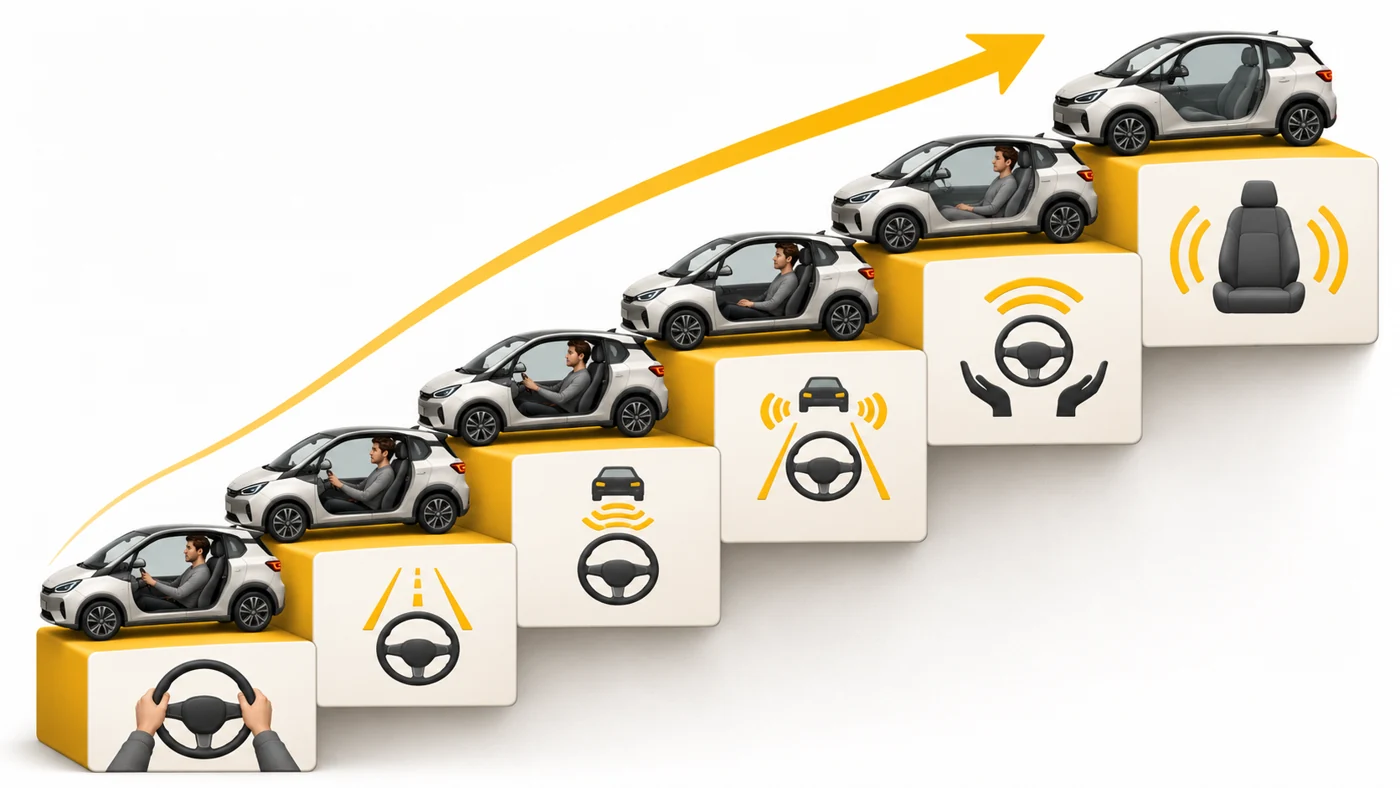
SAE autonomy levels are an international scale from 0 to 5 describing how far a car can drive itself: from full human control (level 0) to a fully driverless car in any conditions (level 5).
In plain words
Think of driving lessons. Level 0: you steer yourself. Levels 1-2: an instructor beside you helps with the pedals or wheel, but you are responsible. Level 3: the instructor drives, but you must be ready to take the wheel. Levels 4-5: a taxi driver takes you, and you can sleep.
How it works
- Level 0: warnings only (for example, lane departure); a person drives.
- Level 1: the car helps with one thing - cruise control or lane keeping.
- Level 2: the car steers and brakes by itself in certain conditions, but the driver must watch the road at all times.
- Level 3: in defined conditions the car drives itself and the driver may look away, but must take over when asked.
- Levels 4-5: the car drives itself in a defined area (4) or anywhere (5); no driver is needed.
Where you'll see it
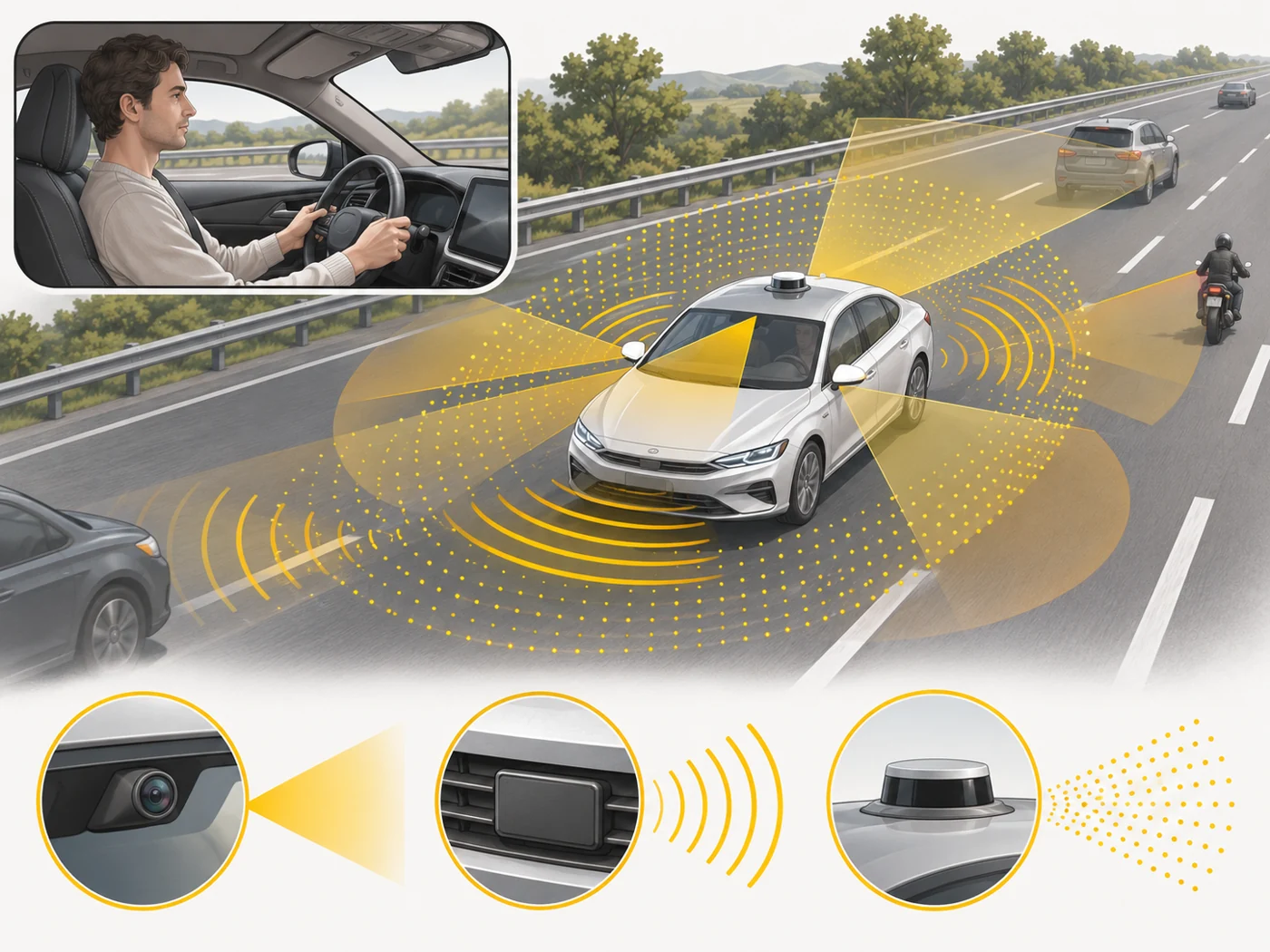
Most modern cars with an "autopilot" are level 2: adaptive cruise control and lane keeping. Some models offer level 3 on certain roads in certain countries. Driverless robotaxis (level 4) operate in limited zones in a few cities around the world.
Does it matter when buying
Yes, if you are choosing a car with "smart" features. The key rule: at level 2 you are always responsible for the road, even if the system is called "autopilot". Check which level is officially stated, not what the ads say.
Myths
- Myth: Autopilot in today's cars means full autonomy. Reality: It is almost always level 2, where the driver must watch the road and keep their hands near the wheel.
- Myth: Level 5 already exists. Reality: There are no fully driverless cars for all conditions yet.
FAQ
Who are SAE?
The Society of Automotive Engineers, a US association that developed this scale.
Can I sleep at the wheel of a level 3 car?
No, the driver must be ready to take over within a few seconds.
Which sensors does autonomy need?
Cameras, radars, often lidars, ultrasonic sensors and precise maps.
Related terms
Autonomous navigation, LiDAR, Sensor fusion, Computer vision