
What is LiDAR in plain words
LiDAR (Light Detection and Ranging) is a sensor that measures the distance to objects using invisible laser pulses and builds a three-dimensional map of the space from them.
In plain words
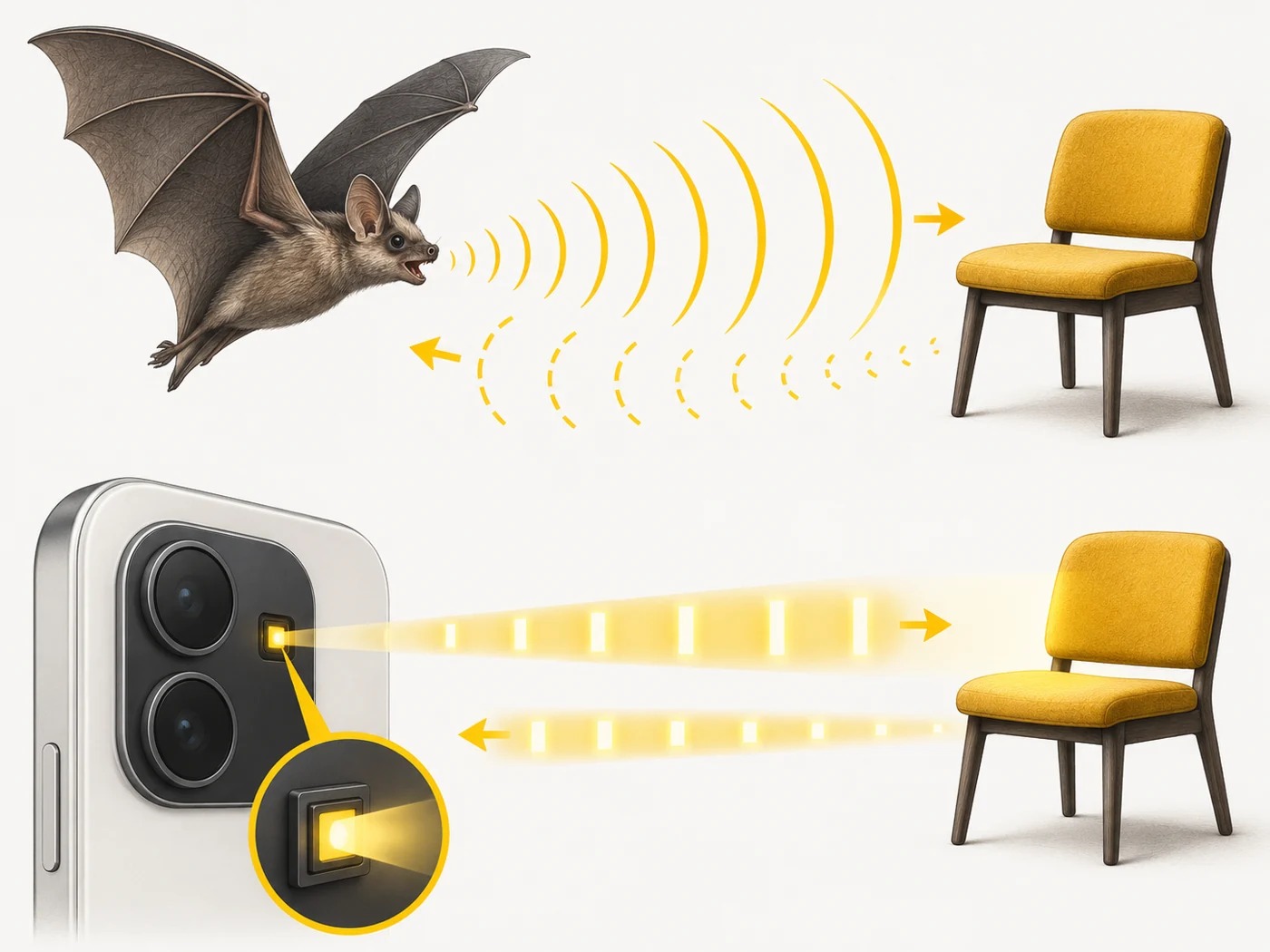
A bat in the dark squeaks and listens for the echo - that's how it "sees" walls. LiDAR does the same with light: it "fires" a short laser flash, catches the reflection and measures how long it took. Light is very fast, so it makes thousands or millions of such measurements per second.
How it works
- LiDAR emits a short pulse of infrared laser light that the human eye can't see.
- The pulse bounces off an object and returns to the sensor.
- The sensor measures the travel time and works out the distance.
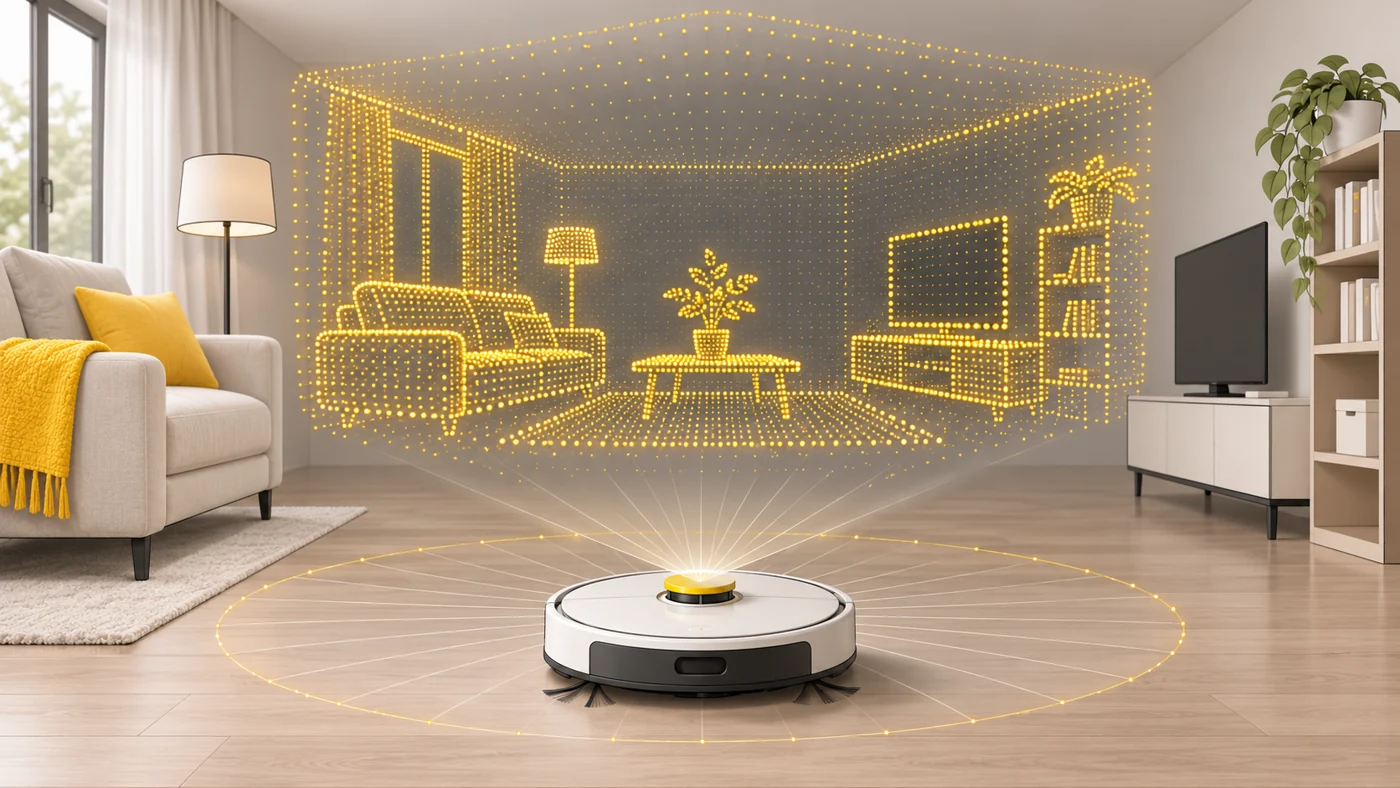
- Repeating this in different directions, LiDAR gets a "point cloud" - a 3D model of a room or street.
- Software (such as SLAM) uses this model for navigation or measurements.
Where you'll see it
In smartphones and tablets: iPhone Pro and iPad Pro have LiDAR next to the cameras - it speeds up autofocus in the dark and helps with augmented reality and measuring objects. In robot vacuums, LiDAR is the "turret" on top that lets the robot map your home. LiDARs are also used on cars, drones and industrial robots.
Does it matter when buying
For a smartphone - not critical: without LiDAR the camera still focuses well, just a bit slower in the dark. For a robot vacuum - important: models with LiDAR usually clean more neatly, in rows, and don't get lost in the dark. I'd recommend a vacuum with LiDAR or at least good camera navigation.
Myths
- Myth: LiDAR is dangerous for your eyes. Reality: Consumer devices use low-power, eye-safe class lasers that don't harm your eyes in normal use.
- Myth: LiDAR and a ToF camera are the same. Reality: Both measure the travel time of light, but LiDAR usually scans in points and sees farther, while a ToF camera captures the whole scene at once over a short range.
FAQ
Why does a phone need LiDAR?
For faster autofocus in low light, more accurate background blur, AR apps and measuring distances.
Can LiDAR see glass and mirrors?
Poorly: light passes through glass or bounces off at an angle. That's why robots sometimes "miss" glass doors.
Does LiDAR work in complete darkness?
Yes, because it provides its own light. It actually has it easier than a regular camera.
Related terms
ToF sensor, SLAM, Autonomous navigation, Robot vacuum navigation, Car autonomy levels