
Tactile sensor: how robots learn to feel touch
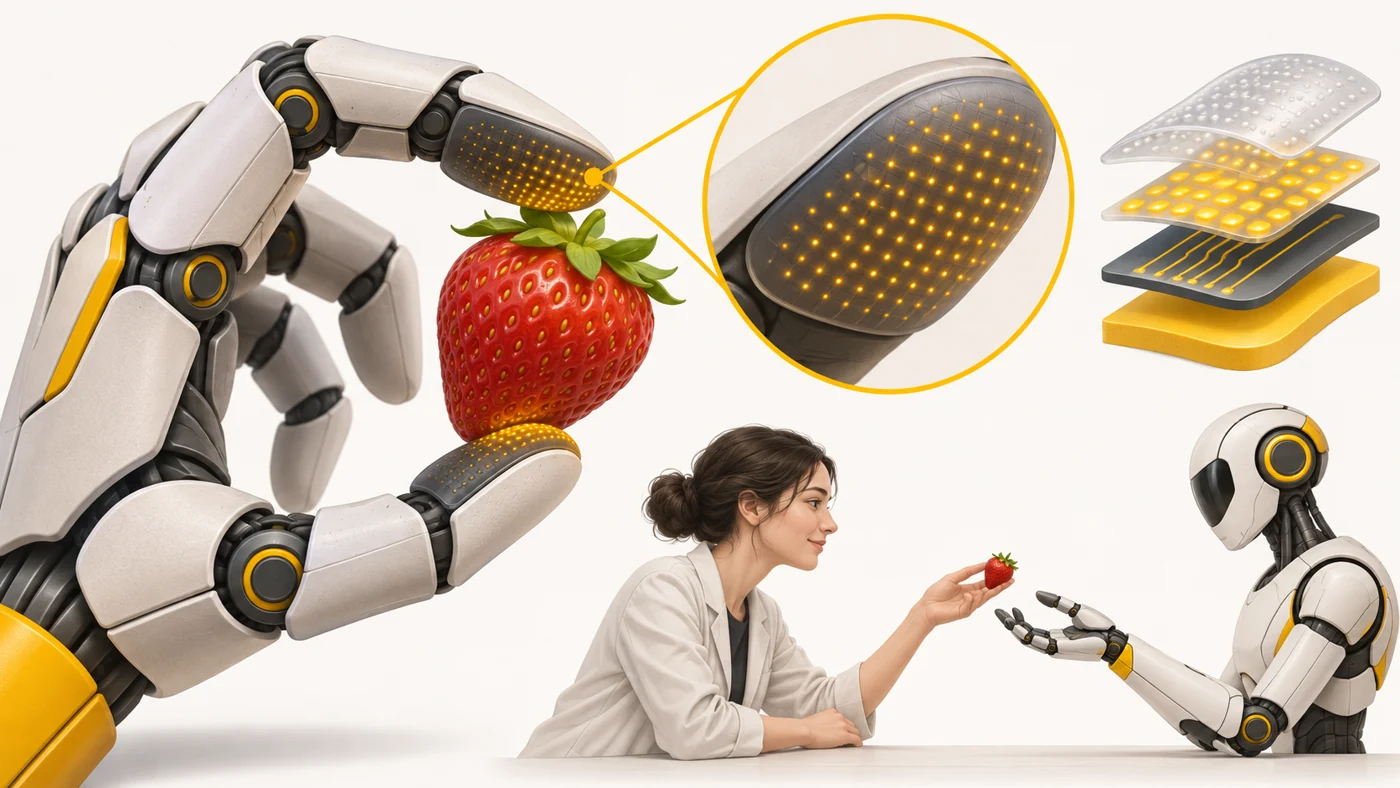
A tactile sensor measures touch: pressure, how load is spread, slipping and sometimes temperature. It is fitted to robot fingers and to "electronic skin".
In plain words
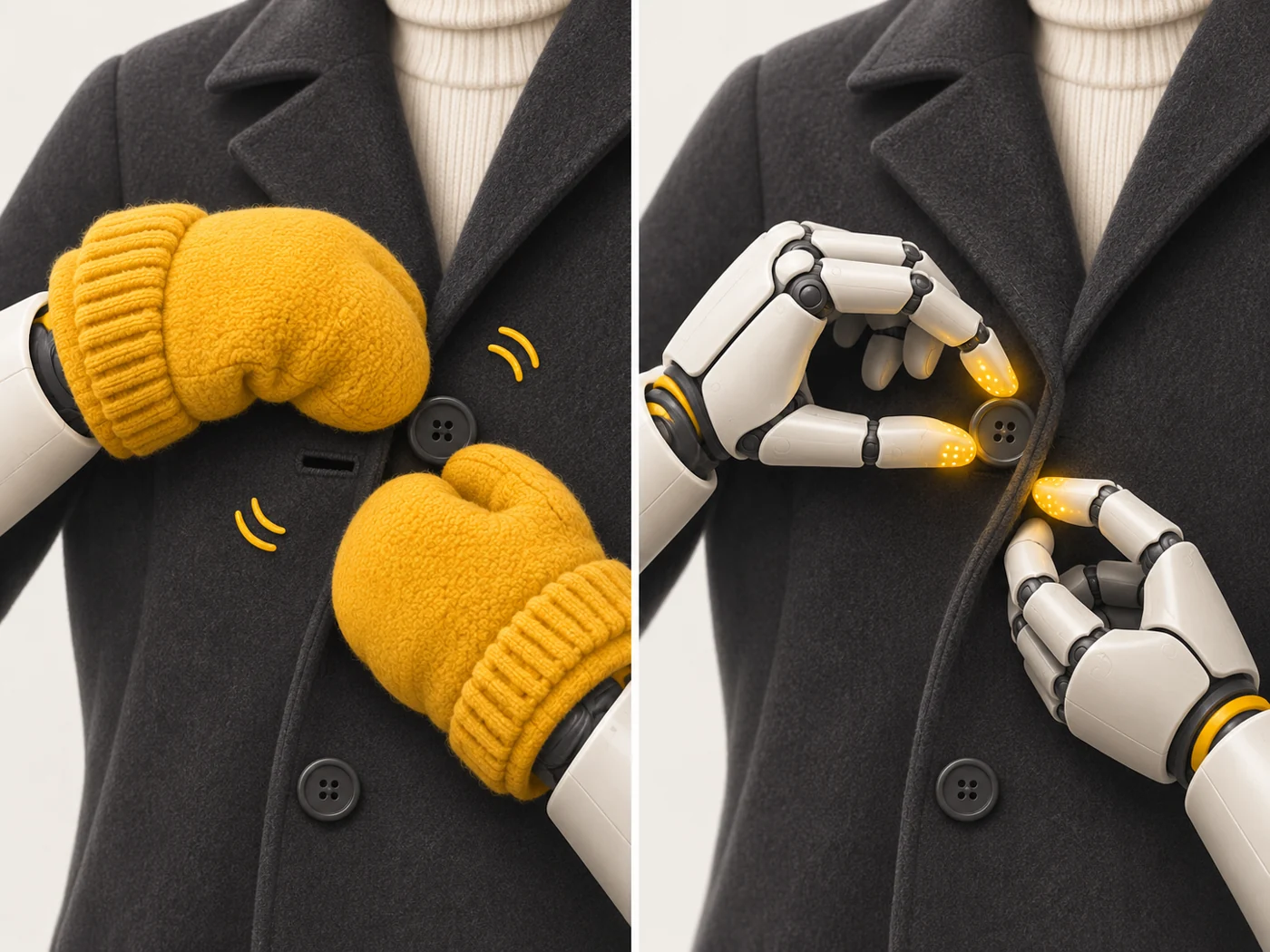
Try doing up a button while wearing thick mittens - it is hard because your fingers feel nothing. For a long time robots worked exactly like that, "in mittens". Tactile sensors take the mittens off: the robot feels when an object is slipping or when it is squeezing too hard.
How it works
- An array of tiny pressure sensors is placed on the surface of a finger.
- The sensors can be resistive, capacitive, piezoelectric or optical (a camera under soft "skin").
- Each point reports how hard it is being pressed.
- Software sees a "touch map" and understands shape, hardness and slipping.
- The controller adjusts its grip so it neither drops nor crushes the object.
Where you'll see it
In the hands of humanoid and industrial robots, surgical robots, prosthetic limbs (so the wearer can feel what they hold) and grippers for fragile food. A similar principle is used in touchscreens and trackpads that sense how hard you press.
Does it matter when buying
Not for buying. But it is one reason home helper robots are not yet widespread: without a good sense of touch, handling fabric, dishes and food is hard. When the news talks about "a robot with sensitive fingers", it means tactile sensors.
Myths
- Myth: A camera is enough for a robot to grab everything properly. Reality: A camera cannot see pressure or slipping - that takes touch.
- Myth: Tactile sensors are the same as a button. Reality: A button has two states; a tactile sensor reports force and how pressure is spread.
FAQ
What is electronic skin?
A flexible covering with many sensors that feels touch over a large area.
Are tactile sensors used in prosthetics?
Yes, in modern bionic prosthetics they help regulate grip strength.
Is there anything similar in smartphones?
Touchscreens and the force sensors in trackpads work on similar principles.
Related terms
Gripper, Robotic arm, Humanoid robot, Collaborative robot (cobot)