
Text-to-speech (TTS): how a computer reads text aloud
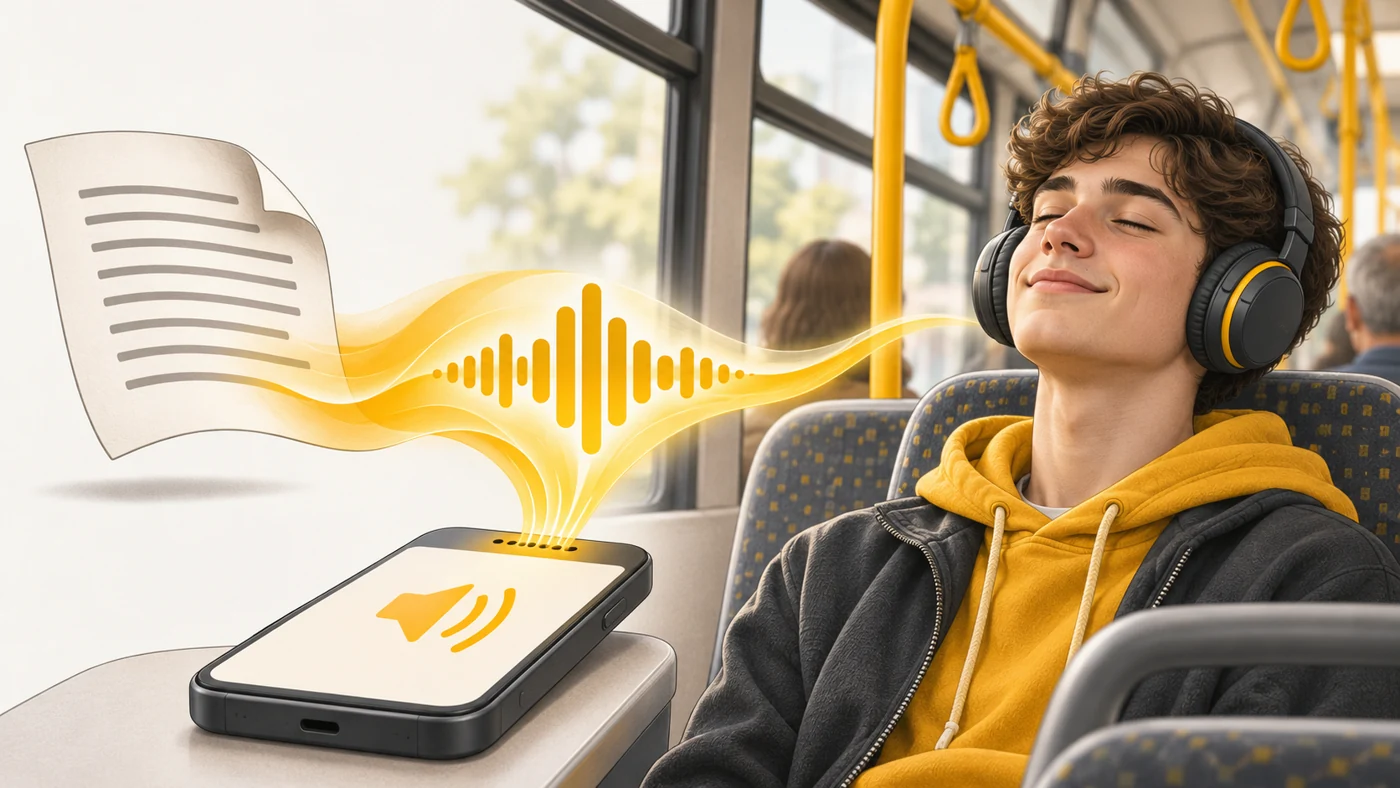
Text-to-speech (TTS) is a technology that turns written text into spoken human language. Modern neural voices sound almost like real people.
In plain words
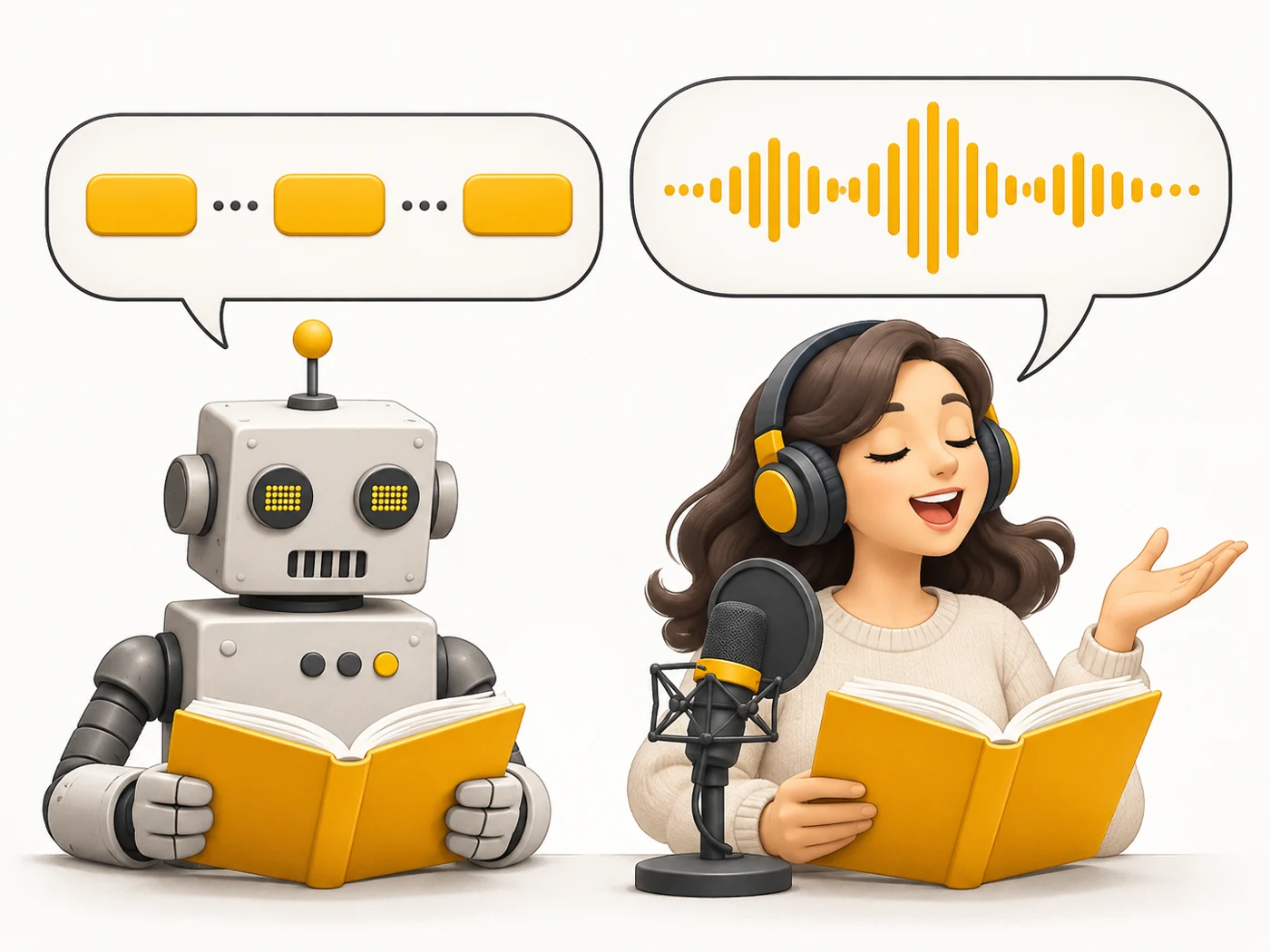
Old sat nav voices sounded like a robot reading syllable by syllable: "In. Two. Hundred. Metres. Turn. Right." They were assembled from snippets of recordings, like a collage of cut-outs. Modern synthesis is like a voice actor reading with expression: pausing, stressing words and even laughing where it fits.
How it works
- The program analyses the text: splits it into sentences, works out stress, reads numbers and abbreviations.
- A neural network predicts how the speech should sound: intonation, pace, pauses.
- Another part of the model (the vocoder) turns that into an actual sound wave.
- You can choose the voice, speed and emotion.
- The best models work in real time with almost no delay.
Where you'll see it
Sat navs, voice assistants, narrated articles and books, accessibility features for people with low vision (TalkBack, VoiceOver), automatic announcements, videos with voice-overs, and AI assistants you can talk to.
Does it matter when buying
For devices, check that the voice assistant and the "read aloud" feature support your language. For studying it is handy: you can listen to your notes on the go. And remember: text-to-speech is also the basis of voice cloning, so do not trust every "familiar" voice on a call.
Myths
- Myth: A synthesised voice always sounds like a robot. Reality: Modern neural voices are often almost impossible to tell from real ones.
- Myth: Speech synthesis only works well in English. Reality: Quality in many other languages has improved a lot in recent years, although stress on rare words can still be wrong.
FAQ
How do I turn on read-aloud on my phone?
On Android, use Select to Speak or TalkBack; on iPhone, use Speak Selection in the accessibility settings.
Does speech synthesis work offline?
Basic voices do; the most realistic ones often need internet.
Can I create my own voice for synthesis?
Yes, that is called voice cloning.
Related terms
Speech recognition, Voice cloning, Live call translation, On-device AI