
Viewfinder: optical, electronic and the phone screen
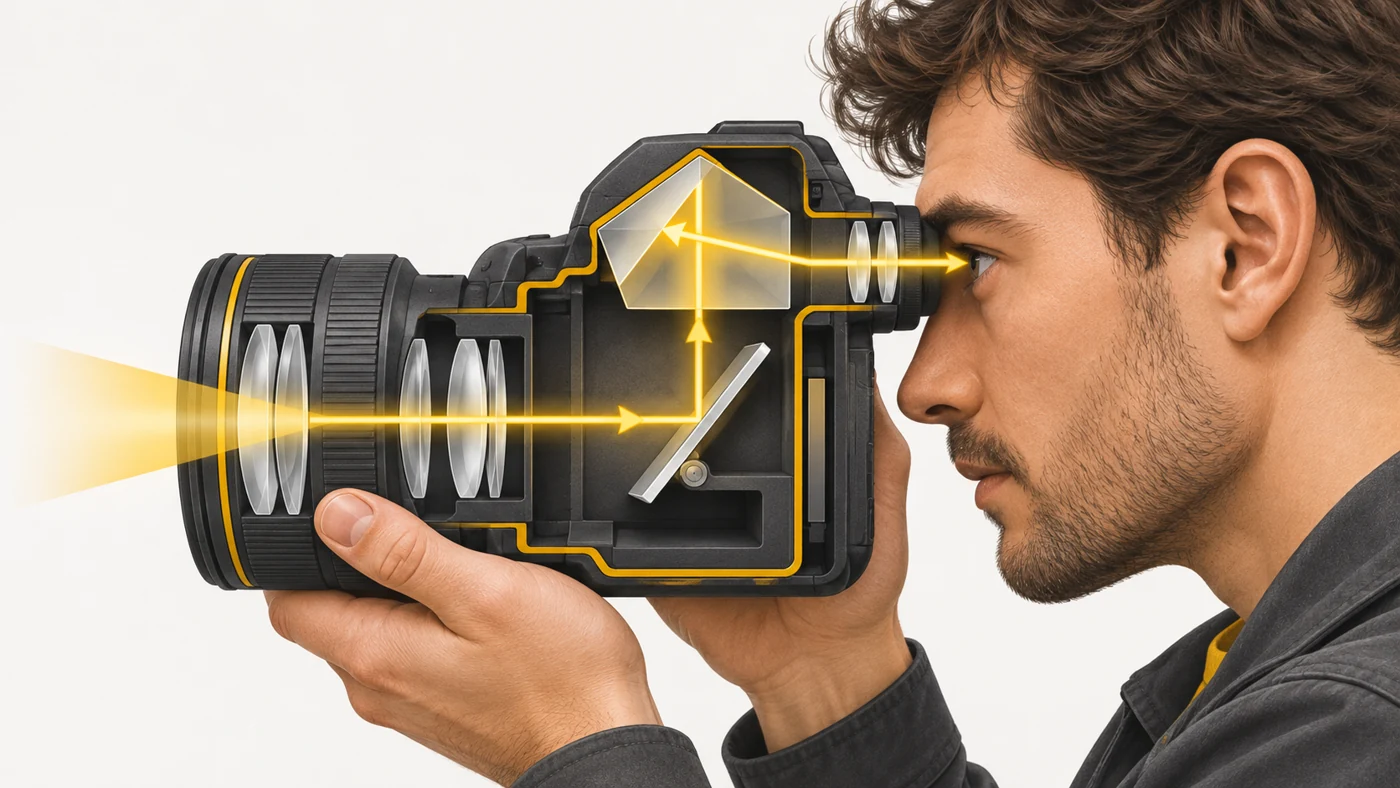
A viewfinder is the part of a camera through which the photographer sees what will be in the frame. It can be optical (in DSLRs, via a system of mirrors), electronic (a small screen in mirrorless cameras) or the display itself, as on phones.
In plain words
A viewfinder is like the window in a cockpit: you look through it to know where the shot is "flying". An optical one is real glass that shows the world directly. An electronic one is like a car's reversing camera: it shows the image from the sensor, so you see the exposure straight away.
How it works
- In an optical viewfinder, light from the lens is reflected by a mirror and pentaprism into your eye.
- In an electronic viewfinder (EVF), the sensor sends the image to a small screen by your eye.
- An EVF shows exposure, white balance and focus before you take the shot.
- A phone uses its main display as the viewfinder.
- A watch can act as a remote viewfinder for a phone.
Where you'll see it
Optical viewfinders are in DSLRs; electronic ones are in most mirrorless cameras. On phones it is the screen; some camera accessories and camera phones offer clip-on viewfinders.
Does it matter when buying
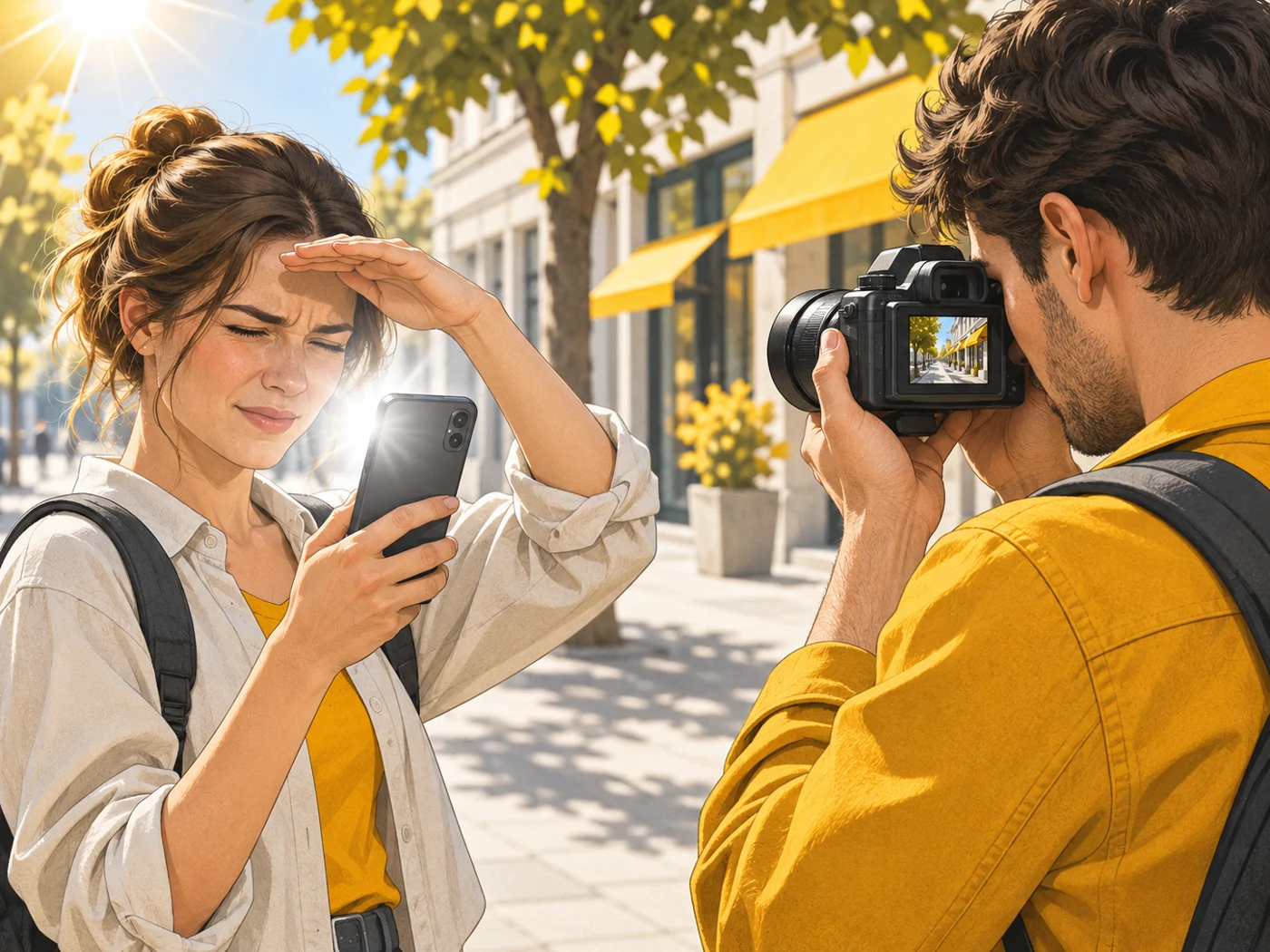
In bright sun, a viewfinder is more comfortable for a photographer than a screen. On a phone, screen brightness matters because the screen is the viewfinder. If you are buying a camera, try the EVF to see whether it suits you.
Myths
- Myth: An electronic viewfinder is always worse than an optical one. Reality: Modern EVFs show more information and the result before you shoot.
- Myth: A phone needs a separate viewfinder. Reality: The screen fully does that job.
FAQ
What is an EVF?
An electronic viewfinder - a tiny screen inside the camera.
Why is the frame hard to see on my phone in the sun?
The screen is not bright enough; a viewfinder or shade helps.
Can a watch be a viewfinder?
Yes, with some phone-and-watch pairings.
Related terms
DSLR and mirrorless camera, Peak brightness (nits), Camera timer